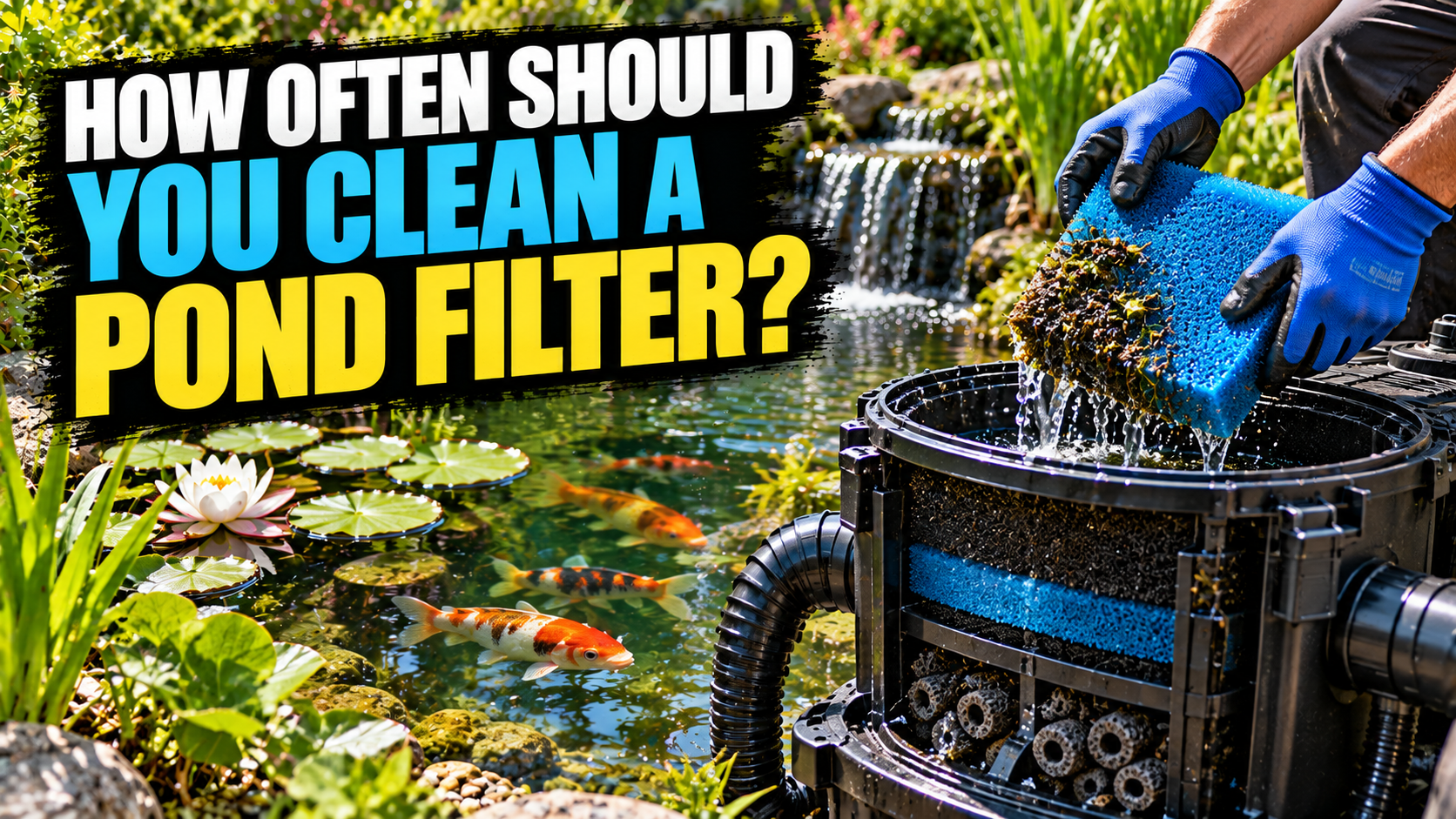
A pond filter’s cleaning schedule varies with the pond’s purpose, how many fish you keep, and the type of filter installed. Manufacturers sometimes recommend monthly checks for small consumer units, but wildlife ponds, lightly stocked ornamental ponds, and heavily stocked koi systems need different approaches. This guide explains why filters need attention, typical maintenance rhythms reported by suppliers and charities, how to clean without damaging beneficial bacteria or wildlife, and what signs mean your filter needs work now.
Quick answer
There’s no single interval—follow the system and the pond
Short version: no universal cleaning interval suits every pond. Frequency depends on whether your filter is mainly mechanical (removing solids) or biological (supporting bacteria), the number and size of fish, the amount of debris entering the pond and the filter design. Many consumer manufacturers recommend monthly cleaning for mechanical pre-filters, and horticultural bodies recommend seasonal checks, but these are general starting points rather than rules.
Always consult the filter manufacturer’s maintenance instructions and adjust for your pond’s specific conditions.
Fundamentals
Mechanical versus biological filtration — why cleaning matters
Mechanical media such as foam pads, sieves and brushes trap leaves, waste and algae. These elements build up and reduce flow, so mechanical components normally need routine physical cleaning.
Biological media provide surface area for beneficial nitrifying bacteria that break down ammonia and nitrite. These bacterial communities take time to establish (suppliers commonly note several weeks is typical) and are harmed if you remove biological media or leave the filter stationary for long periods. For this reason, avoid cleaning biological media the same way you clean mechanical sponges, and don't replace all biological media at once.
Because the two functions differ, a good maintenance routine treats mechanical and biological parts separately.
Typical guidance
What manufacturers and pond organisations commonly advise
Manufacturer schedules and pond-care organisations present patterns rather than a single rule. Common elements reported by suppliers and charities include:
Weekly visual checks of pump intakes and pre-filters to remove large debris.
Monthly cleaning of mechanical filter components is a frequent recommendation for many domestic units — some consumer filters are designed to be cleaned monthly.
Manufacturers commonly advise annual service or replacement of consumables such as sponges or UV bulbs for particular products.
Horticultural organisations also recommend seasonal checks and stress that new systems need time to establish their biological filter populations. Use these intervals as a baseline, and tailor them to your pond conditions and your specific filter model.
Warning signs
How to tell the filter needs cleaning now
Rather than relying solely on a calendar, watch for practical signs that cleaning is necessary:
Reduced flow from the outlet or fountain — often the first sign of clogging.
Visible build-up of solids in mechanical chambers or on pre-filters.
Persistent cloudiness, strong odours, or stressed fish behaviour — these can indicate compromised biological filtration.
If you see these signs, investigate the mechanical components first. Cleaning clogged mechanical media will often restore flow without disturbing biological media. If you suspect biological performance issues (for example, after a shutdown or a large media replacement), proceed carefully and consider professional advice.
Safe cleaning
Practical, wildlife‑friendly steps when you clean a filter
Prioritise wildlife and beneficial bacteria when cleaning. Practical steps commonly recommended are:
Isolate electrical power before you touch the filter. If you’re unsure about electrical isolation or the installation, consult a qualified electrician.
Remove coarse debris from skimmers and pre-filters frequently to keep flow steady.
Rinse mechanical sponges and foam in pond water rather than under tap water; this removes solids while preserving some of the beneficial microbes. Avoid household disinfectants or bleach — these will kill bacteria and can harm wildlife.
Do not replace all biological media at once. If media need replacing, do it in stages so the bacterial population can re‑establish.
If your system includes a UV clarifier, follow the manufacturer’s advice for cleaning the quartz sleeve and for lamp replacement timing. Remember that UV helps control free‑floating algae but can also kill microscopic fauna, so consider the ecological trade‑offs.
Follow the filter maker’s published maintenance steps for your exact model — product manuals often include safe cleaning procedures specific to the unit.
Pond type matters
Wildlife ponds, ornamental ponds, fish ponds and koi — different rules
Your pond’s purpose strongly affects how often you should clean the filter.
Wildlife ponds: habitat organisations caution against routine pump use, aggressive cleaning, or UV in wildlife ponds because intakes can trap invertebrates and amphibians, and UV destroys microscopic life. If you use a filter in a wildlife pond, keep maintenance minimal and avoid harsh interventions.
Ornamental ponds with few or no fish often need less filtration. Seasonal checks and occasional cleaning of any fitted mechanical parts are usually sufficient.
Fish ponds and koi ponds: higher fish biomass increases solids and nutrient load, so mechanical components require more frequent attention. Koi ponds in particular usually need robust mechanical and biological filtration sized to the pond and fish load; owners of high‑stock ponds commonly use self‑cleaning or drum filters to reduce manual cleaning. Proper sizing and continuous operation are important for biological filtration to function well.
If you’re unsure whether a filter is appropriate for your pond, see our guide: Do I Need a Pond Filter?
Common mistakes
Don’t make these filter‑care errors
Certain actions are particularly likely to cause harm:
Don’t use bleach or household disinfectants to clean filter media — they destroy beneficial bacteria and can leave harmful residues.
Don’t remove or replace all biological media at once; doing so risks a collapse in biological filtration and fish stress.
Don’t assume a sudden clear or algae‑free pond means everything is healthy — water clarity and chemical balance are separate matters.
Avoid prolonged filter shutdowns: biological populations can decline if you leave the filter off for extended periods.
If a cleaning is likely to disturb biological filtration (for example, after a long shutdown or a large media replacement), consider staging the work, testing water where possible and seeking advice from a professional aquatic supplier or local pond expert.
If cleaning triggers a green water problem, our page on why pond water can go green after cleaning discusses common causes and next steps.
Plan and reduce work
A simple maintenance checklist and ways to cut cleaning frequency
To keep the effort manageable, establish a simple routine and reduce debris entering the filter. Typical schedules reported by manufacturers and organisations include:
Weekly: visually check pump intakes, skimmers, and pre-filters; remove large leaves and debris.
Monthly: inspect and, if the manufacturer's guidance for your model suggests, clean mechanical filter media.
Annually: consider a service for the whole unit and replace consumables such as worn sponges or UV bulbs as the manufacturer advises; many people do larger maintenance at the start of the season.
Ways to reduce how often you need to clean: fit a coarse pre‑filter or skimmer to intercept leaves, use floating plants to shade the surface and capture some nutrients, avoid overstocking and overfeeding fish, and choose a filter type suited to your pond’s fish load (for heavy loads, self‑cleaning designs reduce manual cleaning).
For help choosing an appropriately sized system, see our guides on what size pond filter you need and on mechanical vs biological filtration.
PONDSTUFF PICKS
Recommended Pond Products
Products relevant to this guide that may help with the job.

POPOSOAP 75W Solar Pond Waterfall Filter Kit for Pond Stream Cascade Garden
PondStuff may earn a commission from qualifying purchases at no additional cost to you. Prices and availability can change. Read our affiliate disclosure.