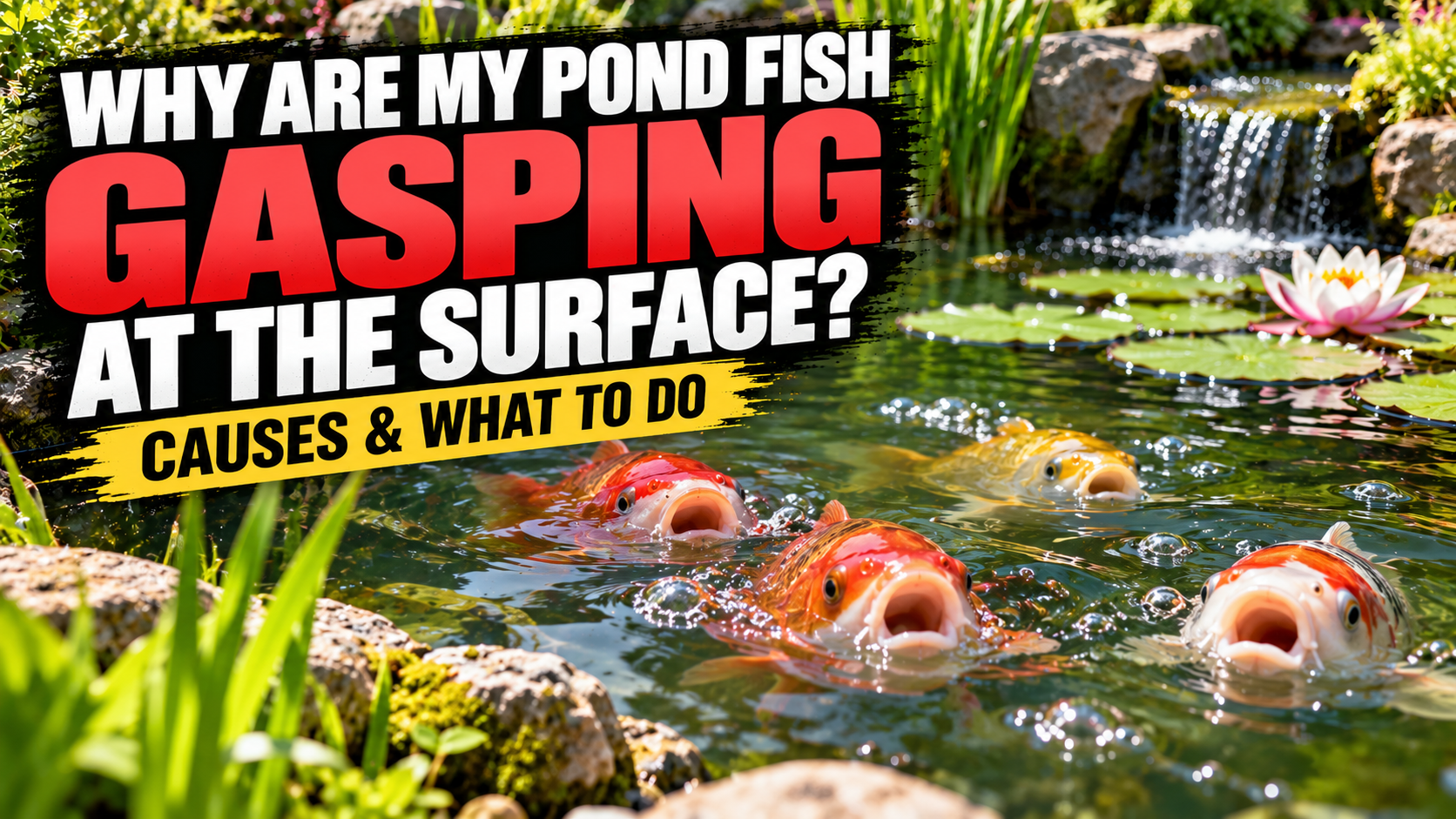
Fish repeatedly coming to the surface and gasping or ‘gulping’ is a common sign that something in the pond is stressing them. The most common issue is low dissolved oxygen, but the symptom can also point to poor circulation, pollution, or a sudden temperature change. This guide explains the usual causes, emergency actions you can take right away, how to diagnose the problem and practical longer‑term fixes for wildlife, ornamental and koi ponds.
Spotting the problem
What surface gasping actually looks like
Surface gasping is more than the odd fish taking a breath at the surface. Look for repeated gulping, fish hanging just below the surface, rapid gill movement, or fish crowding near an outflow or bubbler. You might also see lethargy, loss of appetite or fish staying unusually still in shallow water.
Note whether the behaviour is sudden or gradual and whether it affects many fish or only one or two. Sudden, widespread gasping is an emergency. Isolated cases may reflect a problem with an individual fish or a localised pond issue, but they still merit attention.
Most likely causes
Why fish gasp: low oxygen, poor flow and water stress
Low dissolved oxygen is the most common cause. Warm, still water holds less oxygen, and fish need more oxygen when temperatures rise. Heavy organic loads—fallen leaves, decaying plants, and silt—consume oxygen as they decompose and can cause rapid drops in available oxygen.
Thick surface cover such as duckweed, blanket weed or dense algal blooms restricts gas exchange and can reduce oxygen supply to lower water layers, especially at night when plants respire. In winter, ice cover has the same effect unless an area is kept open.
Poor circulation from a stopped or undersized pump, a blocked inlet, or stagnant zones concentrates fish where oxygen is better (often at the surface near inflows). High stocking levels or recent fish additions increase oxygen and waste demand. Chemical pollution (for example, ammonia, nitrite or runoff from garden treatments) is less common but can cause similar distress and should be investigated with testing if suspected.
Immediate action
What to do straight away — emergency steps that help
If you see multiple fish gasping, act quickly to restore oxygen and reduce further stress. Run any pump, fountain or aerator continuously. If you don’t have a pump, using a hose with a spray attachment to agitate the surface will increase surface exchange until better aeration is available.
Remove obvious surface mats, blanket weed, heavy duckweed and recently fallen leaves with a net to cut ongoing oxygen consumption from rotting matter. Stop feeding immediately — uneaten food and extra waste will worsen oxygen demand.
Check the pump and filter for blockages and restore flow if you find any. If the power is off and fish are in obvious danger, get local help rather than attempting complex electrical or mains work yourself.
Diagnose with a checklist
What to check next — quick diagnostics
Work through a short checklist to narrow the cause. Is the pump or fountain running and delivering good flow? Are the filter intakes clean, or is the media blocked? Has there been a heatwave, a long still spell or a sudden temperature change? Is the surface covered in algae, blanket weed or duckweed? Is there a lot of decomposing plant material or silt?
Also consider recent changes: new fish, heavy feeding, nearby work or runoff from garden treatments. If pollution or chemical problems are possible, collect information and consider professional water testing — do not guess concentrations or attempt chemical corrections without proper testing and guidance.
Practical longer‑term fixes
How to stop gasping episodes from recurring
Match solutions to your pond type. Wildlife ponds with few or no fish rely more on natural balance: avoid excess nutrient inputs, leave marginal planting for habitat and remove only very heavy surface mats. Ornamental garden ponds with goldfish or small mixed fish benefit from reliable circulation, appropriately sized filtration and occasional thinning of dense oxygenating plants so roughly half the surface remains open.
Koi ponds need robust mechanical and biological filtration and deliberate aeration because koi produce a lot of waste. Wherever you keep fish, reduce organic build‑up by clearing leaves and sediment, avoid overstocking and run pumps more during hot, calm spells and overnight when oxygen is lowest.
If you’re unsure whether you need filtration or what type is right for your pond, our guide on whether you need a filter explains the choices and responsibilities. Follow manufacturer guidance for any equipment, and have a qualified electrician carry out any permanent electrical work.
Equipment and maintenance
Pumps, aerators and filters — the right approach
Reliable circulation and biological filtration are central to preventing low‑oxygen events. If a pump is undersized or filter media are clogged or neglected, the system may not cope when conditions worsen. If you’re considering a new pump, see guidance on choosing the right pump size and type for your pond: what size pond pump do I need. Running pumps continuously during warm weather and at night can help; read more on whether to run a pond pump 24 hours a day: should you run a pond pump 24 hours.
Consider adding an aerator or fountain to increase surface movement where improving flow is difficult. UV clarifiers can reduce suspended algae as part of a filtration system, but they do not replace aeration or biological filtration; see our article on green pond water for more on algae issues: why pond water goes green. Regular filter maintenance is important — clogged filters lose effectiveness — and our guide explains typical cleaning considerations: how often to clean a pond filter.
Plants and pond layout
Use plants and design to support oxygen levels
Pond planting affects oxygen and shade. Submerged oxygenating plants release oxygen into the water during daylight and help biological balance; see our list of the best oxygenating plants for a UK pond: best oxygenating plants. At the same time, avoid covering the whole surface — manage floating plants and dense marginal beds so sunlight and wind can still reach open water.
Provide a mix of depths and open water zones. Deeper areas help fish escape temperature extremes and provide more stable conditions at depth. If planning or refurbishing a pond, read guidance about depth and planting positions: how deep should a garden pond be.
When to call a vet or pro
Know when this is beyond DIY
If many fish are dying, showing acute distress, or the problem continues despite restoring flow and reducing organic load, contact an aquatic vet or an experienced pond professional. Treat suspected pollution or chemical contamination as a specialist matter: preserve samples if possible and seek professional water analysis.
For electrical installations, permanent pumps or mains wiring near water, always use a qualified electrician. For complex filtration upgrades or pond refurbishments, a pond specialist can advise on correct sizing and installation to help prevent repeat problems.
PONDSTUFF PICKS
Recommended Pond Products
Products relevant to this guide that may help with the job.

POPOSOAP 12W Solar Pond Pump, 600LPH Solar Fountain Pump for Garden Feature

POPOSOAP 8W Solar Pond Pump with Battery Backup 3600mAh for Pond Bird Bath
PondStuff may earn a commission from qualifying purchases at no additional cost to you. Prices and availability can change. Read our affiliate disclosure.