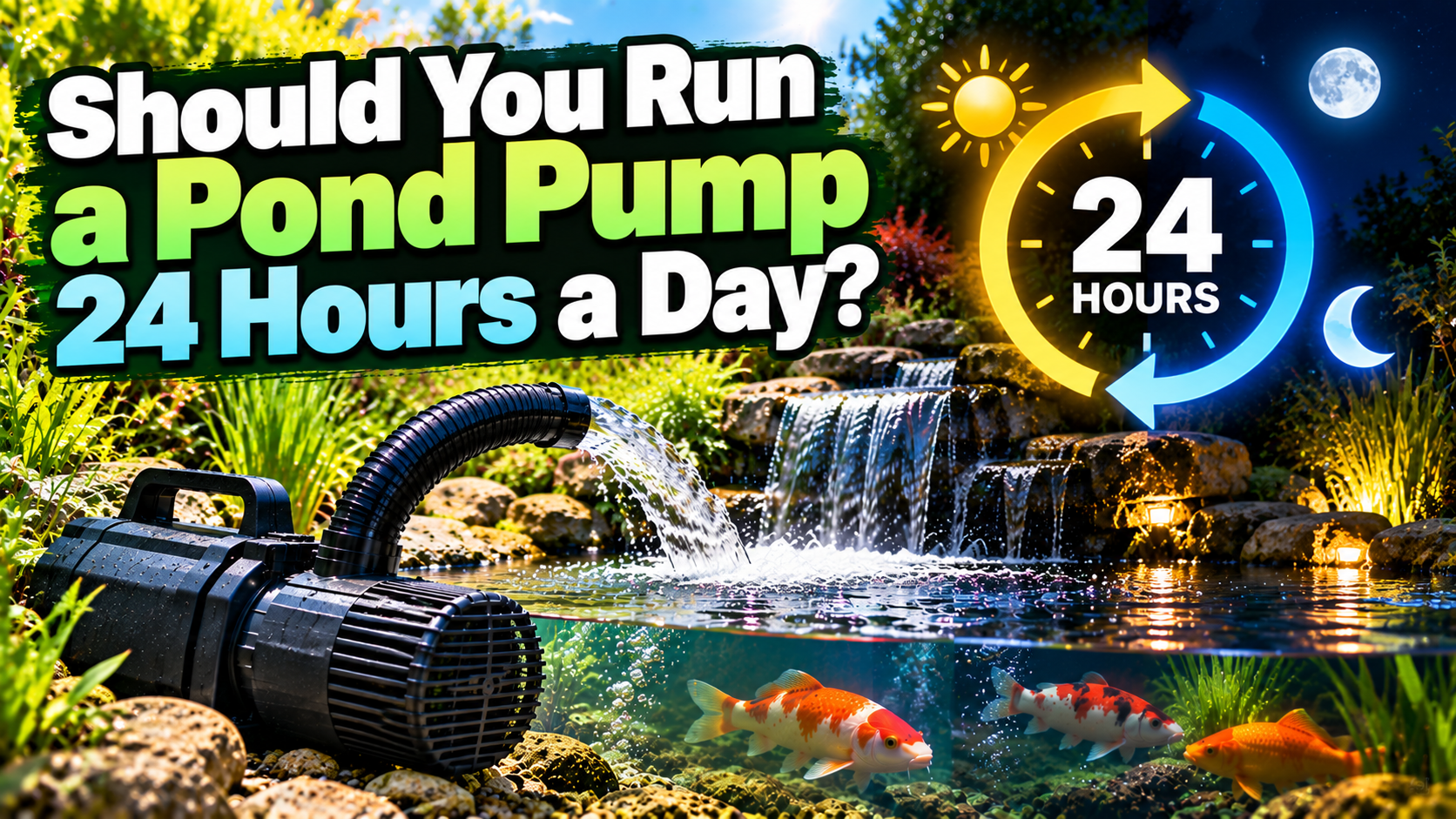
Many pond owners wonder whether their pump should run day and night. The short answer: it depends on what you keep in the pond and what your pump does. Wildlife ponds usually don’t need continuous pumping, whereas ponds with fish—especially koi ponds with heavy stocking—are often designed to run pumps and biological filters throughout the season. This guide explains the reasons, looks at filtration types, covers safety and energy considerations, and gives a simple checklist to help you decide what’s right for your pond.
Quick answer
The short answer: it depends on the pond
No single rule fits every pond. If your priority is supporting wildlife and you have a shallow, planted wildlife pond with few or no fish, a pump is optional and is often used only for decorative features. By contrast, ornamental ponds with fish—and especially koi ponds with high fish biomass—are usually set up with pumps and filters intended to run continuously during the pond season to maintain biological filtration and circulation.
First, decide whether your pond is primarily for wildlife, ornamental display, or fish-keeping. That decision dictates whether continuous running is recommended. If you’re unsure whether you need a filter at all, start with our overview: Do I Need a Pond Filter? (/equipment/do-i-need-a-pond-filter)
Pond types matter
Wildlife, ornamental and fish ponds — why purpose changes the advice
Wildlife ponds are designed for amphibians, invertebrates and plants. They’re typically shallow around the edges, well planted, and usually don't require pumps or filters to meet wildlife objectives. Adding fish to a wildlife pond changes management needs—fish increase nutrient inputs and often require filtration.
Ornamental garden ponds without heavy fish stocks can sometimes use mechanical filtration that may be run intermittently. But once you keep more fish, biological filtration becomes important for transforming fish waste and stabilising water chemistry.
Koi and heavily stocked fish ponds are a different category: manufacturers and experienced keepers treat circulation and biological filtration as continuous systems. If you keep koi, plan for equipment and operation intended to run all season.
Filtration basics
Mechanical vs biological filtration — and why continuous flow matters
Mechanical filters physically remove solids; they begin working as soon as water is pushed through them and, in some setups, can be run intermittently. Biological filters, however, host beneficial bacteria that convert fish waste into less harmful forms. These bacteria form on filter media and rely on a steady flow of water and oxygen to remain effective.
Pond authorities and manufacturers stress that biological filters need continuous flow while the bacteria establish and afterwards. Manufacturers note biological communities can take up to about six weeks to establish; interruptions reduce performance, and the RHS warns the bacterial population “can die if the filter is switched off for 24 hours or more.” For more on the two filter types and how they work, see Mechanical vs Biological Pond Filtration: What’s the Difference? (/equipment/mechanical-vs-biological-pond-filtration)
Fish and water quality
How stocking, oxygen and circulation affect the decision
Fish produce waste and uneaten food that increase the pond's nutrient load. Small ponds with fish can become polluted without adequate filtration and circulation; the Freshwater Habitats Trust warns that fish increase pollution risk in small garden ponds unless you install appropriate filters.
Circulation also helps oxygen exchange at the water surface and distributes heat and dissolved oxygen. In hot weather or where an ice cover persists, running a pump or fountain can improve oxygen levels. For ponds with significant fish stocks, continuous circulation and biological filtration help maintain fish health.
If you plan to keep fish, consult guidance on sizing pump and filter equipment for your pond volume and stocking—starting points include specialist sizing guides such as What size pond pump do I need? (/equipment/what-size-pond-pump-do-i-need) and What size pond filter do I need? (/equipment/what-size-pond-filter-do-i-need).
When to run continuously
Practical rules: when 24/7 running makes sense — and when it doesn’t
Continuous running is commonly recommended for systems that depend on biological filtration and for heavily stocked fish and koi ponds. Manufacturers design those systems to run throughout the pond season (and some models are marketed with frost protection for winter running when specified).
For decorative features such as a fountain or a seasonal waterfall, you can often use a timer and run the feature only when you want it operating. UVC clarifiers, when used as part of a clear-water system, are typically incorporated into systems that manufacturers expect to run continuously — check the product instructions for each unit.
For wildlife ponds or lightly stocked ornamental ponds, intermittent use is usually acceptable. If you’re unsure which approach fits your pond, base the decision on pond purpose, fish load and the type of filtration installed.
Energy, controls and safety
Managing power use safely without compromising biology
Running a pump 24/7 uses more electricity than intermittent operation, but energy-smart pumps and modern controllers can help reduce running costs. Timers and smart controls are useful for decorative pumps and for switching non‑critical features on and off, but don't use them to cycle a biological filter unless the manufacturer explicitly permits it.
Electrical safety is critical. A qualified electrician should install or certify permanent pond electrics and outdoor sockets, and they should include RCD protection and weatherproof fittings. Never attempt fixed wiring unless you are competent and authorised to do so. If you plan winter running, choose frost-rated equipment where the manufacturer specifies it and follow their guidance.
Maintenance and monitoring
Why regular care matters if you run your pump all the time
Continuous systems still need attention. Mechanical media, foam pads and UVC lamps wear and clog; manufacturers recommend servicing and replacing consumables at intervals stated in the product documentation. Worn foams and expired UVC lamps reduce system performance and can negate the benefits of continuous running.
Monitor your pond after commissioning a filter: manufacturers and guidance literature note that biological clarity can take up to about six weeks to establish, so don’t expect instant results. Keep an eye on water clarity, filter condition and pump run indicators. For advice on keeping filters in good order, see How Often Should You Clean a Pond Filter? (/equipment/how-often-clean-pond-filter) And for algae-focused options, consult Do UV Clarifiers Work for Green Pond Water? (/problems/do-uv-clarifiers-work-for-green-pond-water) and How to Clear Green Pond Water (/problems/clear-green-pond-water).
Decision checklist
A simple checklist to decide whether to run your pump 24/7
- Decide the pond’s purpose: wildlife, ornamental or fish/koi. Wildlife ponds rarely need continuous pumps; fish ponds commonly do.
- If you keep fish, size the pump and filter to your pond volume and stocking. Consult manufacturer guidance and sizing tools such as What size pond pump do I need? (/equipment/what-size-pond-pump-do-i-need) and What size pond filter do I need? (/equipment/what-size-pond-filter-do-i-need).
- Identify whether your filter is mechanical or biological. Biological filters generally require continuous flow and can take up to about six weeks to establish; the RHS warns bacteria can be lost if the filter is switched off for 24 hours or more.
- Install electrical supplies safely: use an RCD and a qualified electrician for permanent wiring. Check whether your pump is frost-rated before deciding on winter running.
- Plan a maintenance routine and follow manufacturer service instructions for media and UVC units; monitor water and fish health and adjust as needed.