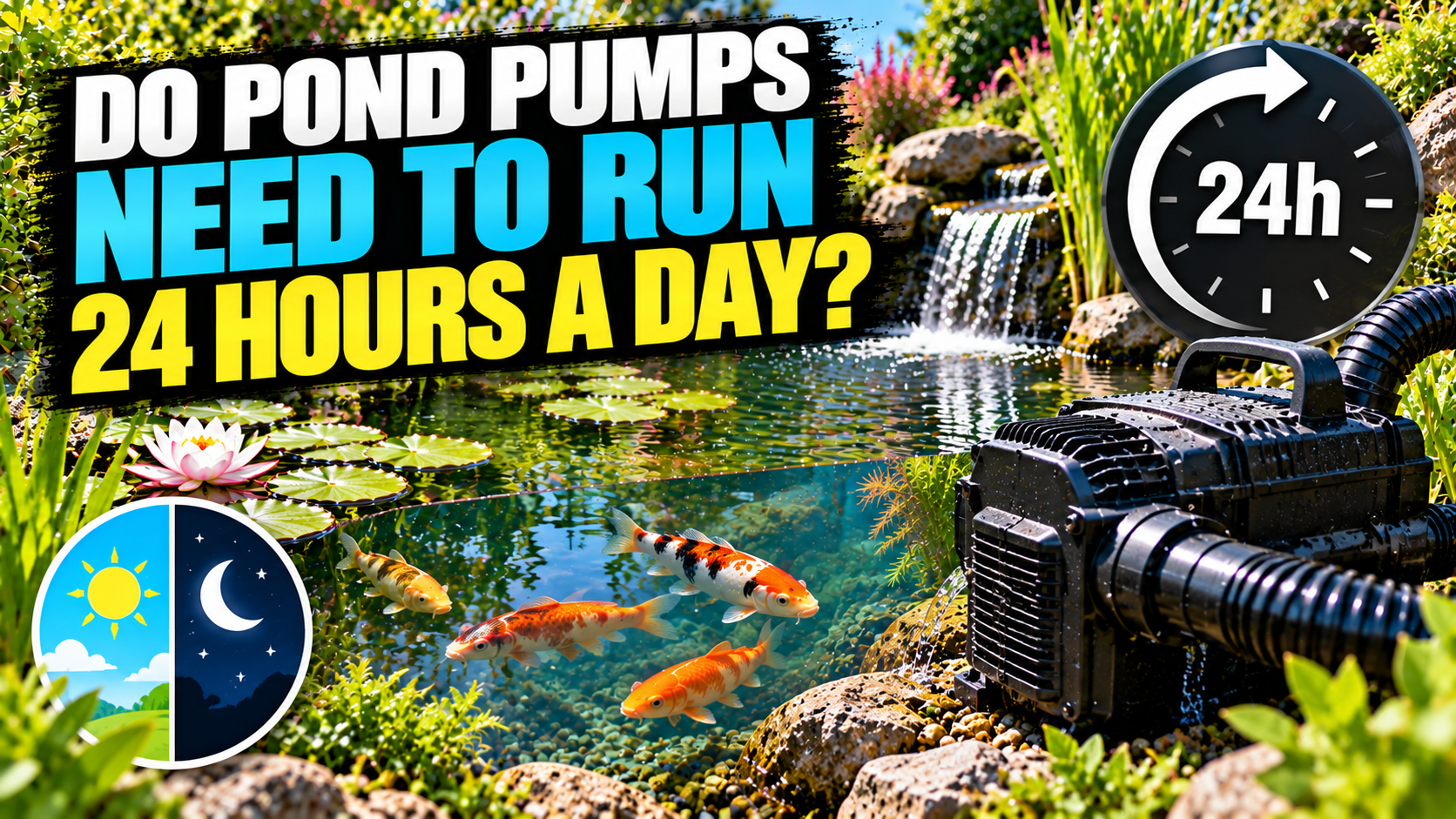
The short answer is: it depends. A pump running 24/7 is commonly recommended for ponds that rely on biological filtration or keep fish, because continuous flow supports the bacteria and devices that keep water safe and clear. For wildlife ponds or lightly stocked ornamental ponds, continuous pumping is often unnecessary and can even be undesirable. This guide explains why, when continuous operation matters, safe ways to use timers, and what to do when you want to switch a pump off.
Straight answer
Do pond pumps need to run all the time?
It depends on what the pond is for. If your pond relies on a biological filter to process fish waste—or you keep koi or many ornamental fish—manufacturers and horticultural bodies recommend running the pump and filter continuously during the pond season. Continuous flow keeps nitrifying bacteria working and ensures devices such as UV clarifiers receive steady throughput.
By contrast, a true wildlife pond (designed for amphibians and insects with few or no fish) usually doesn’t need a pump or filter as standard: natural plant communities, marginal shelves and rainwater can balance the system without constant mechanical intervention.
Pond type matters
Wildlife ponds, ornamental ponds and fish ponds — different needs
Decide first what you want from the pond. A wildlife-focused pond should favour plants, shallow margins, and minimal disturbance; adding a pump or filter is usually not recommended unless you have a specific feature, such as a display waterfall, or need to maintain open water when the surface stays frozen for several days.
Ornamental garden ponds with few or no fish can often get by with intermittent circulation for decorative features or light mechanical filtration. But once you add fish, you introduce a steady nutrient load from faeces and uneaten food. Most guidance for fish ponds recommends a filter and pump to manage that waste and help avoid algae and water-quality problems.
Heavily stocked ponds and koi ponds are the most demanding: they normally require robust filtration and pumps sized and matched to run continuously so the biological filtration can cope with higher waste levels.
How filters work
Mechanical vs biological filtration — why runtime differs
Mechanical filtration physically removes solids such as leaves, debris and silt. It starts working as soon as the pump runs and can be used intermittently if you accept variable performance.
Biological filtration depends on colonies of nitrifying bacteria living on filter media to convert ammonia and nitrite into less harmful forms. Horticultural guidance notes the bacterial population typically takes around six weeks to establish, and it performs best with continuous water flow. Stopping a biological filter for extended periods risks reducing or killing that colony — horticultural guidance warns bacteria can die if a filter is switched off for 24 hours or more.
Because of that difference, systems that rely on biological filtration are usually intended to run 24/7 during the pond season, whereas purely mechanical setups are more flexible.
Algae and UVC
UV clarifiers and algae control need steady flow
An ultraviolet clarifier needs a steady flow of pond water through the unit to treat suspended algae effectively. Manufacturers design UVC systems to operate while the pump runs, so intermittent operation reduces their efficiency. The same applies to combined systems that pair mechanical and biological media with UVC: they are intended for continuous use to deliver consistent results.
Controlling algae usually requires reducing nutrient inputs (fish numbers, feeding, run-off) and encouraging plant growth and shade as well as mechanical or UV measures.
Practical controls
When timers and intermittent running are acceptable
Not all pond equipment must run continuously. Decorative fountains or show pumps that only power a display can be run on a timer — they do not support critical biological processes and are often shut off overnight to save energy or reduce noise.
Similarly, mechanical-only filters for very lightly stocked ornamental ponds can be operated intermittently. But if you have biological media, a UVC clarifier or a significant fish stock, timers that switch the system off for long periods are a poor choice. Many manufacturers offer systems and controllers designed for continuous operation; others supply specialist controllers that let you combine continuous filtration with timed features.
Safety first
Electrical safety and professional installation
Any electrical installation for a pond pump, lighting or filter should be carried out by a qualified electrician. Outdoor equipment must be correctly rated and protected by a residual-current device (RCD) or equivalent safety device. Cables should be routed and secured to prevent trips and weather damage, and all components should be rated for outdoor/pond use.
Do not attempt complex rewiring, electrical modifications or waterproofing yourself if you are not qualified. Manufacturers’ instructions and a professional installer will also advise on locating equipment to minimise risks and facilitate maintenance.
Starting and stopping
Commissioning a new filter and what happens if you stop it
When you install a new biological filter, allow time for the bacterial colony to mature. Manufacturer and horticultural guidance notes this maturation can take up to six weeks; continuous operation during commissioning gives the best chance of a stable biological population.
If you must stop a biologically active filter for maintenance or winterising, do so carefully. Short interruptions are sometimes unavoidable, but long gaps (for example, 24 hours or more) can weaken or kill the filter biology. If you shut systems down for winter, follow the manufacturer’s and horticultural guidance on how to stop and restart so you do not lose biological function.
Keep up regular maintenance too — clean mechanical media, replace or service UV lamps at recommended intervals, and check pump performance — because a well-maintained system needs less emergency intervention.
Reduce demand before you add power
Ways to lower the need for continuous running
If you want to avoid running a pump full-time, design and management choices can reduce the workload: choose appropriate stocking levels and species, avoid overfeeding, plant freely (marginals and oxygenators) and provide shade. These steps reduce nutrient loads and algal pressure.
If you’re unsure how many fish are appropriate for your pond, see our guide on stocking levels: How Many Fish Can I Put in My Pond?. For options to increase oxygen without running a large pump continuously, see: How to Oxygenate a Pond: 7 Ways. For signs that fish are struggling with oxygen or water-quality problems, see: Why Are My Pond Fish Gasping at the Surface?
Other useful pages that help match equipment to your needs include guides to choosing a pump size (What Size Pond Pump Do I Need?) and troubleshooting green water or blanket weed (Why Is My Pond Water Green? and How to Get Rid of Blanket Weed in a Pond).
Quick checklist
Decide what’s right for your pond — a simple checklist
- Identify the pond’s purpose: wildlife, ornamental with few fish, general fish pond, or koi/heavily stocked.
- If you keep fish (especially koi or many fish): plan for a pump and biological filter designed to run continuously during the season.
- For wildlife ponds with no fish: avoid automatic pumping unless you have a specific feature or winter-ice concerns.
- Use timers for decorative features, not for biological filters or UVC units that need steady flow.
- Arrange qualified electrical installation and follow manufacturers’ maintenance schedules so continuous-running equipment performs reliably.
PONDSTUFF PICKS
Recommended Pond Products
Products relevant to this guide that may help with the job.

POPOSOAP 8W Solar Pond Pump with Battery Backup 3600mAh for Pond Bird Bath

POPOSOAP 100W Solar Pond Pump with 4500L/h Water Flow for Water Garden

POPOSOAP 20W Solar Pond Pump 320GPH Dry-Run Protection Quiet Pump for Pond
PondStuff may earn a commission from qualifying purchases at no additional cost to you. Prices and availability can change. Read our affiliate disclosure.