POND FISH GUIDE
White Cloud Goldfish
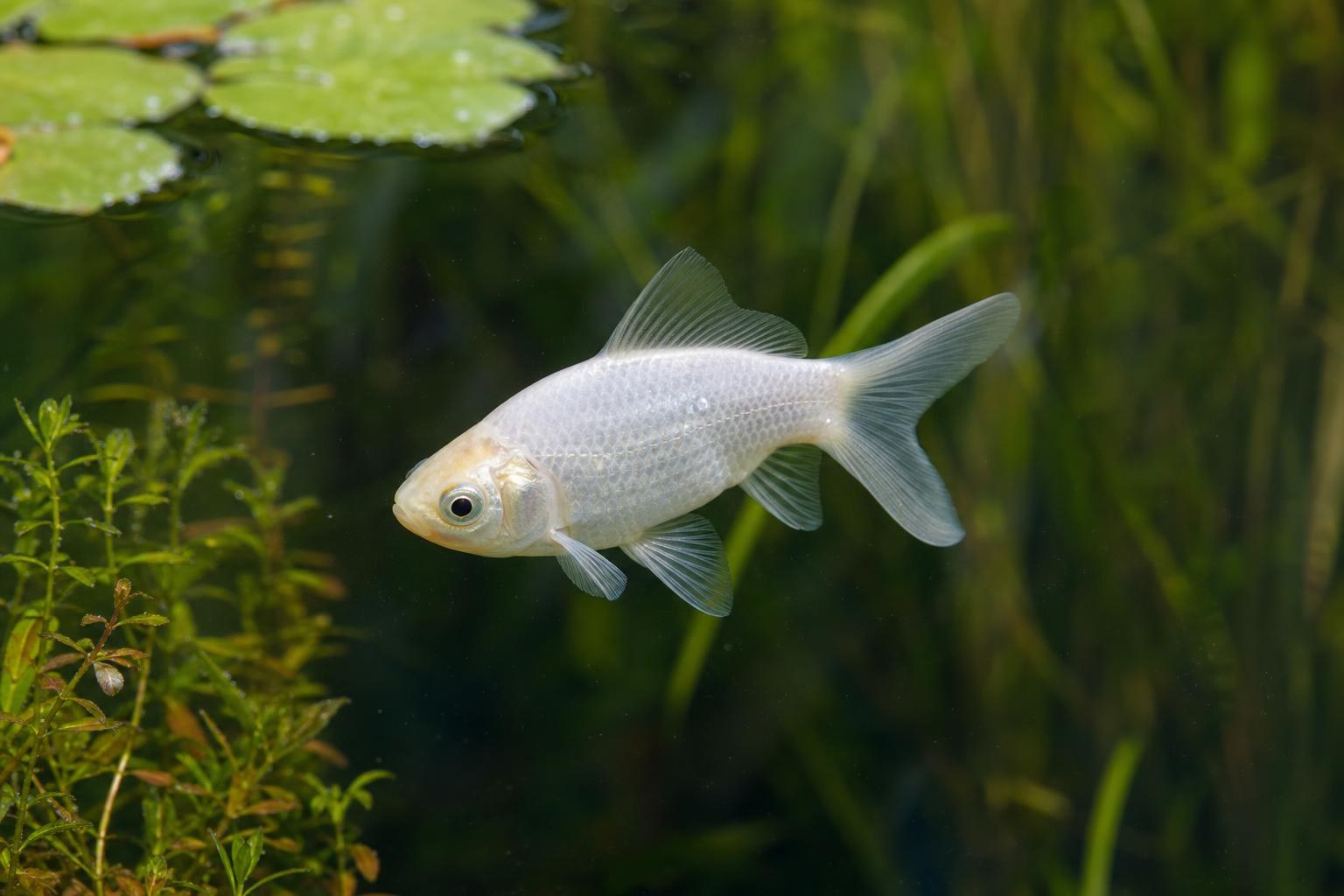
The name ‘White Cloud Goldfish’ is unresolved in trade sources — it may be a colour variety of goldfish (Carassius auratus) or a mis‑labelled White Cloud Mountain Minnow (Tanichthys albonubes). Verify with the seller.
At a glance
- Suitable for small ponds
- No
- Suitable for wildlife ponds
- No
About White Cloud Goldfish
“White Cloud Goldfish” is not a clearly documented catalogue name on the trade sites consulted. There are two plausible possibilities: (A) it is a white‑coloured variety or strain of goldfish (Carassius auratus), or (B) the name is a mis‑label for the White Cloud Mountain Minnow (Tanichthys albonubes), a different species commonly sold alongside goldfish. You must ask the supplier for the scientific name or a clear photo before assuming care requirements. If it is a goldfish (Carassius auratus): expect a temperate pond fish that can reach a wide range of adult sizes (trade guidance commonly cites typical adult ranges of c. 12–30 cm for many forms, with single‑tailed pond types sometimes larger and very large specimens reported). Goldfish are omnivorous, social and generally peaceful but produce large amounts of waste, so good filtration, regular maintenance and adequate water volume are essential. Practical pond guidance suggests providing a deeper area (many garden‑pond guides cite deepest areas around 45 cm as a typical practical depth) and winter refuges, maintaining oxygenation through pumps/fountains where possible and reducing/stopping feeding as temperatures fall (many goldfish care pages reference a rough lower feeding threshold around 10 °C). Goldfish are non‑native in the UK and can establish feral populations; do not release pond fish into the wild. You do not need a licence simply to keep goldfish, but it is an offence to introduce non‑native fish into the wild without authorisation — check GOV.UK and consult regulators if unsure. If it is a White Cloud Mountain Minnow (Tanichthys albonubes): this is a small shoaling minnow that rarely exceeds about 5 cm and is often kept in small, unheated aquaria; recommended parameters cited are narrower (around 17–23 °C). They are peaceful but can be eaten by larger goldfish. Practical next steps: request the scientific name and clear images from the seller. Plan stocking and filtration to the adult size of the confirmed species (trade rule‑of‑thumb examples exist, e.g. c. 25 cm total fish length per 455 L as a general stocking reference). If the pond is intended for wildlife, do not add fish.
Diet
Omnivorous
Compatibility
If a goldfish (Carassius auratus): generally peaceful with other temperate, robust pond fish of similar size but may outcompete or eat very small species and produce high waste. If a White Cloud Mountain Minnow (Tanichthys albonubes): a shoaling, peaceful small fish best kept in groups and can be eaten by large goldfish — avoid mixing with large pond goldfish.
Care notes
Verify species first. For goldfish: provide strong filtration and regular maintenance, a deeper winter refuge area, good oxygenation, and adjust feeding for cooler temperatures (use lower‑protein winter foods and stop feeding when fish stop feeding). Follow practical stocking guidance (examples include c. 25 cm total fish length per 455 L) and plan for adult size. For White Cloud Mountain Minnow: maintain appropriate temperature range (sources cite c. 17–23 °C) and keep in shoals. Do not add fish to ponds intended for wildlife. Do not release fish into the wild; consult GOV.UK/Environment Agency or Fish Health Inspectorate for legal/regulatory questions.