POND FISH GUIDE
Weather loach
Misgurnus anguillicaudatus
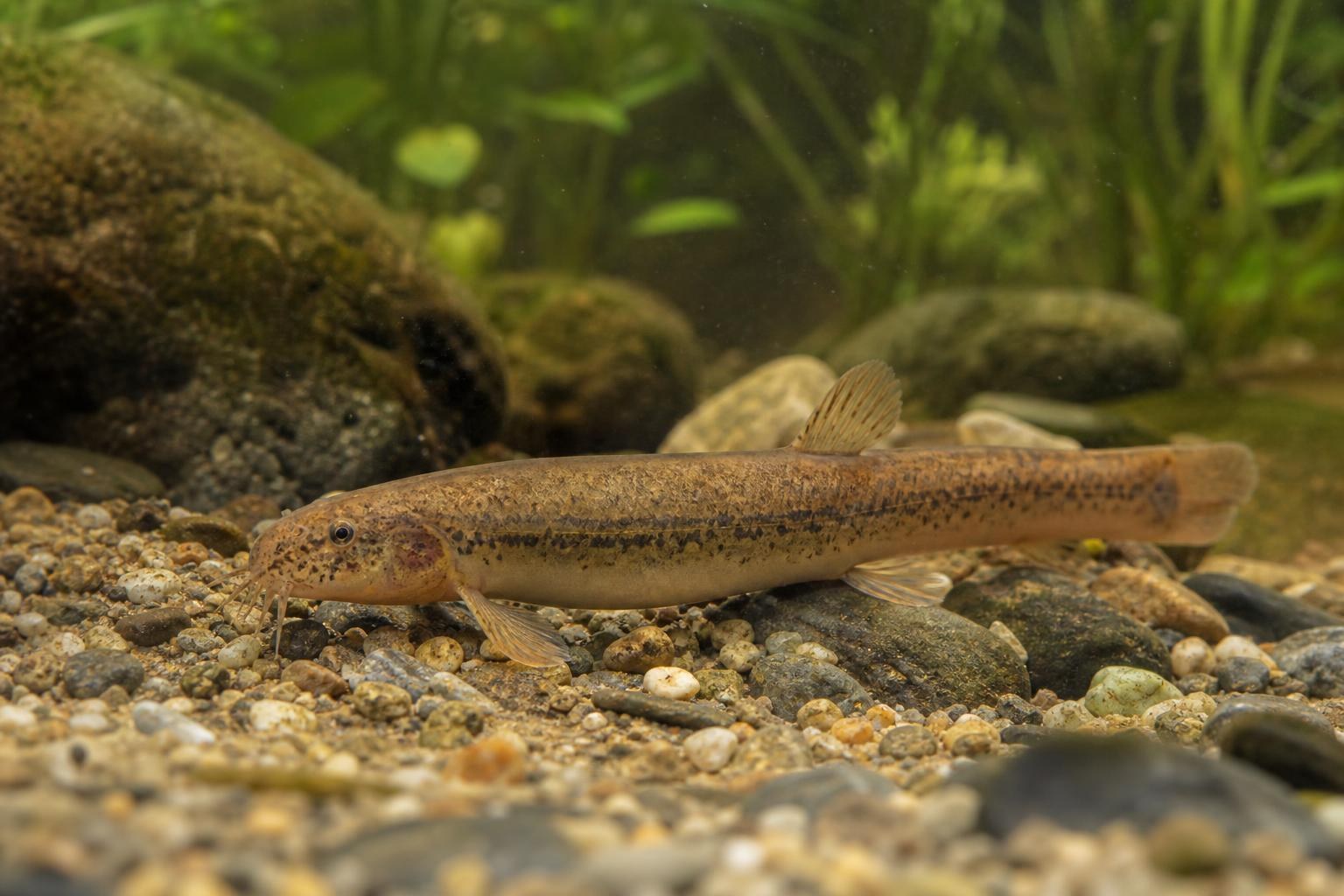
The weather loach (Misgurnus anguillicaudatus) is an Asian dojo loach commonly sold in the trade. Grows to about 25 cm, is a social, bottom‑dwelling omnivore and tolerates a wide temperature and low‑oxygen range. In the UK it is a non‑native taxon with documented garden‑pond records and legal/biosecurity implications — do not release ornamental fish into the wild.
At a glance
- Maximum length
- Up to 25 cm
- Temperature range
- 2–30°C
- Suitable for small ponds
- No
- Suitable for wildlife ponds
- No
About Weather loach
The weather loach (Misgurnus anguillicaudatus) is a bottom‑living, omnivorous loach often sold as ‘dojo’ or ‘oriental/chinese weather loach’. Adults are reported to reach roughly 25 cm total length. They are social fish that do best in groups (OATA trade guidance recommends at least 3–4 individuals) and are generally described as peaceful and compatible with coolwater community species, for example goldfish, when conditions suit all stock. Ecology and tolerance: wild records show a broad tolerance for temperature and oxygen: wild tolerance limits are cited at about 2–30 °C and the species can tolerate low dissolved oxygen by gulping air and burying in soft sediments. This hardiness helps explain why released animals can persist in temperate ponds and why at least one small garden‑pond population in the UK required eradication. Husbandry notes: trade care sheets recommend aquarium temperatures of roughly 17–24 °C and list them as relatively easy to keep with routine maintenance. Provide soft substrate and avoid very sharp or abrasive decor — weather loaches may bury and have sensitive skin. Keep water quality high: ammonia and nitrite should be zero and nitrate low; regular partial water changes are advised. Diet is omnivorous and benthic invertebrate‑oriented in the wild; in captivity they readily accept sinking catfish pellets and will take small live or frozen foods (daphnia, bloodworm, tubifex). Legal and biosecurity considerations: Natural England’s review treats M. anguillicaudatus as a non‑native concern in England and notes quarantine/listing under the Import of Live Fish Act 1980. GOV.UK guidance exists for licences to keep or introduce certain non‑native fish — check licensing and never release ornamental fish into wild waterways. Identification in trade can be uncertain; specialist ID or genetic testing is the reliable method to distinguish M. anguillicaudatus from related Misgurnus species. Unknowns: approved sources do not specify a safe minimum pond volume or depth that prevents establishment; if keeping them outdoors you must consider biosecurity and legal requirements (and avoid any release).
Diet
Omnivorous — benthic invertebrates in the wild; accepts sinking pellets and small live/frozen foods
Temperament
Generally peaceful and social
Compatibility
Trade guidance reports good compatibility with most coolwater community fish (e.g., goldfish) when stocked appropriately. They are social and do best in small groups (OATA recommends groups of at least 3–4). Compatibility depends on species, fish sizes and site conditions.
Care notes
Keep in groups; provide soft, non‑abrasive substrate and avoid sharp ornamentation. Maintain good water quality — ammonia and nitrite zero, low nitrates — and perform regular partial water changes. Recommended aquarium temperature c. 17–24 °C (trade guidance); wild tolerance cited ~2–30 °C. Feed sinking pellets and supplement with frozen/live foods. Aquarium guidance suggests roughly 120 L for a small group (this is aquarium guidance, not a pond minimum). For outdoor keeping, manage biosecurity to avoid escapes, check licensing requirements under relevant legislation and never release ornamental fish into the wild.