POND FISH GUIDE
Wakin Goldfish
Carassius auratus
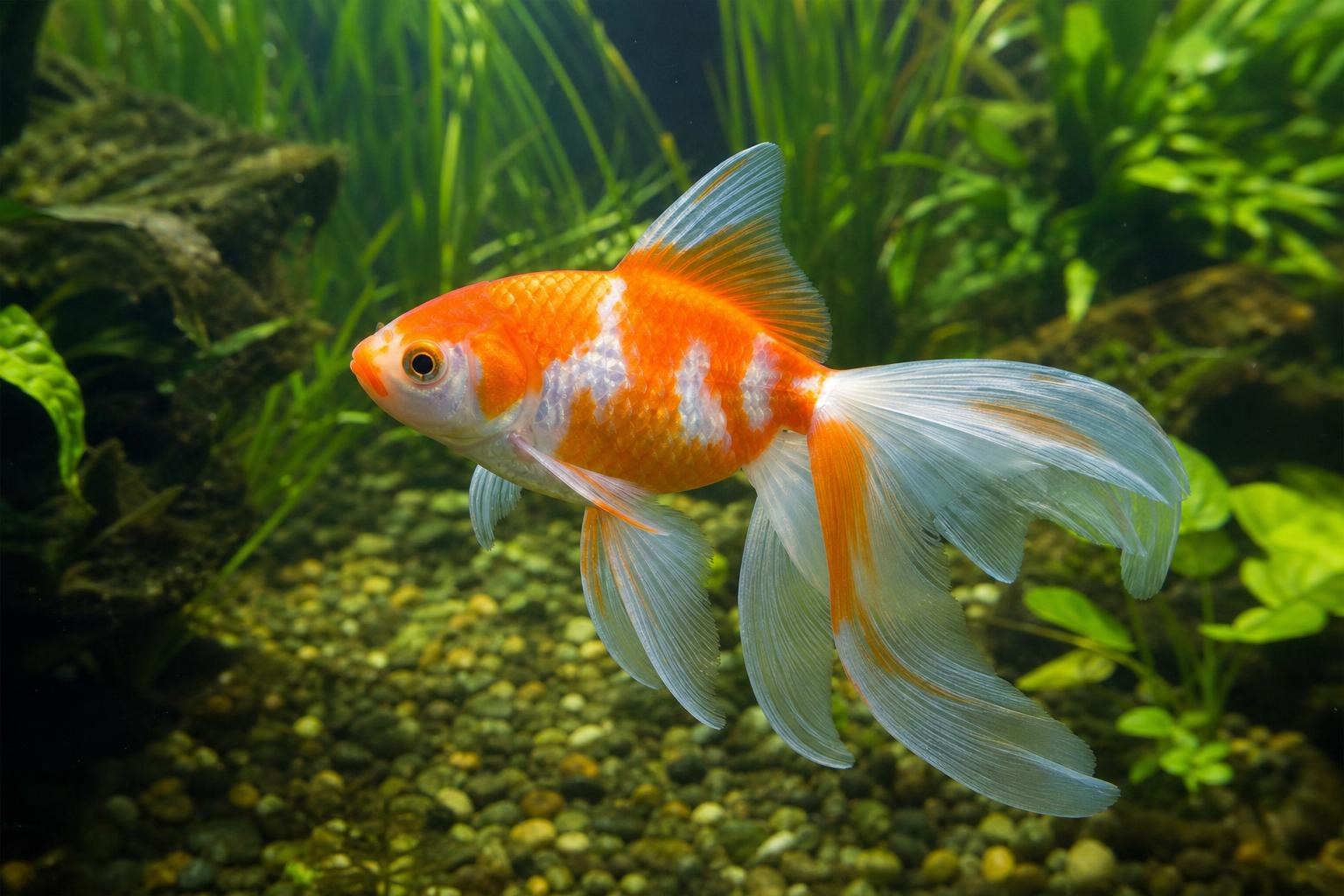
The Wakin is a Japanese-bred, double‑tailed variety of goldfish (Carassius auratus) with a relatively streamlined ‘pond’ body. Treat it like other pond‑hardy goldfish: provide good filtration, a deep, well‑planted pond (c.45–60 cm+, OATA prefers 60 cm), seasonal feeding and winter aeration. Do not release into the wild.
At a glance
- Maximum length
- Up to 25 cm
- Minimum pond depth
- 60 cm
- Temperature range
- 4–25°C
- Care level
- moderate
- Suitable for small ponds
- Yes
- Suitable for wildlife ponds
- No
About Wakin Goldfish
The Wakin is a named variety of Carassius auratus developed in Japan. Unlike very deep‑bodied fancy goldfish, Wakins have a double tail but a more standard, streamlined pond body and are handled in the trade as a pond‑type goldfish. Care should follow generic goldfish guidance rather than any Wakin‑specific rules. Pond design and water quality are the main considerations. Industry guidance recommends ponds with a thermally stable zone — typically around 45–60 cm deep, with OATA advising it is best to choose a pond at least 60 cm deep. Adequate filtration sized for the biomass is essential because goldfish are ‘messy’ feeders and produce a lot of waste. Provide planted and shaded areas to help oxygen and nutrient control but expect Wakins and other goldfish to forage and disturb some vegetation and substrate. Temperatures acceptable for goldfish generally run from about 4 °C up to around 24–25 °C; seasonal feeding should be reduced or stopped as temperatures fall below the fish’s digestion threshold. Diet is omnivorous and opportunistic: adults are routinely fed commercial goldfish foods (flakes, floating or sinking pellets/sticks) with higher‑protein fry foods used for juveniles. Stocking and biosecurity: avoid overstocking and match filtration to fish biomass. For aquarium guidance, OATA gives a practical benchmark of about 100 L for one adult goldfish plus ~50 L per additional adult; pond guidance is less prescriptive but the same principle applies. Quarantine new fish and follow retailer/OATA biosecurity advice. Wakins are relatively cold tolerant and can overwinter outdoors if the pond has some open water/oxygenation (pump, fountain or de‑icer) and sufficient depth; small, shallow features are often unsuitable for year‑round keeping. Conservation/legal note: goldfish are non‑native in Great Britain. You do not need an ILFA licence to keep goldfish privately, but releasing ornamental fish into the wild is strongly discouraged and may have legal and welfare consequences. Wakins are best kept in ornamental garden ponds where impacts on wildlife can be managed.
Diet
Omnivore — commercial goldfish foods (flakes, floating/sinking pellets/sticks); opportunistic forager
Temperament
Generally peaceful and social with other goldfish; bottom‑foraging and likely to disturb plants/substrate
Compatibility
Compatible with other pond‑hardy goldfish varieties (shubunkins, sarasas, canaries) and many non‑predatory pond cyprinids when space and filtration are adequate. Not appropriate for wildlife‑priority ponds where native invertebrates, amphibians or rare fish are the focus.
Care notes
Provide a pond with good depth (OATA recommends at least 60 cm), robust filtration sized to the fish biomass, planted/shaded areas, and regular water testing (keep ammonia and nitrite at zero, nitrates low). Feed commercial goldfish foods and reduce feeding in cold months. Quarantine new fish and maintain winter aeration/open water (pump, fountain or de‑icer) for overwinter survival. Avoid overstocking; use aquarium benchmarks (e.g. 100 L for one adult +50 L per additional adult) as a rough guide for biomass planning.