POND FISH GUIDE
Three-spined stickleback
Gasterosteus aculeatus
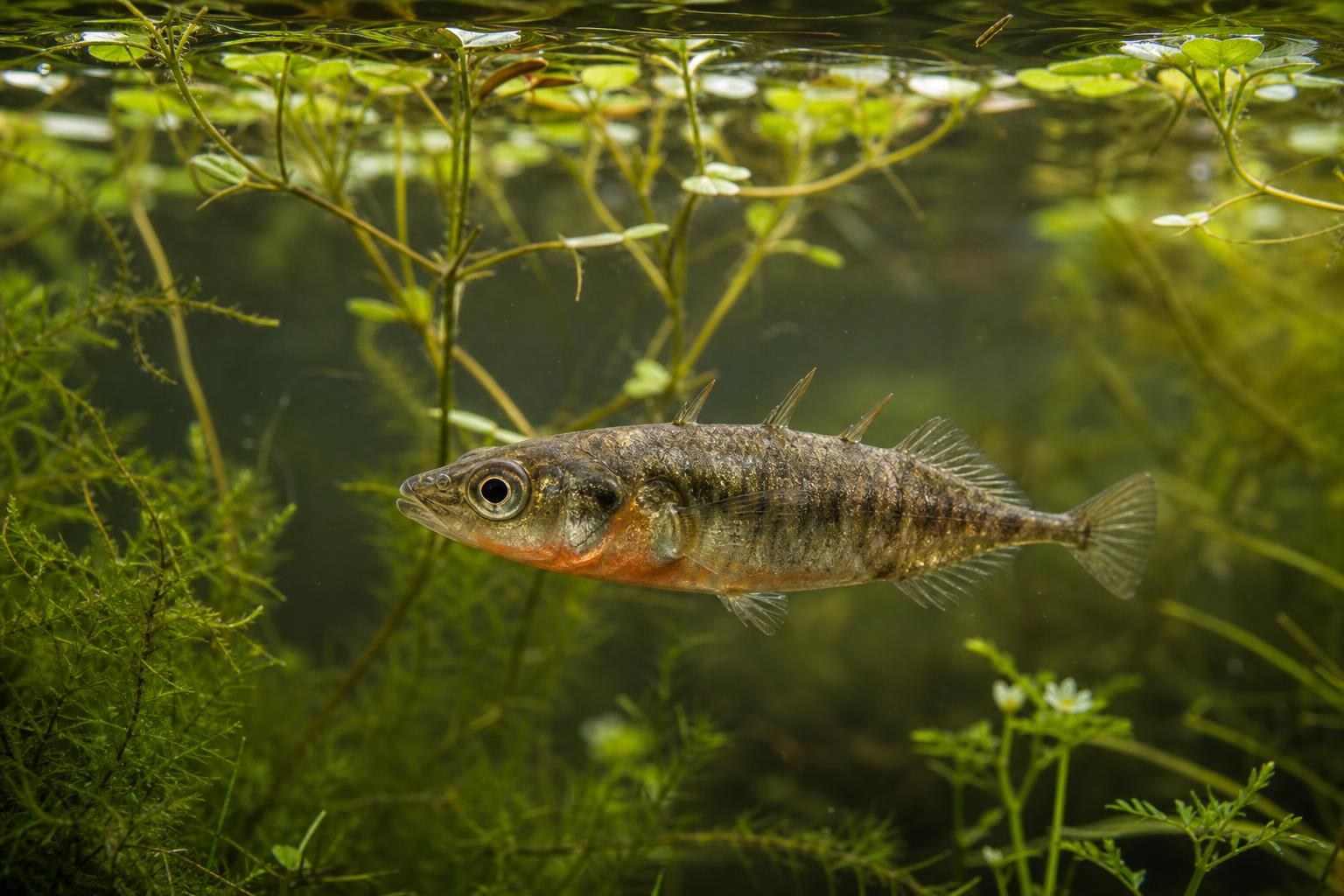
A small native UK freshwater fish (typically 4–7 cm) that readily occupies tiny, planted ponds. Feisty micro-predator: gregarious outside breeding but territorial when spawning. Needs vegetation, some water movement or aeration and basic pond care; can predate amphibian eggs and larvae so may be unsuitable where amphibian breeding is a priority.
At a glance
- Maximum length
- Up to 7 cm
- Temperature range
- 4–20°C
- Suitable for small ponds
- Yes
- Suitable for wildlife ponds
- No
About Three-spined stickleback
The three‑spined stickleback (Gasterosteus aculeatus) is a small, native UK freshwater fish commonly found in streams, ditches and garden ponds. Freshwater/resident adults are typically around 4–7 cm long (anadromous/migratory populations can reach larger sizes, reported up to about 11 cm). They are one of the species most likely to occupy very small or “tiny” planted pools and garden ponds. Diet and behaviour: sticklebacks are micro‑predators, feeding on small crustaceans (for example daphnia), insect larvae (including mosquito larvae), and, in larger individuals, benthic invertebrates and occasionally eggs or larvae of amphibians and fishes. They are gregarious outside the breeding season but become territorial and feisty when spawning; males defend nests vigorously. Pond care notes: provide abundant aquatic and marginal vegetation for cover and nesting substrate. Avoid still, poorly oxygenated conditions in heavily planted small ponds — sticklebacks are noted as sensitive to low oxygen and benefit from gentle filtration, some water movement or aeration. Feed natural prey available in the pond or supplement with suitable small frozen/live foods if needed. They are hardy across typical UK temperatures; a practical guidance range used in captive care is about 4–20 °C. Suitability and compatibility: they are suitable for small, planted ponds but may be undesirable in wildlife ponds where the aim is to support breeding amphibians or vulnerable invertebrate populations, because sticklebacks will prey on eggs and larvae. Keep them in groups rather than singly, and avoid mixing with much larger fish that would eat them. Gaps and cautions: authoritative numeric minimum pond volume, minimum depth, stocking densities and specific oxygen thresholds were not found in the consulted sources. The species is native and widespread in the UK, but if you plan to move or introduce fish locally, check any relevant local regulations or statutory guidance.
Diet
Small crustaceans (e.g. daphnia), insect larvae, benthic invertebrates; larger individuals may take tadpoles, fish eggs/larvae.
Temperament
Gregarious outside breeding; males territorial and feisty during spawning; a small, assertive micro‑predator.
Compatibility
Keep in groups; avoid mixing with larger fish that will eat sticklebacks. Not recommended where you want to encourage amphibian breeding because they prey on eggs and larvae.
Care notes
Provide lots of aquatic and marginal plants for cover and nesting. Ensure gentle water movement or aeration and basic filtration to avoid low-oxygen conditions in small, heavily vegetated ponds. Allow natural invertebrate prey or supplement diet with small frozen/live foods. No authoritative numeric stocking or minimum pond size/depth found in sources.