POND FISH GUIDE
Tancho Koi
Cyprinus carpio
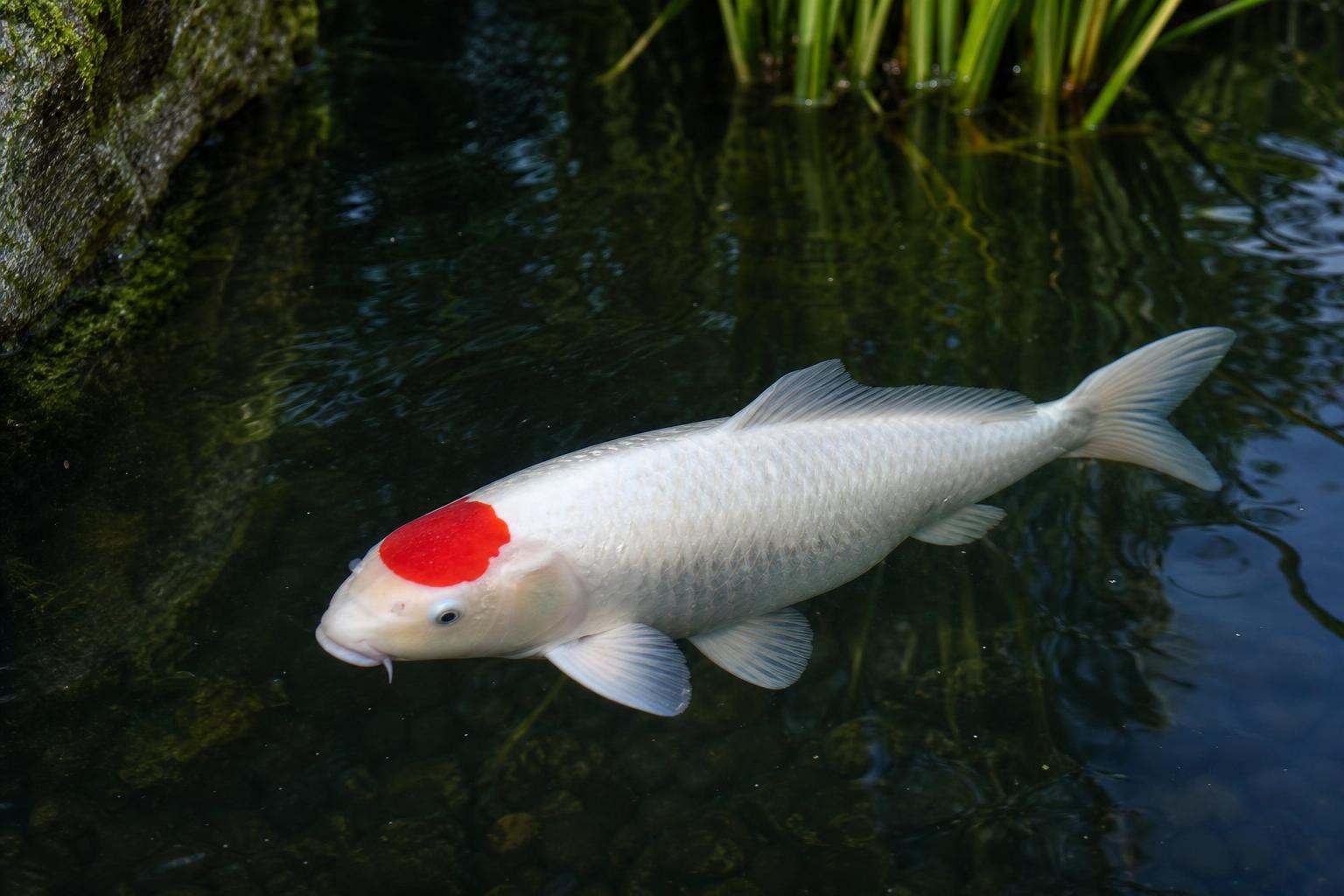
Tancho is a named colour/pattern variety of ornamental koi (Cyprinus carpio) characterised by a single red head spot. Treat Tancho the same as other koi for pond planning: large, deep ponds, robust filtration and careful biosecurity are required.
At a glance
- Maximum length
- Up to 75 cm
- Minimum pond volume
- 4,500 litres
- Minimum pond depth
- 90 cm
- Temperature range
- 4–24°C
- Suitable for small ponds
- No
- Suitable for wildlife ponds
- No
About Tancho Koi
The term Tancho refers to a colour/pattern form of ornamental koi rather than a separate species. Tancho koi are Cyprinus carpio with the distinctive single red mark on the head; UK legislation and industry sources treat all koi varieties as ornamental forms of common carp. Because Tancho denotes pattern only, there is no evidence that they differ biologically from other koi in size, temperature tolerance or oxygen needs. Pond owners should plan for Tancho as they would for other koi. Trade and OATA guidance recommend substantial pond volume and depth for koi — commonly quoted industry minima are around 4,500 litres and depths preferably over 90 cm (many sources advise deeper, for example ~1.2 m, for better temperature stability). Koi kept in ponds often reach large sizes in good conditions (trade sources frequently cite up to about 75 cm for ornamental koi, with wild carp reported larger), so stocking should reflect potential adult size. Koi are omnivorous bottom feeders: they graze on plants and algae and will take invertebrates and small animals while rooting in sediment. Behaviourally they can stir up silt, damage submerged plants and may stress or prey on amphibian larvae. They are robust fish but require stable water quality, good mechanical and biological filtration, pumps/circulation, aeration and often UV to control algae. Regular testing for ammonia, nitrite, nitrate and pH is advised. Tancho/koi are not recommended for small garden ponds or wildlife ponds intended to support native biodiversity; conservation sources warn carp damage habitat quality, reduce macrophytes, and prey on amphibian larvae. Compatibility is best with other large, robust pond fishes in appropriately large, well‑filtered systems. Follow current GOV.UK and industry advice on biosecurity and disease (for example koi herpesvirus) before buying or moving koi, and follow wintering recommendations such as reduced feeding, maintaining oxygen/circulation and avoiding large swings in water quality.
Diet
Omnivore — plants, algae, benthic invertebrates and sometimes small animals; bottom‑feeding/rooting behaviour.
Temperament
Robust but rooting/grazing; can resuspend sediment, damage submerged plants and dominate or stress smaller pond inhabitants; may be more aggressive during breeding.
Compatibility
Compatible with other large, robust pond fish in spacious, well‑filtered ponds. Not suitable with small fish, amphibians or delicate submersed plants due to rooting behaviour, predation risk and potential for habitat damage. There are also hybridisation and disease risks to consider.
Care notes
Provide generous pond volume and depth, strong mechanical and biological filtration, adequate pump circulation, aeration and consider UV filtration. Monitor water chemistry (ammonia, nitrite, nitrate, pH). Avoid overstocking, acclimatise new fish and follow OATA/industry biosecurity advice. For winter, reduce/stop feeding as metabolism slows, maintain oxygen/circulation and keep a hole in ice or run an aerator/fountain if possible. Check current GOV.UK disease guidance before buying or moving koi.