POND FISH GUIDE
Sterlet
Acipenser ruthenus
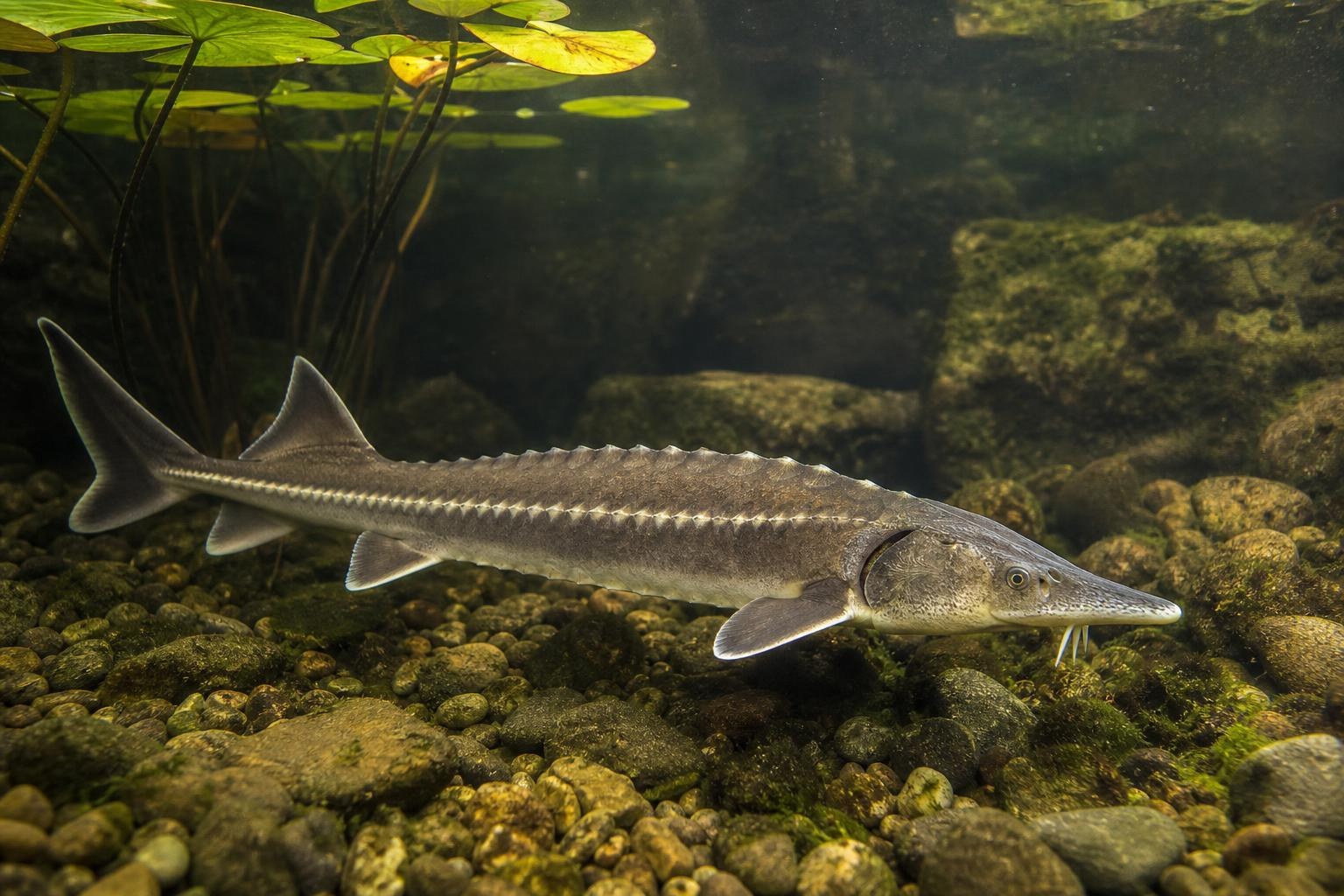
A small sturgeon species (grown to about 1 m) suited only to large, deep, well‑filtered UK garden ponds. Requires sinking high‑protein food, strong oxygenation and careful legal/stocking controls.
At a glance
- Maximum length
- Up to 100 cm
- Minimum pond depth
- 90 cm
- Suitable for small ponds
- No
- Suitable for wildlife ponds
- No
About Sterlet
The sterlet (Acipenser ruthenus) is the smallest commonly kept sturgeon and is reported to grow to about 1 m as an adult. It is a benthic feeder in the wild, eating insect larvae, small molluscs, worms and fish eggs, and in captivity does best on high‑protein, fast‑sinking pellets formulated for sterlet/sturgeon. As constant swimmers with a clumsy, less manoeuvrable swimming style, sterlet suit large, spacious “koi‑style” ponds rather than small or shallow features. Practical keeping notes for UK pond owners: trade guidance describes a working minimum pond depth of around 3 ft (≈0.9 m) as a practical starting point, and repeatedly stresses that sterlet need large volume, deep water, robust biological filtration and good water turnover. Sterlet have relatively high oxygen demands compared with many carp‑family pond fish, so reliable aeration (especially in warm weather), and attention to oxygenation and filtration capacity are essential. A flattened bottom helps feeding behaviour because they are bottom feeders. Long filamentous algae and blanketweed should be controlled: sterlet are less manoeuvrable and can become entangled, and heavy blanketweed also interferes with feeding. Temperature and reproduction: an authoritative summary gives an optimum reproduction range of about 12–17 °C. Approved sources do not provide absolute minimum or maximum thermal tolerances for garden‑pond keepers, so treat specific survival/overwintering limits as unknown and seek specialist or official guidance for seasonal care. Compatibility and stocking: sterlet can be housed with other large coldwater pond species (for example koi or common carp) if pond volume, filtration, oxygenation and feeding regimes are adequate. They may be outcompeted for food by hungry carp unless sinking pellets and feeding management are used. Plan stocking with adult size and welfare in mind. Legal and sourcing points: UK guidance allows keeping sturgeon in private garden ponds under the gov.uk definition (discrete bodies no bigger than an acre) without an ILFA licence, but importing live fish requires authorisation and health certification from the Fish Health Inspectorate/Cefas. Prevent escape, check paperwork and be aware of hybridisation and disease risks when sourcing sterlet.
Diet
Benthic diet in the wild (insect larvae, small molluscs, annelids, fish eggs); in captivity feed high‑protein, fast‑sinking pellets/sticks formulated for sterlet/sturgeon.
Temperament
Constant swimmers; generally non‑aggressive but relatively clumsy and less manoeuvrable than carp; bottom‑feeding behaviour.
Compatibility
Can be kept with other large coldwater pond fish (e.g. koi, common carp) provided space, filtration and oxygenation are sufficient. May be outcompeted for food by hungry carp unless sinking pellets and feeding management are used. Avoid very boisterous tankmates and heavy filamentous blanketweed that can entangle or harm sterlet.
Care notes
Keep in a large, deep (koi‑style) pond with robust biological filtration and good water turnover. Provide high‑protein, fast‑sinking pellets sized for fish size; a flattened bottom aids feeding. Ensure strong aeration, particularly in warm weather, and control long filamentous algae/blanketweed. Do not rely on catalogue ‘pond size’ claims—plan stocking for adult size, filtration and oxygenation. Specific overwintering practice and absolute thermal limits are not established in the approved sources; consult a specialist or the Fish Health Inspectorate for detailed seasonal/health guidance.