POND FISH GUIDE
Shubunkin
Carassius auratus
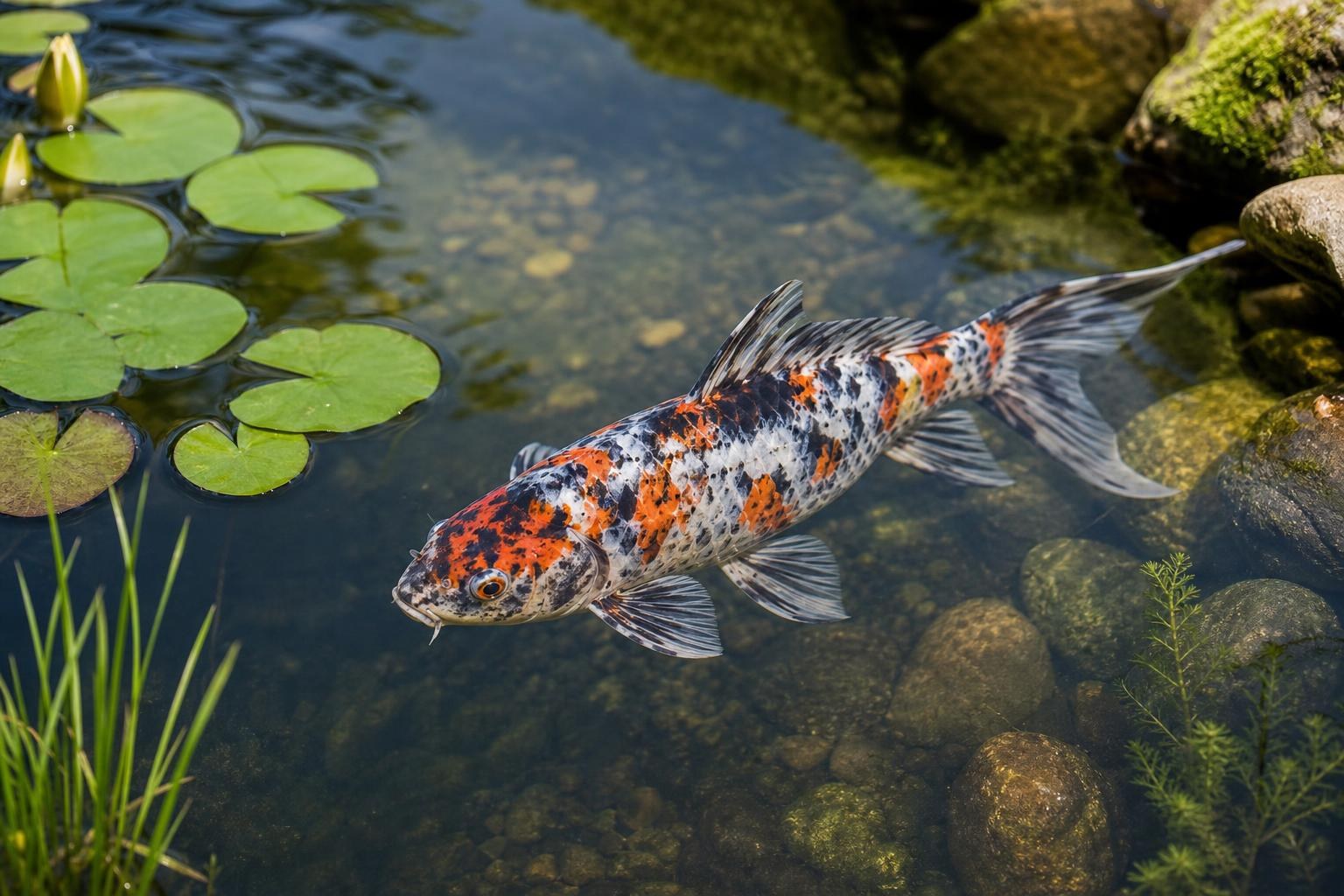
Shubunkins are a hardy, colourful variety of domestic goldfish suited to well-filtered garden ponds. They are omnivorous, social and active foragers, but can uproot delicate plants and should not be released into wild waterbodies.
At a glance
- Maximum length
- Up to 45 cm
- Minimum pond depth
- 45 cm
- Temperature range
- 4–25°C
- Suitable for small ponds
- No
- Suitable for wildlife ponds
- No
About Shubunkin
Shubunkin is a selectively bred variety of the domestic goldfish (Carassius auratus) commonly kept in UK garden ponds. They are pond-hardy, generally peaceful and social fish that do well in groups. Adult size varies by strain and environment: most commonly seen at about 12–30 cm in ordinary ponds, with exceptional records up to around 45 cm — plan pond space and filtration for the largest expected adult size. Single‑tailed, comet‑like pond forms tend to be larger and more active than heavily fancied short‑finned varieties. Practical care: Shubunkins are omnivores and will accept commercial floating pond pellets/sticks as well as natural foods (insect larvae, small invertebrates and soft plant material). Adjust feeding with temperature: switch to lower‑protein wheatgerm foods as water cools and reduce or stop feeding when fish become inactive in winter. Good biological filtration and regular water testing (ammonia, nitrite, nitrate, pH, general hardness) are important because goldfish produce substantial waste. Provide good surface movement and aeration (pump, waterfall, air stones) to avoid low dissolved‑oxygen events, especially in warm weather and overnight. Pond design and stocking: Industry guidance recommends ponds should ideally be at least 45–60 cm deep for thermal stability; a useful stocking rule‑of‑thumb is roughly 25 cm of adult fish length per 455 L (100 imp gal) of water — treat this as planning guidance rather than a strict legal minimum. Small, shallow features are not recommended as permanent homes because of temperature and chemistry swings. Plants and wildlife: provide plant cover (marginals, floating plants) but protect delicate planting from rooting or browsing; use robust baskets or barriers. Do not introduce Shubunkins to wildlife ponds: they eat invertebrates and amphibian larvae and can alter pond ecology. Never release domestic fish into wild waterbodies — dumped goldfish are an ecological problem in the UK. Overwintering: goldfish slow metabolism as water cools and overwinter in deeper pond layers. Keep aeration open, reduce feeding as temperatures fall and cease regular feeding once fish become inactive.
Diet
Omnivore: commercial pond pellets/sticks and natural foods (insect larvae, small invertebrates, plant material).
Temperament
Generally peaceful and social; active foragers that can root in substrate and disturb delicate plants.
Compatibility
Compatible with other coldwater, non‑aggressive cyprinids of similar adult size (other goldfish varieties, rudd) provided pond volume, filtration and oxygenation are adequate. Avoid mixing with species requiring very different temperature/oxygen regimes or predatory species.
Care notes
Provide effective biological filtration and regular water testing; maintain near‑zero ammonia/nitrite. Ensure good surface movement and aeration (pumps, waterfall, air stones). Protect delicate plants using baskets/barriers. Reduce protein in feed as water cools and stop feeding when fish become inactive. Use the stocking guideline of ~25 cm adult fish per 455 L as planning advice. Do not release into wild waterbodies.