POND FISH GUIDE
Showa (Showa Sanshoku)
Cyprinus carpio
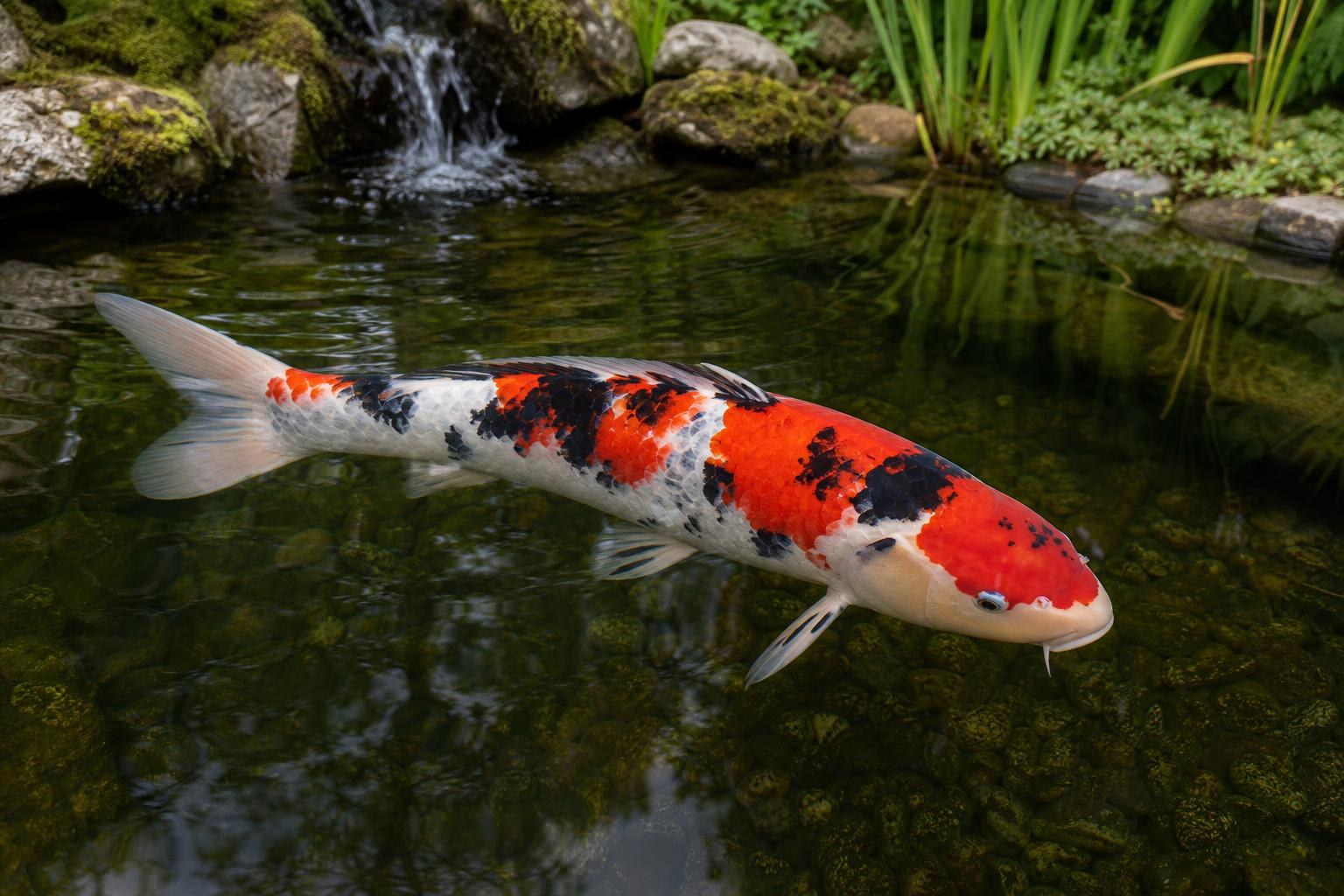
Showa are a named colour variety of koi (Cyprinus carpio). Adults in garden ponds commonly reach about 60–75 cm. They need deep, well‑filtered ponds (trade guidance commonly cites 4,500 L+ and ≥90 cm depth), good aeration, strict biosecurity and are not suitable for small or wildlife ponds.
At a glance
- Maximum length
- Up to 75 cm
- Minimum pond volume
- 4,500 litres
- Minimum pond depth
- 90 cm
- Temperature range
- 4–24°C
- Suitable for small ponds
- No
- Suitable for wildlife ponds
- No
About Showa (Showa Sanshoku)
Showa (Showa Sanshoku) are a named variety of ornamental koi; koi are treated in UK pond literature as varieties of the common carp, Cyprinus carpio. In garden‑pond settings koi are commonly cited as reaching around 60–75 cm as adults (trade guidance notes some carp can reach ~1 m in very large waters). Because of their size and biomass, trade bodies advise keeping koi in genuinely established, well‑filtered ponds – many UK sources give a recommended pond volume of several thousand litres (example figure cited: 4,500 L+) and a preferred minimum depth of around 90 cm (some keepers advise 1.2 m or more for long‑term koi). These figures are industry husbandry recommendations rather than statutory minimums. Showa are omnivores in the wild, consuming plant material, algae and benthic invertebrates; in captive ponds they are normally fed formulated koi pellets or sticks designed for growth and colour. They are social and can become tame and food‑orientated, but their foraging behaviour means they will dig and can uproot or damage planting. Breeding activity can be rough and may stress or injure females. Care needs are higher than for small cold‑water species: koi need stable, high water quality, appropriately sized filtration for the fish biomass and feeding rate, and good aeration, particularly in warm weather. Trade guidance gives a general temperate pond range of about 4–24 °C and suggests dissolved oxygen guidance around 6 mg/L as a husbandry target for coldwater systems. Strict quarantine and biosecurity are important because koi are susceptible to serious diseases (for example Koi Herpesvirus and Spring Viraemia of Carp); follow current GOV.UK and trade guidance before moving or introducing koi. Because of their size, feeding and ecological impact, Showa/koi are not suitable for small wildlife ponds, which are generally recommended to be fish‑free to support invertebrates and amphibians.
Diet
Omnivore; in ponds usually fed formulated koi pellets/sticks (also eat plant material, algae and benthic invertebrates).
Temperament
Social/tame and food‑orientated; dig/forage and can uproot plants; breeding can be rough.
Compatibility
Can be kept with other large, cold‑water cyprinids (e.g. orfe, tench) in suitably large, well‑filtered ponds, but will predate invertebrates and compete with or damage planting. Mixing species requires consideration of stocking, filtration capacity and disease risk.
Care notes
Provide robust filtration sized to fish biomass and feeding rate; regular water testing; supplementary aeration/oxygenation (pumps, fountains, air stones) especially in warm weather; maintain open water/oxygenation in winter if pond is iced; quarantine new fish and follow strict biosecurity to reduce risk of KHV/SVC. Stocking guidance is advisory only (examples in trade guidance: ~8 kg fish per 1,000 L or retailer rules of thumb such as 25 cm of fish per 1,000 L); determine final stocking from water‑quality, filtration and professional advice.