POND FISH GUIDE
Sarasa Shubunkin
Carassius auratus
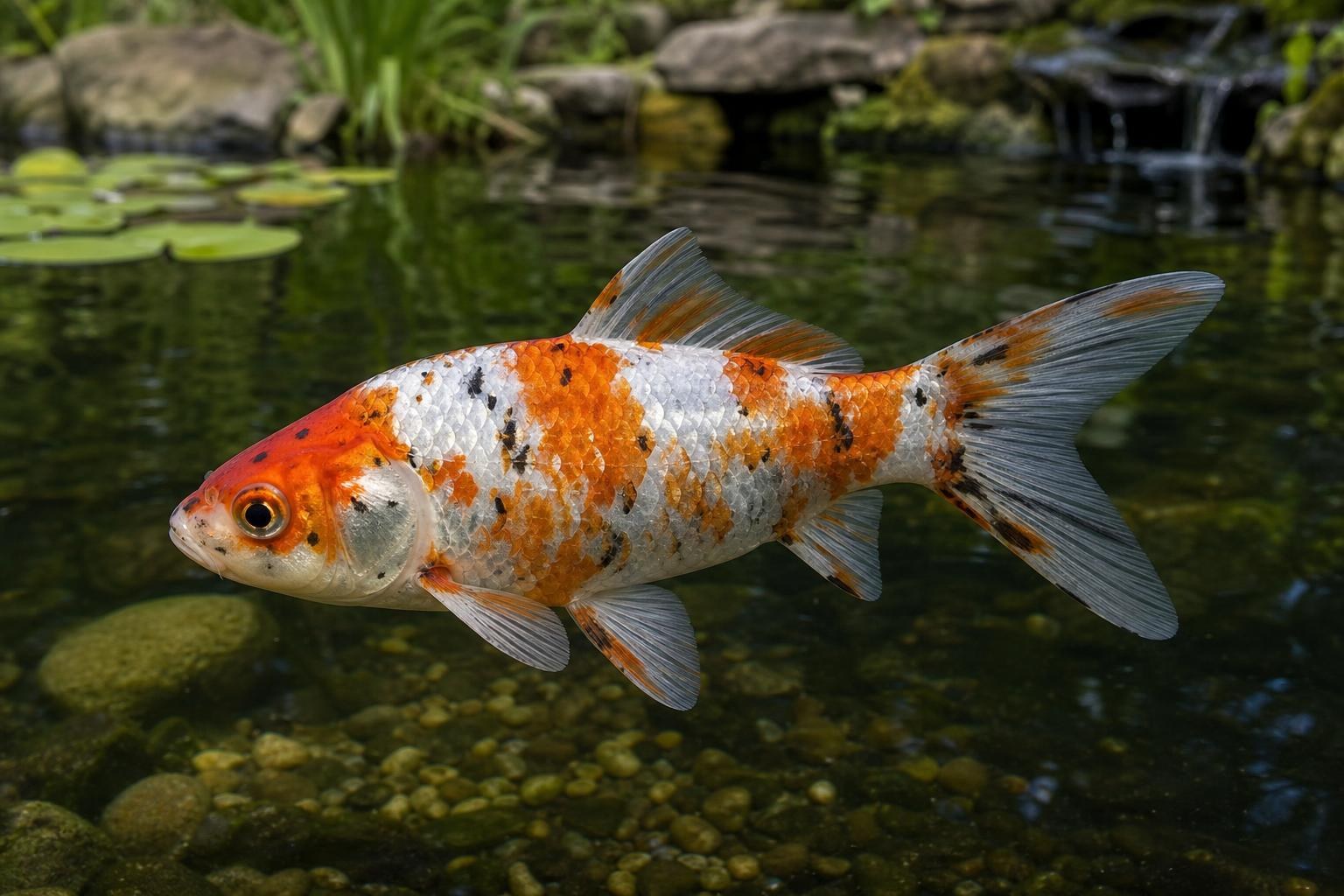
A red-and-white calico, single‑tailed form of domestic goldfish. Hardy and active, suitable for outdoor ponds if given adequate depth, filtration and stocking space. Expect adult sizes commonly in the 25–30 cm range, with larger reports to 40+ cm. Do not release to the wild; prevent escapes and follow UK guidance on non‑native species.
At a glance
- Maximum length
- Up to 40 cm
- Minimum pond depth
- 45 cm
- Temperature range
- 4–25°C
- Care level
- moderate
- Suitable for small ponds
- Yes
- Suitable for wildlife ponds
- No
About Sarasa Shubunkin
The Sarasa Shubunkin is a retail/catalogue name describing a red‑and‑white (sarasa) colour pattern on a single‑tailed shubunkin-type goldfish; it is a variety of the domestic goldfish Carassius auratus. Treat them as you would other single‑tailed, pond‑hardy goldfish: they are hardy and active swimmers but grow large and produce significant waste, so good filtration and husbandry are essential. Reported adult sizes vary: a maximum of around 25 cm is common in aquaria, commercial pond single‑tailed types can reach about 30 cm (a foot), and there are larger reports of 40 cm+ in favourable conditions. A precise maximum for the specific retail name is not established in the sources, so plan stocking on the expected adult size you obtain. Depth and shelter: OATA pond guidance recommends ponds of at least 45–60 cm depth to provide temperature stability and winter refuge; deeper water is recommended for larger carp species. Filtration and aeration: because these fish are “large and messy,” fit filtration sized for the pond and provide good circulation and aeration. Water testing for ammonia, nitrite, nitrate and pH and regular maintenance/partial water changes are advised to maintain water quality. Temperatures and feeding: practical temperature guidance for goldfish is roughly 4–25 °C (pond guidance lists 4–24 °C). Feed less as temperatures fall; around ~10 °C switch to low‑protein wheatgerm foods and cease feeding when fish become dormant. Diet: opportunistic omnivores — take formulated pond pellets/sticks and also browse invertebrates and plant material. Stocking and compatibility: use stocking guidance rather than assuming small ponds are appropriate; one rule‑of‑thumb given is 25 cm of adult fish per 455 L (100 imp gal) to estimate pond capacity. Single‑tailed types may outcompete slower fancy goldfish for food, so avoid mixing fast and slow varieties in small ponds. Goldfish breed readily — account for this in long‑term plans. Legal/conservation note: do not release or allow escape. UK guidance and non‑native species assessments highlight ecological risks (competition, hybridisation, disease). Rehome responsibly if required.
Diet
Opportunistic omnivore: formulated pond pellets/sticks, natural invertebrates and plant matter
Temperament
Active, social and hardy; single‑tailed types can be boisterous and may outcompete slower fancy goldfish
Compatibility
Compatible with other hardy, non‑fancy goldfish and similarly robust pond species when pond volume, filtration and stocking are appropriate. Avoid housing with slow fancy goldfish in small ponds due to competition; expect breeding.
Care notes
Provide a pond depth of at least 45–60 cm, robust filtration sized for fish load, good aeration/circulation and regular water testing (ammonia, nitrite, nitrate, pH). Use stocking guidance (e.g., 25 cm adult fish per 455 L) to plan capacity. Reduce feeding as water temperature drops; switch to low‑protein wheatgerm feed around 10 °C and stop feeding when fish become dormant. Do not release into the wild; follow UK guidance on non‑native species and rehome responsibly if needed.