POND FISH GUIDE
Sanke Koi
Cyprinus carpio
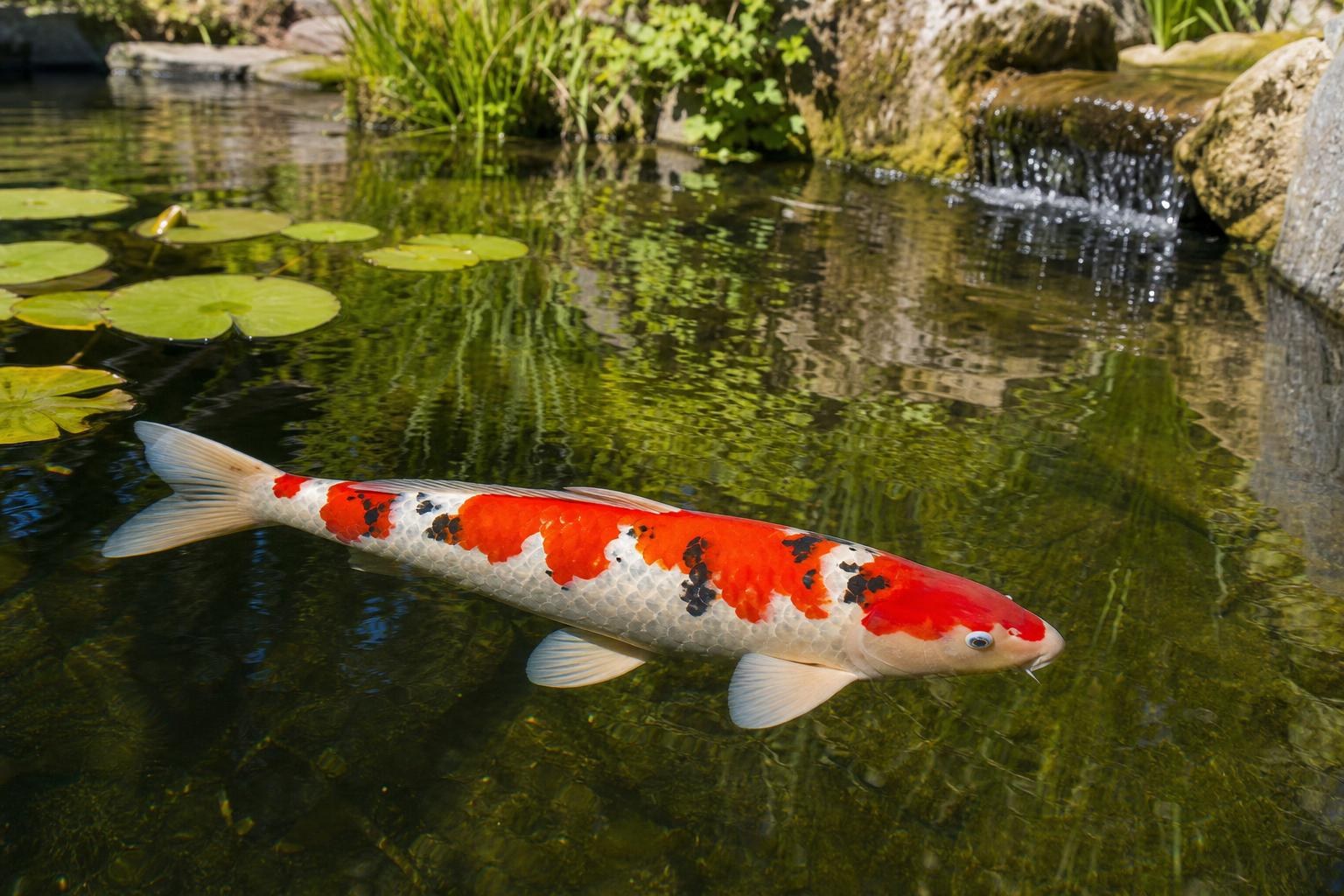
A trade variety of ornamental carp (koi) treated as common/ornamental carp in UK guidance. Sanke require large, deep, well‑filtered ponds and are unsuitable for small or wildlife ponds.
At a glance
- Maximum length
- Up to 75 cm
- Minimum pond volume
- 4,500 litres
- Minimum pond depth
- 90 cm
- Temperature range
- 4–24°C
- Suitable for small ponds
- No
- Suitable for wildlife ponds
- No
About Sanke Koi
“Sanke” is a trade name for a variety of ornamental koi (koi are varieties of common/ornamental carp). UK pond guidance treats koi as Cyprinus carpio and advises planning ponds and equipment for large, long‑lived carp rather than small goldfish. For UK pond owners, Sanke should be considered a large, demanding pond fish: adults commonly reach about 60–75 cm and exceptional specimens can grow larger, so design and stocking must be for adult size. Husbandry: industry and trade guidance recommends large pond volumes (OATA suggests 4,500 litres or more for koi) and substantial depths. Recommended pond depth for robust overwintering and stability is commonly cited around 90 cm, with many experienced keepers advising 1.2 m or more for long‑term koi. Koi need heavy filtration and good aeration: trade guidance includes examples such as filters sized to provide very high turnover (one worked example recommends filter capacity at least double pond volume) and the use of fountains, sprinklers or air stones to maintain oxygen, particularly in summer. Water‑quality targets used in pond guidance include ammonia = 0 mg/L and nitrite = 0 mg/L, with controlled nitrate levels. Feeding and behaviour: koi are omnivorous and are routinely fed specialist pond/koi pellets, but they will also forage, root in sediment and eat aquatic plants. They are social and often become tame around people, but their large, active foraging behaviour can uproot plants and reduce water clarity, making them incompatible with wildlife ponds. Compatibility and legal notes: in suitably large, well‑filtered ponds koi are often kept with large non‑predatory species such as goldfish, orfe, tench or rudd. UK guidance warns that carp can harm wildlife ponds through sediment disturbance and plant loss, and owners should not release fish to the wild. While keeping common carp in a private garden pond does not normally require an ILFA licence, any import or movement of live fish may be regulated and you should consult gov.uk/Fish Health Inspectorate guidance if in doubt. Practical tips: plan for adult size, invest in robust filtration and aeration, follow seasonal feeding thresholds (trade guidance commonly uses ~10–12 °C as a point to change feeding), and maintain routine filter maintenance and biosecurity.
Diet
Omnivore: specialist koi/pond pellets plus opportunistic foraging; may eat aquatic plants and detritus.
Temperament
Social and often tame around people; generally non‑predatory to similarly sized fish but large, active foragers that uproot plants and disturb sediments.
Compatibility
In large, well‑filtered ponds koi can be kept with large non‑predatory pond species such as goldfish, orfe, tench and rudd. They are unsuitable for small or wildlife ponds because their foraging disturbs plants and sediment.
Care notes
Provide a large, deep pond (trade guidance: 4,500 L+ and ~90–120 cm depth), robust filtration (examples recommend filter capacity at least double pond volume), and good aeration (fountains, air stones). Aim for ammonia = 0 mg/L and nitrite = 0 mg/L, control nitrate, perform regular filter maintenance, and adjust feeding seasonally (practical thresholds often cited ~10–12 °C). Plan stocking and equipment for adult fish, and follow biosecurity and gov.uk guidance when importing or moving fish.