POND FISH GUIDE
Ryukin Goldfish
Carassius auratus
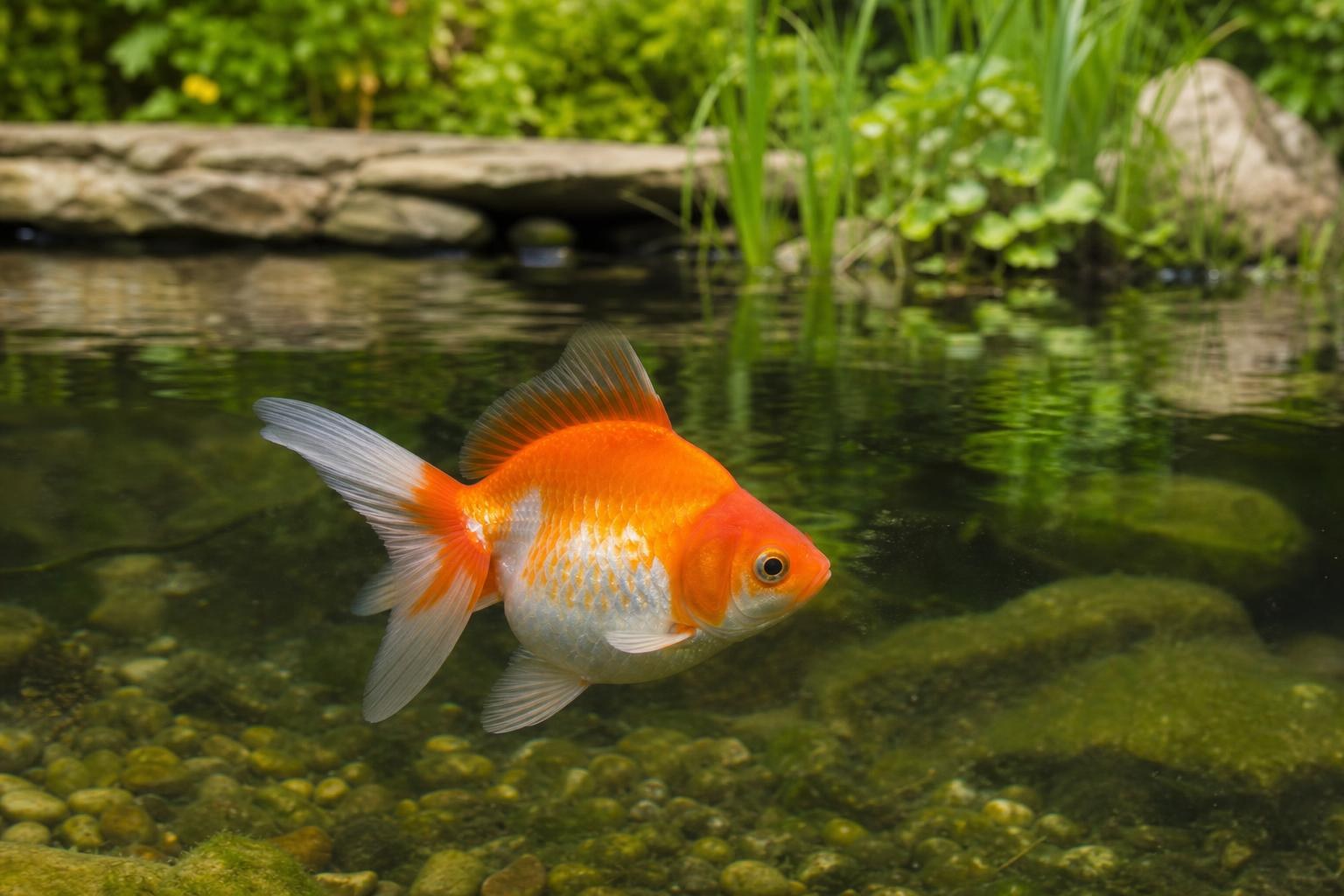
Ryukin are a fancy variety of goldfish (Carassius auratus). They typically reach about 20 cm, are omnivorous and social, and need good filtration, oxygenation and regular maintenance in garden ponds. They are unsuitable for wildlife ponds and must never be released into the wild.
At a glance
- Maximum length
- Up to 20 cm
- Temperature range
- 4–28°C
- Suitable for small ponds
- Yes
- Suitable for wildlife ponds
- No
About Ryukin Goldfish
Ryukin are a selectively bred fancy goldfish variety of Carassius auratus commonly kept in UK gardens and aquaria. As a fancy form they are deeper‑bodied and slower‑swimming than single‑tailed common goldfish, and trade care guidance generally lists a typical adult size of around 20 cm. Ryukin do well in groups of other fancy goldfish but can lose out to faster, single‑tailed types, so match stock accordingly. Temperature guidance in UK trade literature varies: OATA care notes give an operative range of about 4–25 °C with an optimal zone around 15–23 °C, while other trade sources list 10–28 °C. They are cold‑tolerant enough to overwinter outdoors provided the pond offers a stable thermal refuge, good oxygenation and sufficient depth; shallow ponds that freeze solid are unsuitable. General pond guidance recommends designing ponds with a deeper zone (examples in guidance include 45–60 cm as a useful minimum depth for pond fish and noting a deep refuge of around 1 m to avoid freezing), but there is no single, authoritative species‑specific pond‑volume or depth minimum in the cited documents. Ryukin are omnivores. Recommended feeding includes specialist sinking pellets or granules for goldfish supplemented with frozen foods (bloodworm, daphnia, brine shrimp) and occasional blanched vegetables (peas, lettuce) to reduce digestive problems. They are described as “messy” with a high bioload — therefore efficient filtration, regular partial water changes and weekly monitoring are stressed by trade guidance. Keep water well oxygenated (e.g. return sprays, air pumps) and avoid rapid temperature swings. Important practical and legal points from UK guidance: do not release aquarium or pond fish into the wild (keepers have a duty of care under the Animal Welfare Act and introducing goldfish can damage native wildlife and cause hybridisation). Goldfish are not suitable for wildlife ponds where amphibian and invertebrate conservation is the aim.
Diet
Omnivore — specialist sinking goldfish pellets/granules, flakes; supplemented with frozen foods (bloodworm, daphnia, brine shrimp) and blanched vegetables (peas, lettuce).
Temperament
Sociable and non‑aggressive; slower swimmer than single‑tailed goldfish—best kept with other fancy goldfish.
Compatibility
Best kept with other fancy goldfish varieties. Avoid mixing with fast, single‑tailed common goldfish due to competition and potential fin damage. Not appropriate for wildlife ponds where amphibians and invertebrates are prioritized.
Care notes
Provide strong filtration and regular partial water changes; monitor water quality weekly. Aim for stable temperatures (OATA optimal 15–23 °C), good oxygenation (surface agitation, air pumps) and gradual stocking to allow biological filtration to develop. For indoor aquaria, OATA gives a guideline of ~100 L for one adult goldfish and an additional ~50 L per extra adult (aquarium guidance). Overwintering outdoors is possible if the pond is deep enough to maintain a thermal refuge and remains oxygenated. Never release Ryukin or other goldfish into wild waterbodies; they are introduced in the UK and can harm native wildlife.