POND FISH GUIDE
Rosy Red Minnow
Pimephales promelas
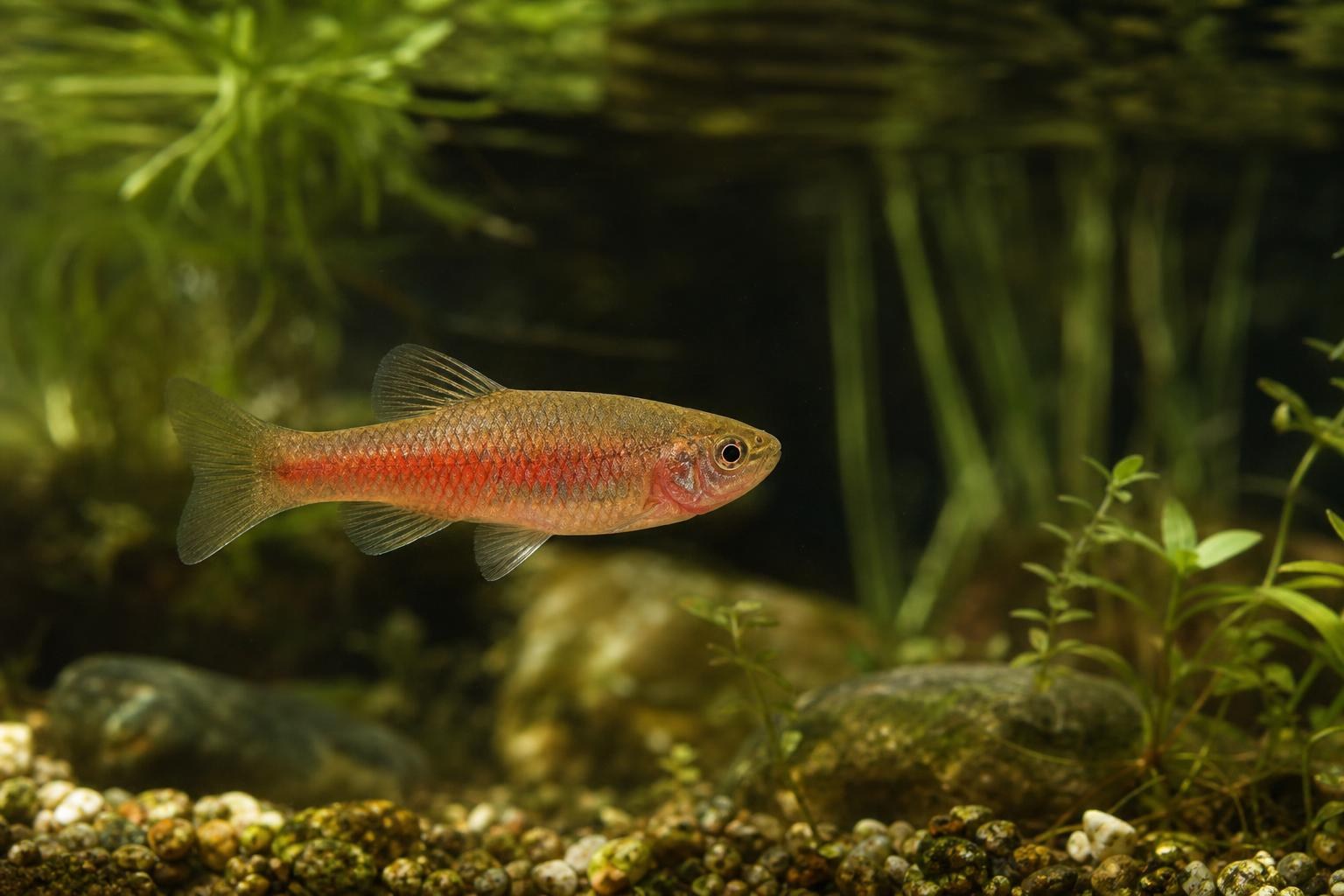
Rosy Red Minnow is the ornamental strain of the fathead minnow (Pimephales promelas). Small (to about 6 cm), hardy and omnivorous, it is a recognised non‑native in the UK and must not be released into outdoor ponds.
At a glance
- Maximum length
- Up to 6 cm
- Temperature range
- 0–33°C
- Care level
- easy
- Suitable for small ponds
- No
- Suitable for wildlife ponds
- No
About Rosy Red Minnow
The Rosy Red Minnow is the domesticated/ornamental colour strain of the fathead minnow, Pimephales promelas. UK technical sources record typical total lengths in the range of roughly 3.8–6.4 cm, so adults are small (reported up to about 6 cm). They are generalist feeders and are treated in UK literature as omnivorous competitors in small fresh waters rather than specialist feeders. Trade and husbandry material describe Rosy/Fathead minnows as hardy and suitable for cool, filtered aquarium or small water‑feature setups: they accept flake and pellet foods and small frozen items, do well in unheated/cool conditions and are generally described as easy to keep. Males develop the characteristic swollen head and become nest‑guarding and territorial around spawning substrate. UK non‑native assessments note the species can reach high densities, compete with native fishes and persist in UK climates; recorded UK occurrences and eradication work show that overwintering and establishment in some waters is possible. Reported temperature tolerance in UK material is approximately 0–33 °C. However, the overriding point for pond owners is legal and biosecurity risk. Pimephales promelas (including “Rosy Red”/“Rosyreds”) appears on statutory lists and has been the subject of eradication efforts in Great Britain; in Scotland keeping or release is prohibited except under licence. Do not introduce, move or release Rosy Red/Fathead minnows into outdoor garden or wildlife ponds in the UK. If you suspect a wild sighting, report it through the GB non‑native species reporting routes or to the Environment Agency as advised by national guidance. For contained aquarium keeping, follow strict quarantine, biosecurity and fish‑health guidance and never use indoor stock to top up or seed outdoor ponds.
Diet
Generalist omnivore (competitor for food in small fresh waters)
Temperament
Hardy and not highly aggressive generally; males become territorial and nest‑guarding during breeding. Can reach high densities and outcompete native species.
Compatibility
In contained aquarium contexts they are typically compatible with other small, coolwater, non‑aggressive species. In the UK wild context compatibility is irrelevant: introductions pose ecological and legal risks. Always avoid mixing with wild systems and follow quarantine/biosecurity.
Care notes
For contained aquaria/filtered features: provide good filtration and water quality, cool/unheated conditions are acceptable, feed flake/pellet and small frozen foods. Provide spawning substrate if breeding occurs (males guard nests). Use quarantine and strict biosecurity. Do not stock or release into outdoor ponds in the UK; statutory controls and eradication history apply.