POND FISH GUIDE
Rosy Barb
Pethia conchonius
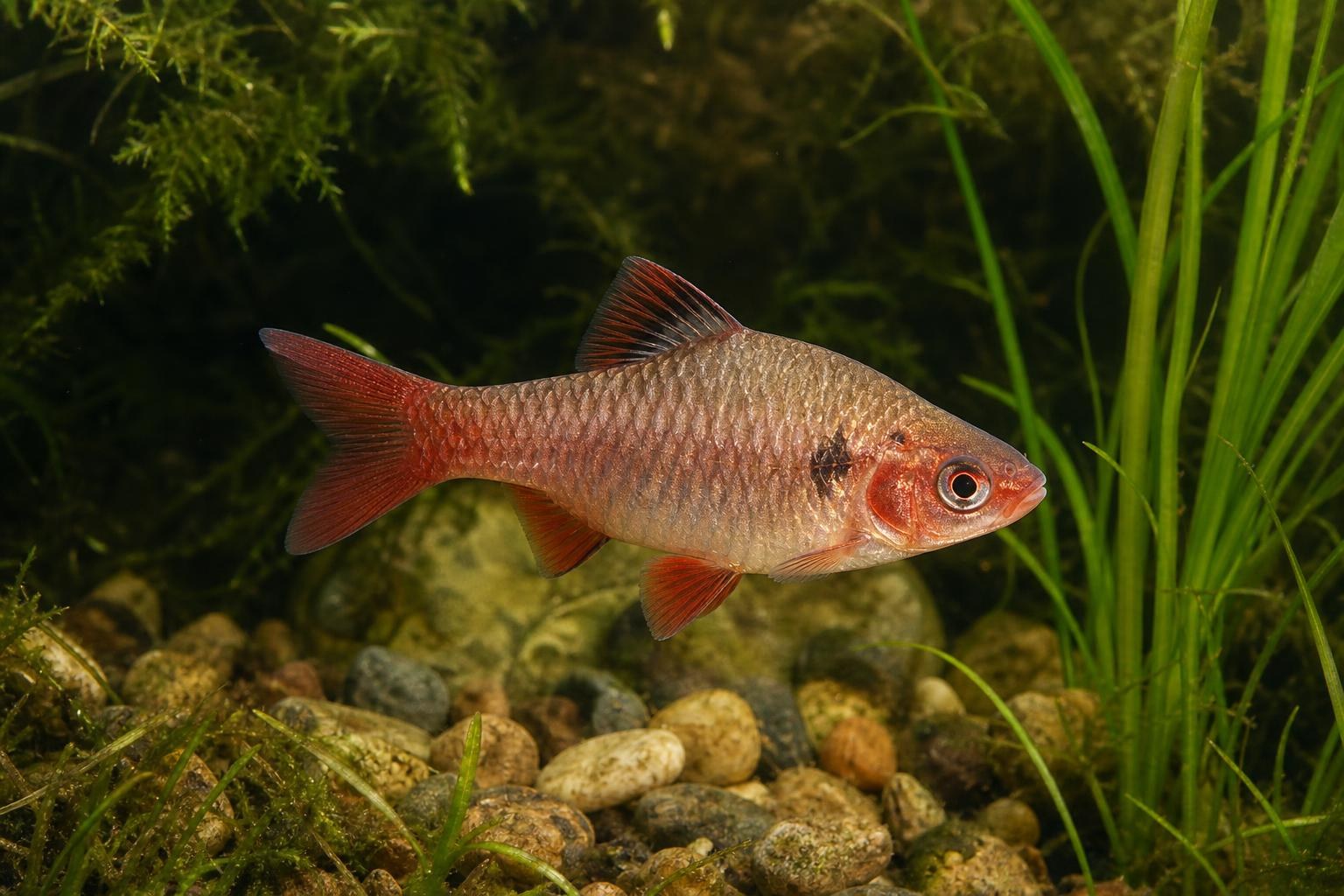
A hardy, active shoaling barb used in the aquarium trade. Trade sources give adult sizes of about 8–10 cm and differing temperature ranges (15–24 °C and 17–27 °C). Not recommended for wildlife or very small garden ponds; needs filtration, a shoal and good biosecurity.
At a glance
- Maximum length
- Up to 10 cm
- Temperature range
- 15–27°C
- Suitable for small ponds
- No
- Suitable for wildlife ponds
- No
About Rosy Barb
The Rosy Barb (Pethia conchonius) is a lively, shoaling cyprinid commonly sold for aquaria and sometimes considered for garden fish ponds. Trade literature describes it as hardy and relatively undemanding provided its basic needs are met: keep in a group (generally at least five or six), provide an open swimming area with some dense marginal planting, a reliable filter and regular maintenance. Rosy Barbs are omnivores and will accept quality flake or pellet food, frozen/live items such as mosquito larvae, brine shrimp or daphnia, and occasional vegetable matter (spinach, lettuce). Two common trade figures appear for adult size (about 8 cm in one source and roughly 10 cm in another) and for preferred temperatures (15–24 °C in one guide; about 17–27 °C in another). Use these as husbandry guidance rather than absolute limits: provide adequate space and avoid prolonged exposure to the lower end of ranges. There is no species-specific, authoritative minimum pond volume or guaranteed overwintering statement for UK garden ponds in the cited sources. General guidance for fish ponds (not species-specific) recommends deeper construction (commonly 50–60 cm) and a secure, filtered system for pond fish. Rosy Barbs are active and can be boisterous and fin-nippy; avoid keeping them with slow-moving, long-finned or very shy species. They are not suitable for wildlife ponds intended to maximise native biodiversity: fish will eat amphibian larvae and many invertebrates and can increase nutrient/pollution risk. Keep biosecurity in mind—do not release ornamental fish or plants into the wild, and check gov.uk / OATA guidance and the ILFA/ornamentals list for licensing and permitted species before introducing non-native fish to outdoor ponds.
Diet
Omnivore: quality flake/pellet, frozen/live foods (mosquito larvae, brine shrimp, daphnia), occasional vegetable matter
Temperament
Active, shoaling, boisterous; may nip fins
Compatibility
Keep in a shoal (5–6+). Compatible with lively, robust community fish that tolerate boisterous tankmates. Avoid slow-moving, long-finned or very shy species. Do not mix with amphibian larvae or expect wildlife-pond compatibility.
Care notes
Provide a good filter and some flow, weekly water testing and routine partial water changes, stable water chemistry (trade guidance gives pH ~6.0–7.5 and soft–moderate hardness), mixed omnivorous diet, dense marginal planting plus open swimming area, quarantine new fish and follow OATA/gov.uk biosecurity guidance.