POND FISH GUIDE
Red Comet Goldfish
Carassius auratus
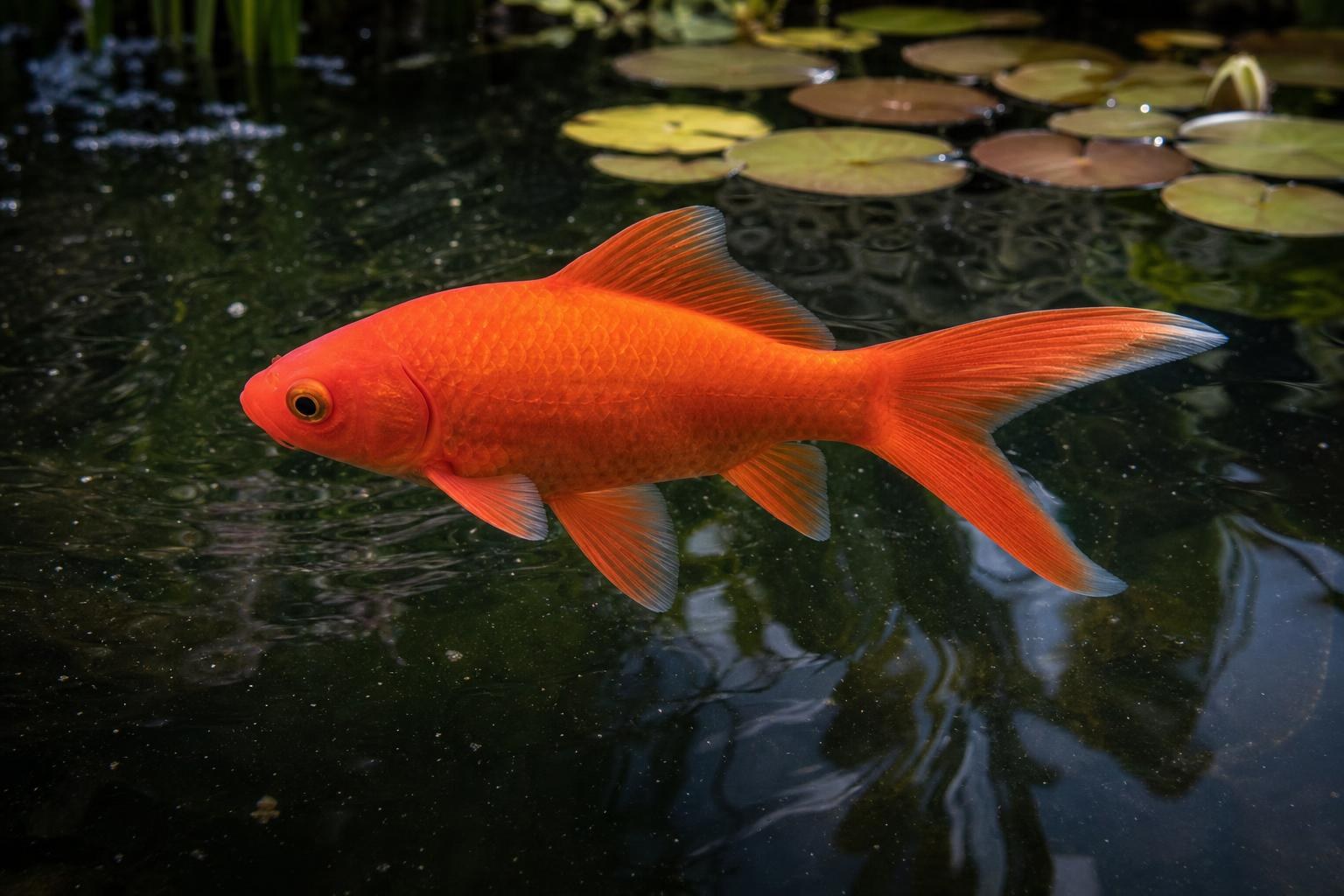
A comet-type domesticated goldfish, the Red Comet is an active, hardy pond fish often kept in UK garden ponds. Adults commonly reach about 30 cm and need good filtration, aeration and swimming space.
At a glance
- Maximum length
- Up to 30 cm
- Minimum pond depth
- 50 cm
- Temperature range
- 4–25°C
- Care level
- moderate
- Suitable for small ponds
- Yes
- Suitable for wildlife ponds
- No
About Red Comet Goldfish
The Red Comet (often sold as Comet or Sarasa Comet) is a comet-shaped variety of domesticated goldfish and is treated in trade care guidance as Carassius auratus. It is an active, fast-swimming and generally robust pond fish that commonly reaches around 30 cm as an adult (30 cm is the typically quoted pond maximum for ornamental goldfish forms). UK pond guidance frames Red Comets as a pond — not wildlife — species. The Freshwater Habitats Trust and industry sources recommend designing ponds intended for fish with sufficient depth (commonly cited guidance for fish ponds is c.50–60 cm to reduce freeze-through risk), good filtration and aeration. If your primary aim is wildlife value, do not add goldfish: fish reduce the wildlife value of shallow ponds and can impact amphibians and invertebrates. Care basics from UK trade advice: treat Red Comets as omnivores. Feed a quality goldfish/pond pellet or floating stick, taking care not to overfeed because uneaten food harms water quality. They will also take live or frozen foods and natural pond foods. Target water temperatures broadly in the coldwater pond range (approximately 4–24/25 °C). Other water-quality aims from industry guidance include pH roughly 6.0–8.5, zero ammonia and nitrite, and low nitrate (guidance commonly cites keeping nitrate low, e.g. <20 mg/L above tap baseline). Regular testing, adequate biological filtration, sensible stocking and routine maintenance are emphasised. Practical winter advice: goldfish are relatively tolerant of low temperatures but benefit from maintained aeration or partial circulation and from avoiding complete freeze-over so oxygen exchange continues. Legally and ecologically, goldfish are non-native in GB and can establish feral populations. Do not release pet goldfish into the wild (releasing non-native animals is unlawful without a licence); follow GOV.UK and statutory advice when moving or disposing of fish.
Diet
Omnivore; feed specialist goldfish/pond pellets or floating sticks. Will accept live/frozen foods and natural pond foods. Avoid overfeeding.
Temperament
Active, fast-swimming and robust. Can outcompete or fin-nip slower "fancy" goldfish; generally sociable with other hardy coldwater pond species of similar size and activity.
Compatibility
Compatible with other hardy, coldwater pond species of similar activity and size. Do not mix fast-swimming comets with slow fancy goldfish (risk of competition and fin-nipping). Avoid adding goldfish to ponds intended primarily for wildlife.
Care notes
Provide good biological filtration and aeration, regular water testing and routine maintenance. Aim for c.4–24/25 °C, pH circa 6.0–8.5, zero ammonia/nitrite and low nitrate (guidance often cites <20 mg/L above tap baseline). Give ample swimming space and avoid overstocking; a numeric stocking rule specific to Red Comet is not established in the cited UK sources. Overwinter with some water circulation/aeration and prevent complete ice cover where possible.