POND FISH GUIDE
Ranchu Goldfish
Carassius auratus
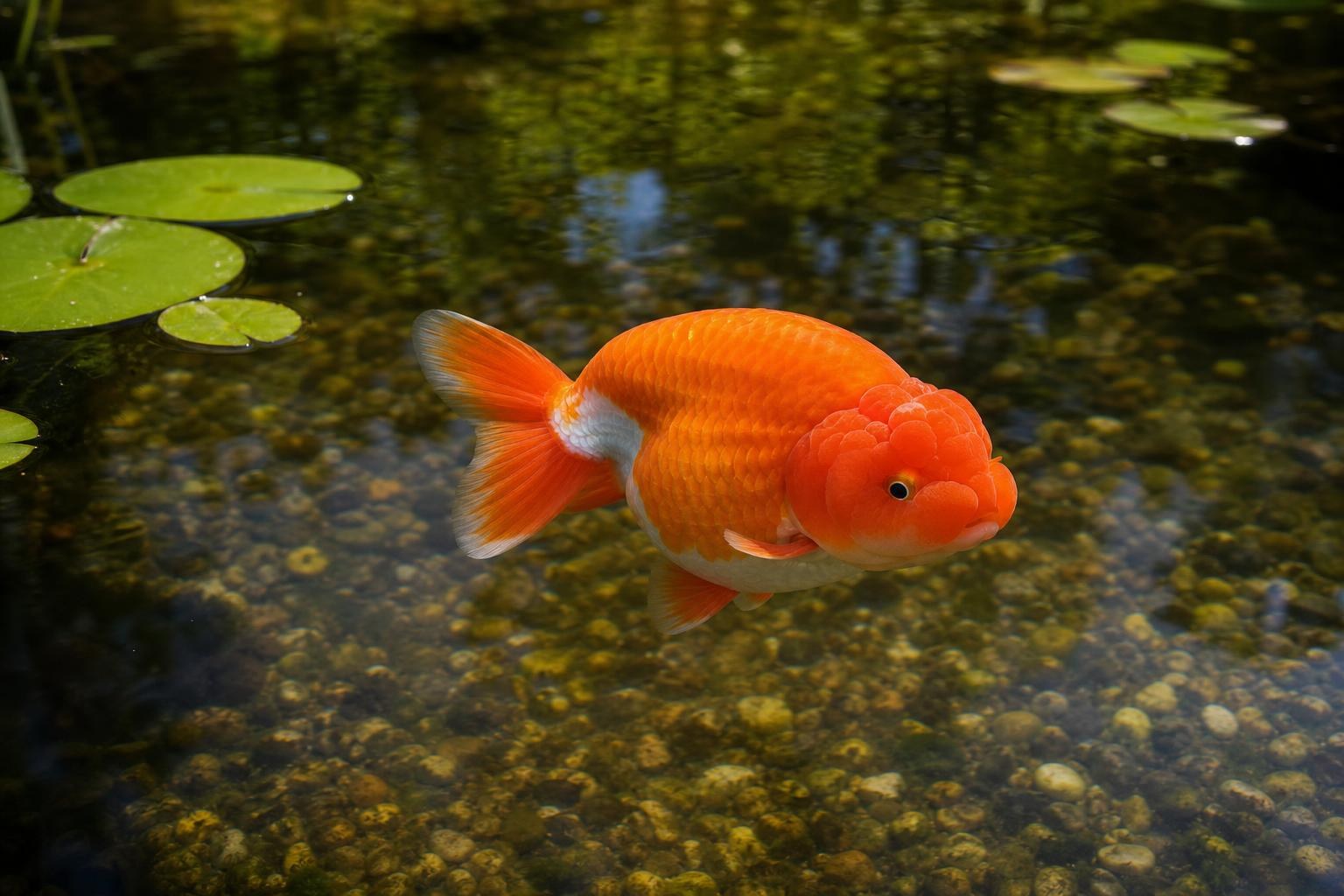
A fancy-goldfish variety of Carassius auratus, Ranchu grow to about 20 cm, need good filtration and aeration, prefer ponds 45–60 cm deep and tolerate cold. Do not add to wildlife ponds or release into the wild.
At a glance
- Maximum length
- Up to 20 cm
- Minimum pond depth
- 45 cm
- Temperature range
- 4–25°C
- Suitable for small ponds
- Yes
- Suitable for wildlife ponds
- No
About Ranchu Goldfish
The Ranchu is a classic fancy-goldfish variety of the domestic goldfish (Carassius auratus). As a selectively bred form it shares the species-level biology of goldfish but has the body shape and swimming characteristics of other fancy types: relatively slow-moving, sociable with other fancy goldfish, and prone to buoyancy and digestive issues if fed or handled poorly. Trade guidance puts adult size for fancy Ranchu at up to about 20 cm. Pond owners should treat Ranchu as a pond fish that requires good husbandry. Industry guidance recommends fish ponds be at least 45–60 cm deep; this is the general pond-depth guidance used for goldfish and other pond species. There is no authoritative, Ranchu-specific minimum pond-volume figure in the permitted sources. Ranchu tolerate cold conditions but need oxygen and water quality management year-round — conservative temperature guidance for fancy goldfish is about 4–25 °C (with 15–23 °C often cited as optimal bands). In warm weather ensure good aeration and avoid overstocking. Diet is omnivorous: feed sinking, high-fibre goldfish pellets or granules (to reduce air-swallowing), and supplement with vegetable matter (blanched peas/lettuce) and frozen or live foods such as daphnia, bloodworm or mysis. Filtration that handles solids is essential because fancy goldfish are “messy”; weekly partial water changes and routine water testing are advised. Target water chemistry is typical for pond goldfish: ammonia and nitrite at 0 mg/L, low nitrate, and pH in a generally neutral to slightly alkaline range. Conservation and legal note: goldfish are a non-native species that can establish feral populations, harm amphibians and invertebrates, and hybridise with related carp. In the UK goldfish are commonly kept in garden ponds without an import licence, but deliberate release into wild waterbodies is discouraged/controlled. If your priority is wildlife value, do not stock the pond with Ranchu.
Diet
Omnivore — sinking high‑fibre goldfish pellets/granules; supplement with frozen/live foods (daphnia, bloodworm, mysis) and blanched vegetables (peas, lettuce).
Temperament
Sociable with other fancy goldfish, peaceful but slow‑swimming; can be outcompeted by faster fish, will forage constantly and may disturb substrate; in ponds may prey on or reduce small amphibian/invertebrate life.
Compatibility
Best kept with other fancy goldfish varieties. Avoid mixing with fast single‑tailed goldfish (common, comet) that will outcompete fancier types. In outdoor settings avoid species that could be eaten or disturbed; be aware of hybridisation risks with wild/feral Carassius/carp species.
Care notes
Provide robust, solids‑handling filtration, good aeration and some open water. Perform weekly partial water changes and routine testing; maintain ammonia and nitrite at 0 mg/L and keep nitrate low. Use sinking, high‑fibre feeds to reduce swim‑bladder problems and avoid overfeeding. Overwintering: Ranchu are tolerant of cold if the pond provides an oxygenated refuge and some open water; avoid deoxygenation under ice. Do not release unwanted fish into the wild; follow biosecurity advice when moving or disposing of fish.