POND FISH GUIDE
Pond Sturgeon
Acipenser spp. (commonly sold as Sterlet, Acipenser ruthenus)
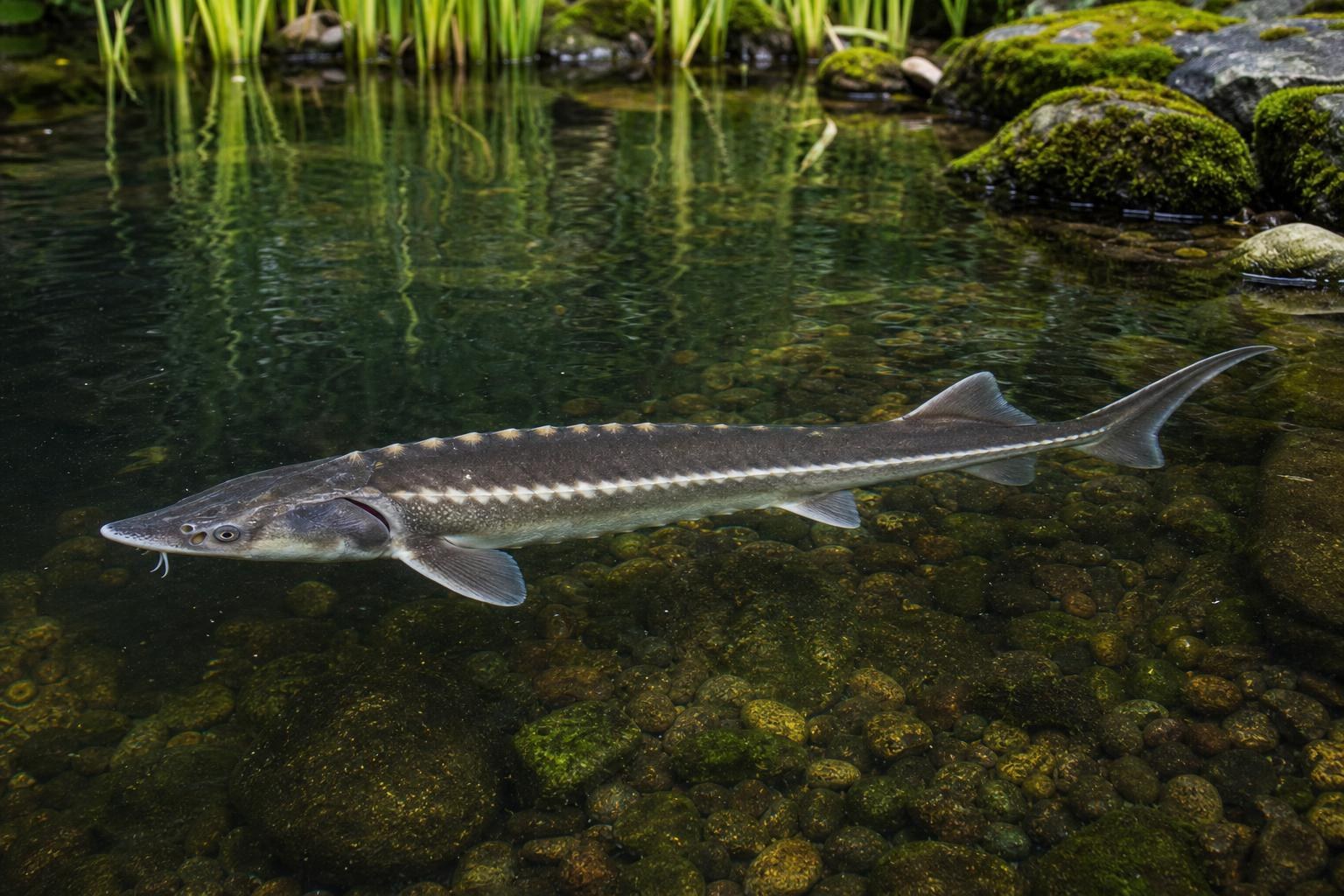
A trade name for small or juvenile sturgeons (Acipenser spp.), most commonly sterlet in the UK ornamental market. Requires large, deep, well‑filtered ponds, strong aeration and a sinking high‑protein diet — not suitable for small or wildlife ponds.
At a glance
- Maximum length
- Up to 100 cm
- Minimum pond volume
- 10,000 litres
- Minimum pond depth
- 120 cm
- Temperature range
- 4–24°C
- Suitable for small ponds
- No
- Suitable for wildlife ponds
- No
About Pond Sturgeon
“Pond Sturgeon” is a trade/catalogue name rather than a single species. In the UK market it most commonly refers to small or juvenile Acipenser spp., particularly sterlet (Acipenser ruthenus), though other Acipenser species may be offered. Before purchase, ask the seller for the exact scientific name (Acipenser sp.) or provenance — do not assume an item labelled “Pond Sturgeon” will remain small. Husbandry is specialist: industry guidance (OATA) recommends very large ponds and deep water for adult sturgeon (practical guidance often cited is around 10,000 litres and depths over 120 cm). Sturgeons are benthic feeders in the wild (insect larvae, small molluscs, annelids and similar prey) and in ponds require sinking, high‑protein sturgeon/sterlet feeds rather than floating carp foods. They are continuous foragers and need robust filtration, good circulation and strong aeration — dissolved‑oxygen demand is high, especially in warm weather. Temperament is generally peaceful but they are powerful, tireless swimmers and can out‑compete or injure smaller species at feeding times; they may also take fish eggs or very small fry. Keep numbers low for the pond volume, separate feeding areas where possible and plan stocking densities conservatively. Deep ponds (>90–120 cm) give a thermal refuge in winter and are recommended for overwintering. Legal and biosecurity notes: verify the species before purchase — European/common sturgeon (Acipenser sturio) is protected, and all sturgeon trade is subject to CITES and fish‑health controls. GOV.UK guidance states an ILFA licence is not required to keep Acipenser/Huso in a discrete private garden pond (subject to conditions), but consult Fish Health Inspectorate/OATA guidance when importing or moving stock. Do not release ornamental sturgeon into the wild.
Diet
Benthic feeder: insect larvae, small molluscs, annelids and similar. Require sinking, high‑protein sturgeon/sterlet pellets or sticks as staple feed.
Temperament
Generally peaceful and shy, constant bottom foragers and strong swimmers; can out‑compete or injure smaller fish at feeding and may eat eggs or fry.
Compatibility
Can be kept with large, robust carp/koi in very large ponds if feeding regimes are separated. Will predate eggs and very small fry and can out‑compete or injure smaller species at feeding times; plan stocking and feeding carefully.
Care notes
Industry guidance: deep, large pond (OATA guidance c.10,000 L and >120 cm depth for adults), strong koi‑scale filtration, excellent circulation and aeration, sinking high‑protein sturgeon feed, low stocking density, separate feeding area to reduce competition, regular maintenance and disease checks. Deep water (>90–120 cm) helps overwintering. Verify species identity and check fish‑health/CITES/import rules when sourcing.