POND FISH GUIDE
Pearlscale Goldfish
Carassius auratus
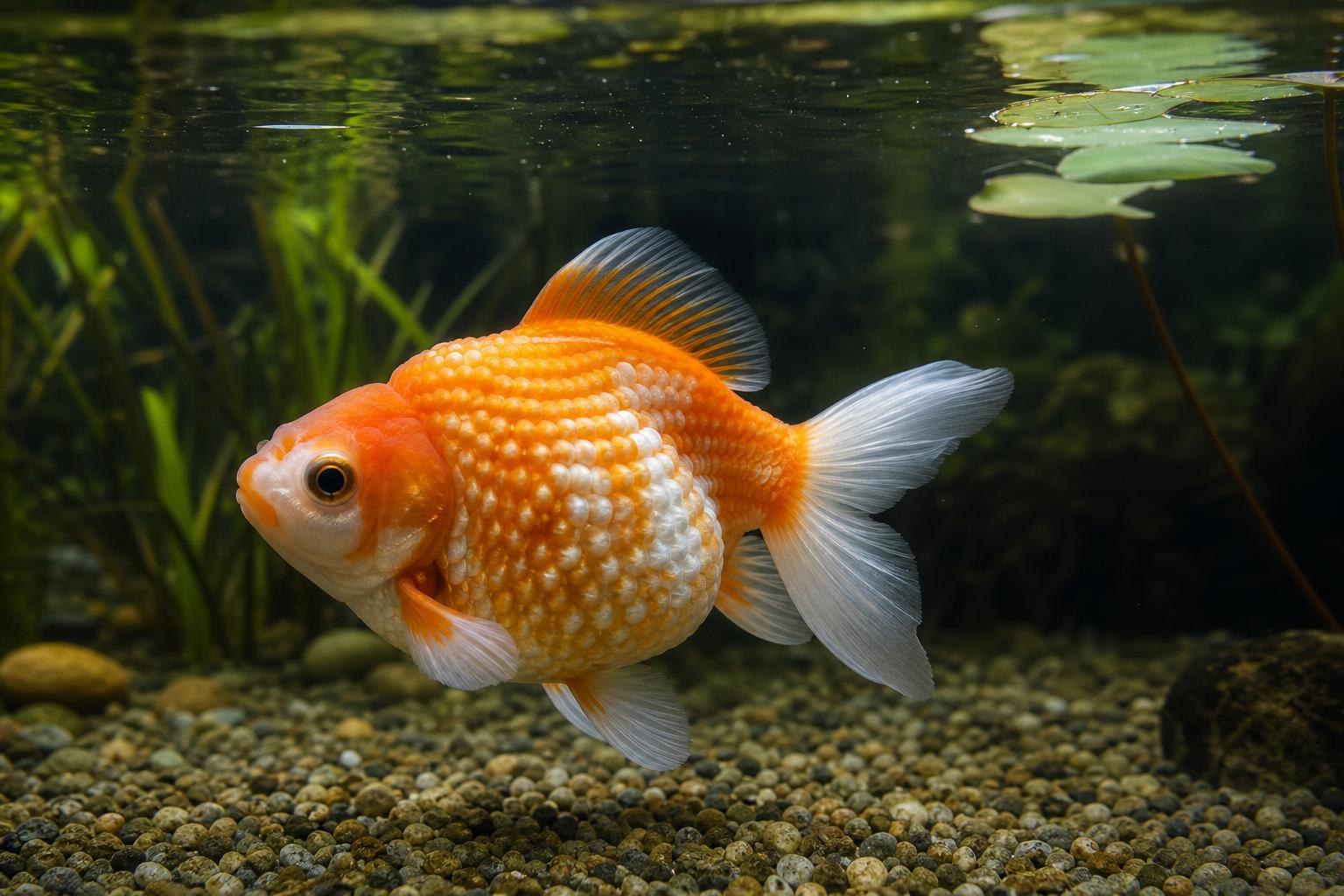
A fancy goldfish variety with rounded body and raised, pearly scales. Grows to about 20 cm, is cold‑tolerant but more delicate than common goldfish and needs good filtration, aeration and stable pond conditions.
At a glance
- Maximum length
- Up to 20 cm
- Minimum pond depth
- 45 cm
- Temperature range
- 4–25°C
- Suitable for small ponds
- No
- Suitable for wildlife ponds
- No
About Pearlscale Goldfish
The Pearlscale is a fancy variety of domesticated goldfish (trade name Pearlscale; Carassius auratus). As a bred fancy form it has a compact, rounded body and pronounced, bead‑like scales. Fancy goldfish like Pearlscales are generally slower‑swimming and more delicate than single‑tailed/common goldfish, and UK trade guidance treats them as domesticated C. auratus rather than a separate wild species. Size and housing: fancy goldfish are reported as unlikely to grow larger than about 20 cm when fully grown. Aquarium guidance from UK trade bodies recommends a minimum aquarium allowance (for context) of ~100 litres for a single adult goldfish and extra volume for additional fish; however the cited UK sources do not give a single authoritative pond‑volume minimum for Pearlscales. For outdoor work, OATA pond guidance recommends ponds should ideally be 45–60 cm deep as a general starting point to provide thermal stability — depth, filtration and aeration are the key pond design priorities rather than a fixed litres figure. Care essentials: Pearlscales are omnivores and should be fed a good quality goldfish flake/pellet with regular supplementation of frozen or live foods and vegetable matter (e.g. daphnia, bloodworm, blanched lettuce, thawed peas). They require excellent water quality (ammonia and nitrite zero, low nitrate), reliable biological/mechanical filtration, good aeration and gentle water movement. Weekly testing and regular partial water changes are recommended. Compatibility and wintering: keep Pearlscales with other fancy, slow, coldwater non‑predatory fish rather than fast, single‑tailed goldfish which can outcompete or nip fins. Fancy goldfish are more work to keep and UK trade guidance is cautious about housing delicate fancies in small/shallower garden features year‑round; many keepers use indoor aquaria for wintering if the outdoor feature is small or exposed. Conservation/legal note: goldfish are non‑native in the UK and can harm wildlife if released. Do not release Pearlscales into wild or wildlife ponds; follow gov.uk guidance for rehoming or surrendering unwanted fish.
Diet
Omnivore: goldfish‑formulated flake/pellet with regular live/frozen and vegetable supplements (daphnia, bloodworm, peas, blanched lettuce).
Temperament
Generally peaceful and slow‑moving; can be outcompeted by fast single‑tailed goldfish and may suffer fin‑nipping from boisterous tankmates.
Compatibility
Best kept with other fancy goldfish or similarly slow, coldwater, non‑predatory species. Avoid mixing with fast single‑tailed/common goldfish to prevent competition and fin‑nipping.
Care notes
Maintain excellent water quality (ammonia/nitrite zero, low nitrate), strong biological/mechanical filtration, good aeration and gentle flow. Weekly water testing and regular partial water changes (aquarium guidance suggests ~25% weekly) are recommended. Feed a balanced goldfish diet with live/frozen and vegetable supplements; avoid overfeeding. For outdoor housing ensure sufficient pond depth for thermal refuge (OATA recommends 45–60 cm as general guidance), and consider indoor overwintering for delicate fancy varieties if the outdoor feature is small or exposed. Never release ornamental goldfish into wild waterbodies.