POND FISH GUIDE
Oranda Goldfish
Carassius auratus
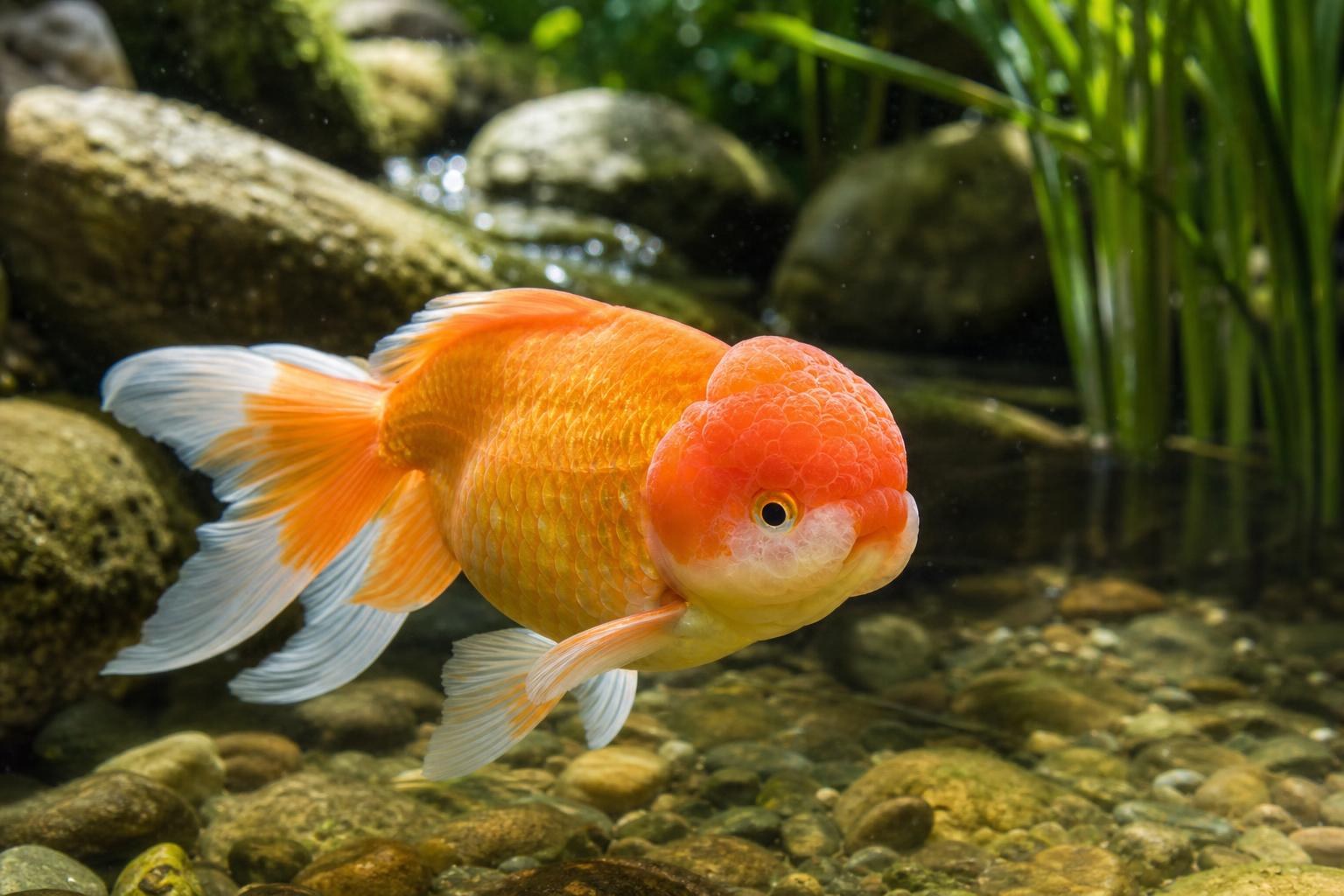
A fancy variety of domestic goldfish with a distinctive head 'wen'. Typically reaches about 20 cm, needs careful husbandry and is generally recommended for aquaria rather than small garden ponds.
At a glance
- Maximum length
- Up to 20 cm
- Temperature range
- 4–25°C
- Suitable for small ponds
- No
- Suitable for wildlife ponds
- No
About Oranda Goldfish
The Oranda is a fancy goldfish variety (Carassius auratus) distinguished by its helmet-like head growth or 'wen'. As a selectively bred domestic form it is classed with other fancy goldfish rather than common/comet types. Fancy varieties including Orandas are typically smaller than common goldfish and are cited as unlikely to grow larger than about 20 cm in usual captive conditions. Orandas are more delicate than common goldfish and require attentive husbandry. OATA (Ornamentalfish) guidance recommends they are best kept in indoor aquaria; if kept outdoors, owners should ensure excellent filtration and circulation, reliable aeration, and seasonal stability in water temperature. General pond advice (from pond-care guidance) recommends ponds be at least around 45–60 cm deep to improve thermal stability, but no authoritative, species‑specific minimum outdoor pond volume or mandated depth for Orandas was found in the supplied sources. For aquarium guidance, OATA recommends a minimum of about 100 litres per adult fancy goldfish. Temperature guidance for fancy goldfish is 4–25 °C, with about 15–23 °C described as optimal. Orandas will accept good-quality goldfish flakes, pellets or granules; supplement with occasional frozen/live foods (daphnia, bloodworm, brine shrimp) and blanched vegetables (lettuce, shelled peas). Avoid overfeeding — feed amounts the fish can eat quickly and reduce feeds in cooler temperatures. Keep water quality high: ammonia and nitrite should be zero, nitrates low; test regularly and perform routine partial water changes in aquaria. Provide gentle water flow (fancies dislike strong surge) and avoid sharp décor that can damage fins or the head-wen. Quarantine new fish and watch for disease. Fancy goldfish can tolerate cool conditions and overwintering outdoors is possible in suitably deep, well-oxygenated ponds, but ornamentalfish guidance emphasises aquaria as the preferred environment for these more delicate varieties. Conservation/legal note: goldfish are non-native in the UK and can harm pond wildlife; do not release them. Gov.uk states goldfish do not normally need an ILFA licence, but check the official guidance and local conditions before moving or releasing fish.
Diet
Good-quality goldfish flakes, pellets or granules formulated for goldfish; occasional frozen/live foods (daphnia, bloodworm, brine shrimp); blanched vegetables such as lettuce and shelled peas. Avoid overfeeding.
Temperament
Generally peaceful but slower and clumsier than common goldfish; can be outcompeted or nipped by fast-swimming common/comet goldfish.
Compatibility
Compatible with other fancy goldfish. Avoid mixing with fast-swimming common/comet goldfish, aggressive species, or tropical fish with higher temperature needs. Ensure tank/pondmates have similar temperature tolerances and are non-aggressive.
Care notes
Maintain zero ammonia and nitrite and low nitrate; test water regularly. Provide efficient biological filtration sized to the bioload and gentle flow. Aerate surface and avoid full surface freeze in winter; provide planted cover but note goldfish may uproot plants. Quarantine new arrivals. Follow OATA aquarium guidance (≈100 L per adult fancy goldfish) as a reference for stocking in confined systems. Do not release into wild waters.