POND FISH GUIDE
Ochiba Koi
Cyprinus carpio
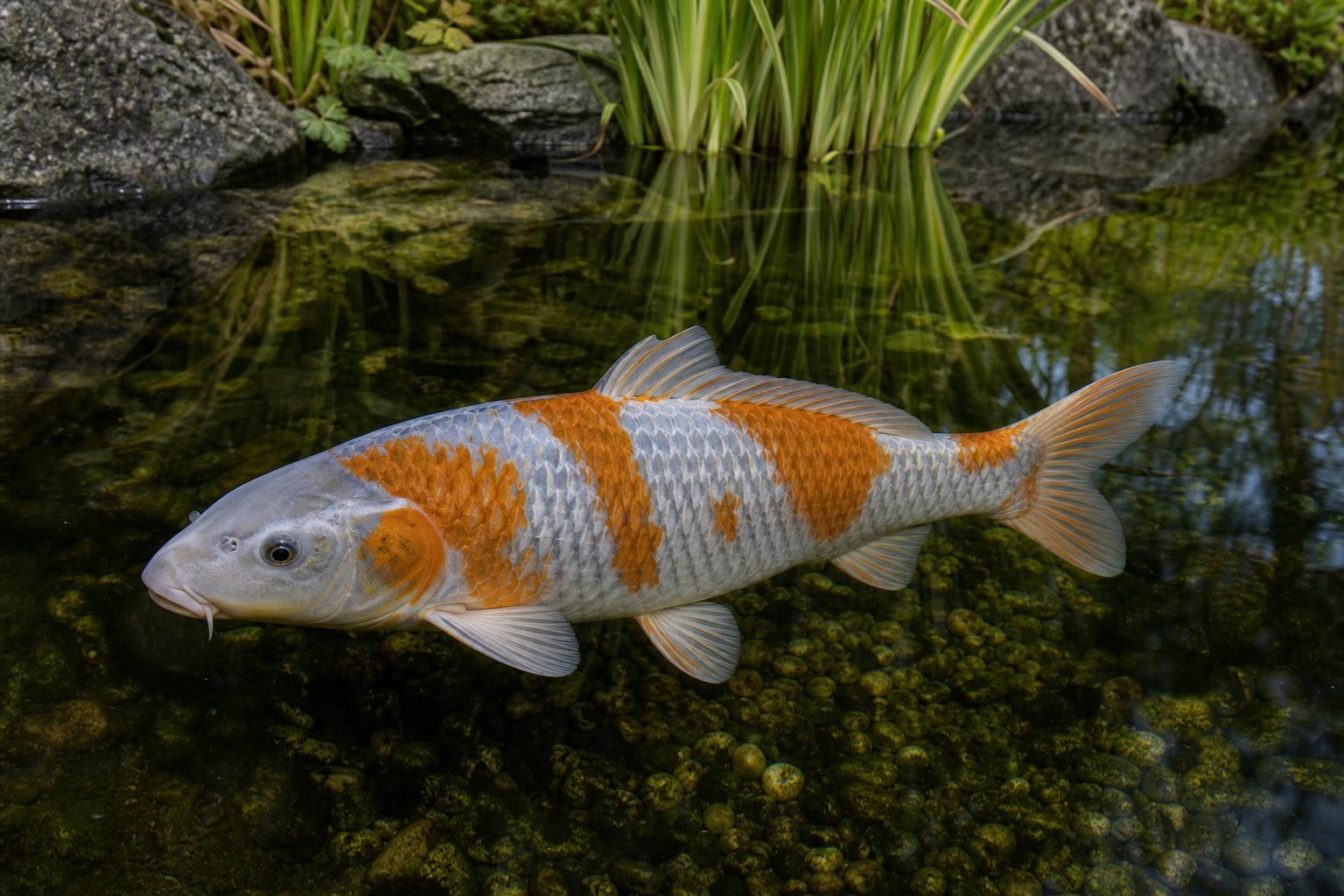
'Ochiba' is a colour/pattern name used for koi (ornamental common carp). Husbandry follows general koi guidance: large, deep ponds (several thousand litres), strong filtration, aeration and seasonal feeding.
At a glance
- Maximum length
- Up to 75 cm
- Minimum pond volume
- 4,500 litres
- Minimum pond depth
- 90 cm
- Temperature range
- 4–24°C
- Suitable for small ponds
- No
- Suitable for wildlife ponds
- No
About Ochiba Koi
“Ochiba” (often seen in trade names such as Kogane Ochiba Shigure) is a colour/pattern descriptor for ornamental koi rather than a separate species. In UK guidance and trade literature ochiba koi are treated as varieties of common carp, Cyprinus carpio, and should be kept to the same husbandry standards as other koi. Adults can reach sizes typical of koi (up to about 75 cm), so they need substantial pond space, depth and robust water management. Trade guidance for UK pond owners recommends ponds of several thousand litres for koi: commonly quoted husbandry guidance suggests a minimum pond volume in the region of 4,500 litres and a pond depth preferably around 90 cm (many sources reference 75–90 cm as a practical minimum). Good filtration (mechanical and biological), reliable aeration/circulation and regular water testing (ammonia, nitrite, nitrate, pH) are essential. Koi are opportunistic omnivores and are fed formulated koi diets (commercial pellets): higher‑protein feeds in summer and more easily digested, lower‑protein wheatgerm diets as temperatures fall. Ochiba koi are generally peaceful and social but are large, active fish that compete at feeding and may uproot or eat aquatic plants; they are therefore unsuitable for small ponds or wildlife-focused ponds where they can harm invertebrate and amphibian communities and vegetation. They are commonly kept with other large pond species (for example orfe, tench or large goldfish) provided the pond is large enough, well oxygenated and properly filtered. There is also documented risk of habitat modification and potential hybridisation with other cyprinids if released. Overwintering guidance follows standard koi practice: sufficient depth for seasonal refuge, maintain oxygenation (avoid sealed ice—use de‑icers or aeration), and reduce/stop high‑protein feeding as water temperatures drop (many retailers recommend slowing feeding below around 10–12 °C). Do not release koi into the wild; check gov.uk guidance on licences and legal controls before moving fish to inland waters.
Diet
Omnivore: commercial koi pellets; higher‑protein in summer, lower‑protein/wheatgerm diets in cooler months
Temperament
Generally peaceful and social; large, active and competitive at feeding; may root in substrate and disturb/eat plants
Compatibility
Compatible with other large pond species (e.g. orfe, tench, large goldfish) if pond volume, oxygenation and filtration are sufficient. Will outcompete smaller species and can damage planted or wildlife ponds. Hybridisation with other cyprinids is a documented concern if fish escape or are released.
Care notes
Provide robust mechanical and biological filtration, good aeration/circulation and regular water testing (ammonia/nitrite/nitrate/pH). Use species‑specific koi feeds with seasonal adjustments (high protein in warm months; low‑protein/wheatgerm as temperatures fall). Protect from predators (netting) and quarantine new stock. For overwintering ensure adequate depth and oxygenation (avoid sealed ice—use deicers/aeration); many trade sources reference dissolved oxygen guidance around 6 mg·L−1 as a planning target. Follow trade stocking rules of thumb and consult gov.uk for licensing/transfer rules before moving fish to inland waters.