POND FISH GUIDE
Medaka (Japanese rice fish)
Oryzias latipes
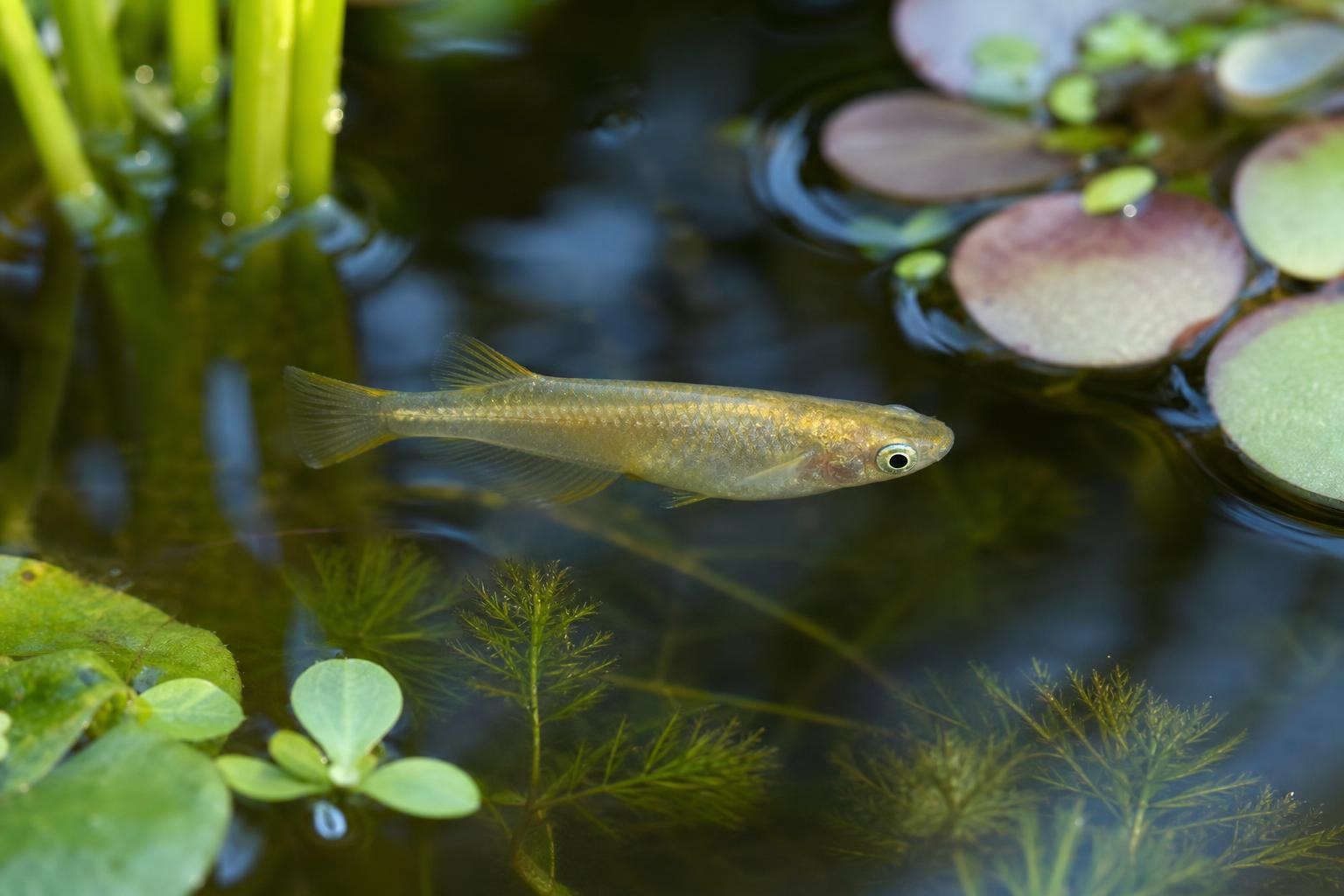
Small, hardy surface‑feeding ricefish kept in aquaria. Not recommended for UK outdoor ponds — industry and UK licensing restrict them to indoor aquaria.
At a glance
- Maximum length
- Up to 4 cm
- Temperature range
- 10–24°C
- Suitable for small ponds
- No
- Suitable for wildlife ponds
- No
About Medaka (Japanese rice fish)
Medaka (Oryzias latipes), commonly sold as Japanese rice fish, are small (adult to about 4 cm) peaceful, shoaling fish popular in aquaria. UK retailer care sheets describe them as hardy and suitable for beginner aquarists when kept indoors: they favour mature, well‑planted tanks with calm flow, plenty of surface cover and a tight‑fitting lid because they can jump. In captivity they accept small meaty foods (frozen bloodworm, mosquito larvae, daphnia, Artemia nauplii) and will also take flake or micropellets; a diet focused on small meaty frozen foods is commonly recommended. Medaka are social and do best in groups (a minimum of six is suggested, with 10+ preferable). They are generally peaceful and can be kept with other small, calm species that share similar temperature needs, though many keepers prefer species‑only tanks. Adults usually ignore eggs but will feed on fry, so provide dense planting or rearing tanks for young if breeding is intended. Crucially for UK pond owners: industry guidance and UK licensing frameworks restrict Oryzias spp. to indoor aquaria because the species appears on GB susceptible/vector species lists and its outdoor release could pose biosecurity and regulatory risks. Retailers are advised to sell these fish only for indoor aquarium use and to ensure customers understand they should not be kept in outdoor ponds, barrels or similar setups. Because permitted UK sources focus on aquarium husbandry, they do not provide pond‑volume or pond‑depth minima, overwintering protocols for outdoor ponds, or numeric oxygen thresholds for pond use — those items are therefore not established in the supplied guidance. If you are a UK pond owner wanting small, cold‑tolerant pond species, do not assume medaka are suitable; follow official licensing guidance and retailer advice and keep medaka in indoor aquaria only.
Diet
Surface/near‑surface micro‑predator: insect larvae, small crustaceans; in captivity accept small meaty frozen foods (bloodworm, mosquito larvae, daphnia, Artemia nauplii), flakes or micropellets.
Temperament
Peaceful, shoaling; social species best kept in groups.
Compatibility
Community‑compatible with other small, peaceful, similar‑sized fish; species groups of 6 minimum (10+ preferable). Often kept in species‑only tanks. Adults may eat fry; provide dense planting or separate rearing.
Care notes
Keep in a mature, well‑planted aquarium with calm flow and surface cover. Provide dense planting and floating plants, efficient but low‑flow filtration, and a tight‑fitting lid to prevent jumping. Feed a variety of small meaty frozen foods plus flakes/pellets. Maintain stable water quality and keep in groups.