POND FISH GUIDE
Lionhead Goldfish
Carassius auratus
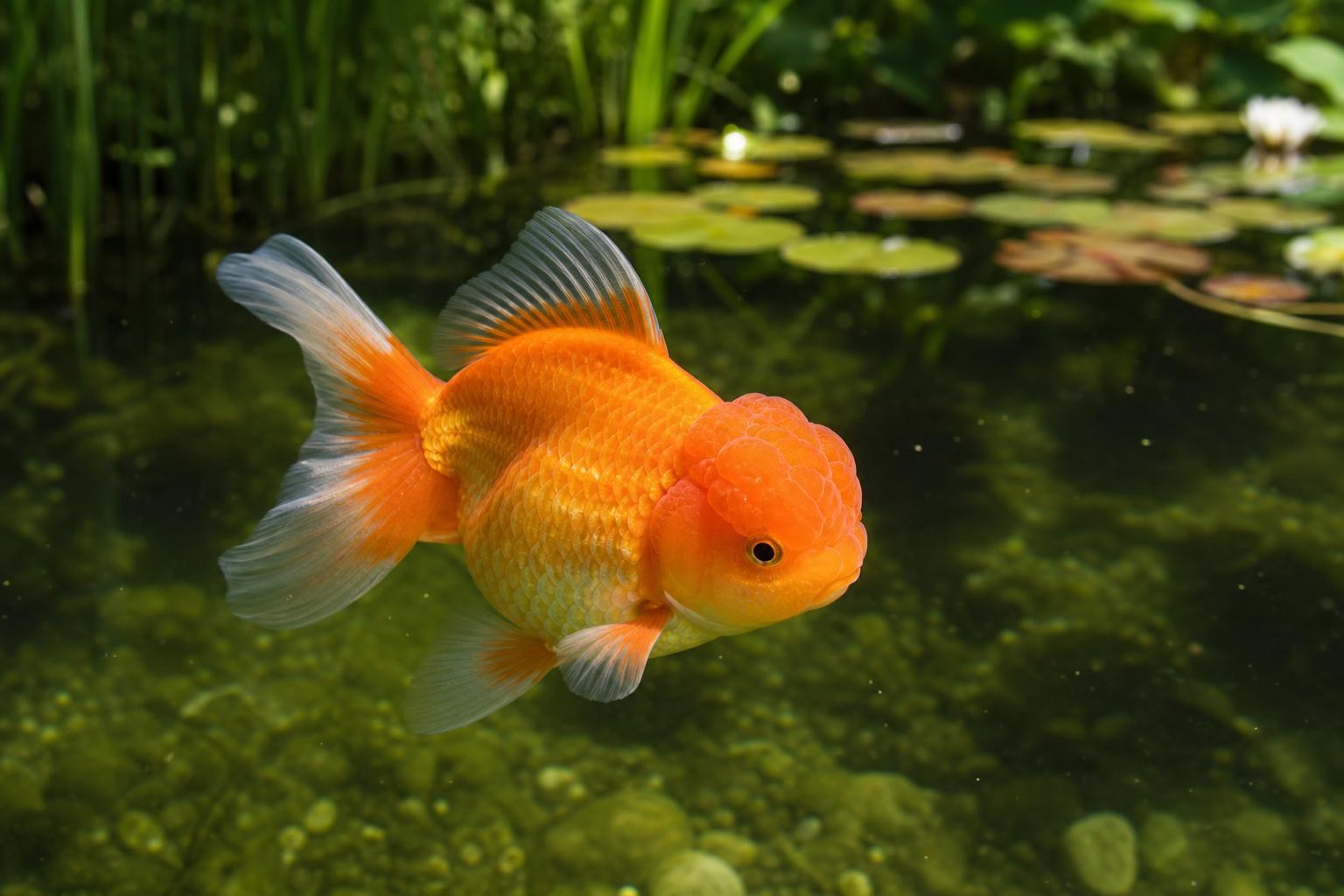
A fancy (selectively bred) form of goldfish. Lionheads are a domestic variety of Carassius auratus noted for their hooded head growth and rounded body. They are a coldwater, ornamental pond fish requiring stable water quality, adequate depth and good filtration. Lionheads are not recommended for wildlife ponds and owners should take care to avoid releasing them into the wild.
At a glance
- Maximum length
- Up to 20 cm
- Minimum pond depth
- 45 cm
- Temperature range
- 4–25°C
- Suitable for small ponds
- No
- Suitable for wildlife ponds
- No
About Lionhead Goldfish
The Lionhead is a fancy, domesticated form of goldfish (Carassius auratus). As a selective-bred morph, it is treated as a fancy goldfish rather than a separate species. Fancy goldfish like Lionheads tend to have rounded bodies, reduced swimming speed compared with single‑tailed goldfish, and the characteristic hooded “wen” on the head. Size and housing: guidance for fancy goldfish notes that these forms are unlikely to exceed about 20 cm in routine captive conditions, although non-fancy pond goldfish may grow larger. There is no Lionhead-specific, UK pond-only maximum or a single authoritative minimum pond volume in the sources consulted. Pond design advice for keeping goldfish emphasises depth: ponds should ideally be at least 45–60 cm deep, with areas of 60 cm or greater advised to provide a thermally stable winter refuge. Water and temperature: fancy goldfish are coldwater fish and the recommended temperature range from OATA is 4–25 °C (optimal ~15–23 °C). Maintain stable water quality: ammonia and nitrite should be zero, with nitrates preferably low. Good filtration sized to the expected bioload, weekly testing and regular partial water changes are advised. Diet and feeding: Lionheads accept a range of foods. Feed quality goldfish flakes, granules or pellets formulated for goldfish, supplemented with occasional live/frozen foods (daphnia, bloodworm, brine shrimp) and vegetable matter (blanched peas or lettuce). Avoid overfeeding; offer only what is consumed in a few minutes. Compatibility and wildlife considerations: fancy goldfish are generally peaceful but slower and can be outcompeted by faster single‑tailed goldfish or boisterous species; best kept with other fancy goldfish. Freshwater wildlife organisations advise that wildlife ponds should remain fish‑free because fish (including goldfish) can reduce amphibian and invertebrate populations and alter habitat. Goldfish are non‑native in the UK and can have ecological impacts and hybridise with wild Carassius; do not release pet fish into natural waters. Care notes: Lionheads are more delicate than single‑tailed goldfish and need well‑maintained water quality, appropriate filtration and quarantine/biosecurity for new stock. Overwintering outdoors is possible in a properly designed pond with deep refuge areas; reduce or stop feeding as temperatures fall.
Diet
Omnivore: quality goldfish flakes/pellets for goldfish, supplemented with live/frozen foods (daphnia, bloodworm, brine shrimp) and vegetable matter (blanched peas, lettuce). Avoid overfeeding.
Temperament
Generally peaceful but slow-moving; can be outcompeted by faster, single‑tailed goldfish and may harass tankmates at feeding time.
Compatibility
Best kept with other fancy goldfish. Avoid mixing with single‑tailed/common goldfish (faster, boisterous) or predatory species. In garden ponds be cautious: goldfish can eat amphibian larvae and invertebrates and may harm wildlife value.
Care notes
Maintain stable water quality (ammonia and nitrite zero; keep nitrates low). Provide adequate filtration for the bioload, weekly water testing and regular partial water changes (e.g. ~25% weekly). Acclimatise and quarantine new fish. Avoid sharp décor that could damage delicate fins/eyes. Provide deep areas (45–60 cm, with some places ≥60 cm) for overwintering. Practice biosecurity, buy healthy stock and never release fish into wild waters.