POND FISH GUIDE
Koi
Cyprinus rubrofuscus (synonym Cyprinus carpio)
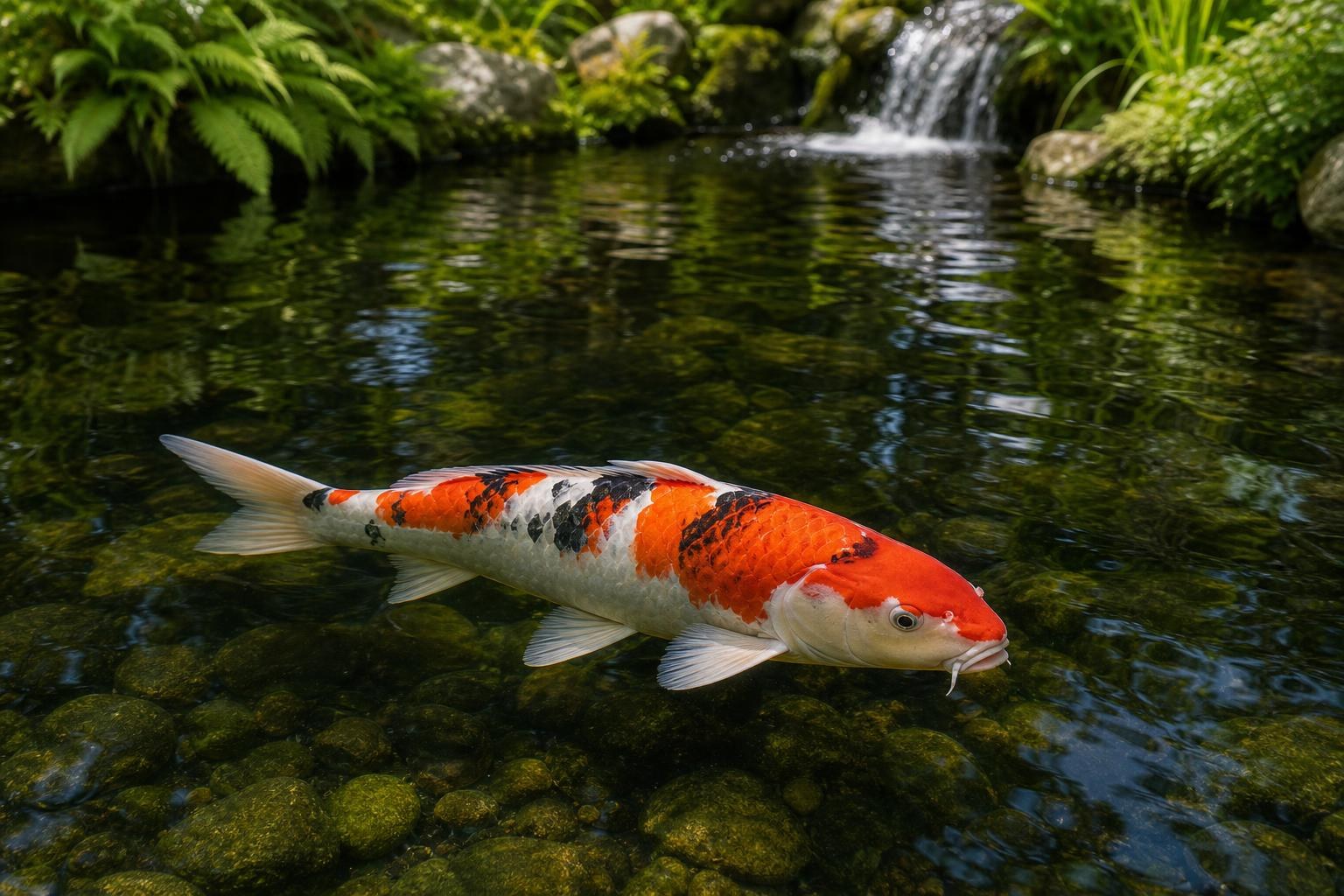
Domesticated ornamental carp (koi / Nishikigoi). Industry sources report adult sizes up to c.75–90 cm. Require large, well-filtered ponds (industry guidance: ~4,500 L+, depth ~90–120 cm), stable water quality, and careful biosecurity because of disease risks such as Koi Herpesvirus (KHV). Not suitable for small or wildlife-focused ponds.
At a glance
- Maximum length
- Up to 90 cm
- Minimum pond volume
- 4,500 litres
- Minimum pond depth
- 120 cm
- Temperature range
- 2–30°C
- Suitable for small ponds
- No
- Suitable for wildlife ponds
- No
About Koi
Koi (Nishikigoi) are the domesticated ornamental form of carp. UK trade and hobby sources use both Cyprinus rubrofuscus and Cyprinus carpio (the former is used by Fishkeeper, with C. carpio cited as a synonym), reflecting differing taxonomic usage in industry materials. Reported adult sizes vary between industry sources: Fishkeeper lists a maximum around 90 cm while other trade guidance groups larger carp at up to about 75 cm — use the larger adult size when planning a pond and filtration system. Because koi grow large and produce a high bioload, industry care sheets recommend purpose-built, deep ponds with robust filtration. The Ornamental Aquatic Trade Association (OATA/Ornamentalfish) recommends large carp be kept in ponds of roughly 4,500 litres or more; Fishkeeper advises a pond depth of at least 1.2 m (120 cm) while another trade guideline suggests preferably over 90 cm. These figures are industry recommendations rather than statutory minima. Temperature guidance in trade sources varies: Fishkeeper lists a broad koi tolerance of about 2–30 °C, while general pond-fish guidance suggests a desirable band nearer 4–24 °C. Note disease-risk: Koi Herpesvirus outbreaks are commonly associated with water temperatures around 16–25 °C, so biosecurity and monitoring are important. Diet consists of commercial koi pellets, granules, flakes and suitable frozen foods. Koi are fast-growing and voracious, so feeding regimes should be adjusted seasonally and overfeeding avoided to protect water quality. Practical care priorities are excellent water quality (aim for ammonia/nitrite at 0 mg/L and low nitrates), strong biological and mechanical filtration, bottom drains, UV clarifiers for clarity, good aeration/circulation and regular testing. Overwintering requires depth or maintained circulation to ensure oxygen exchange. Koi can be kept with other large, robust pond species (large goldfish, orfe) but will outcompete or disturb small fish and will uproot plants. They are not suitable for small garden ponds or ponds managed primarily for wildlife or biodiversity.
Diet
Commercial koi pellets, granules, flakes and suitable frozen foods
Temperament
Fast-growing, greedy; sociable with keepers and can be hand-fed
Compatibility
Best kept with similarly sized, robust pond species (large goldfish, orfe). Not recommended with small or delicate fish or invertebrate/amphibian-focused wildlife ponds — koi will uproot plants, increase turbidity and outcompete smaller species.
Care notes
Design ponds and filtration for expected adult biomass, not juvenile size. Maintain ammonia and nitrite at 0 mg/L and keep nitrates low; monitor pH and carbonate hardness per industry guidance. Use heavy biological/mechanical filtration, bottom drains and UV clarifiers for clarity. Adjust feeding seasonally and avoid overfeeding to protect water quality. Ensure good aeration and circulation; provide sufficient depth or open water and circulation during winter to allow gas exchange. Follow strict biosecurity: koi/common carp are listed as susceptible to KHV and other diseases; practise check-clean-dry measures and avoid releasing fish into the wild. Stocking densities should be determined by filtration capacity and adult fish size; industry sources do not provide a single numeric stocking-density figure.