POND FISH GUIDE
Kohaku Koi
Cyprinus carpio
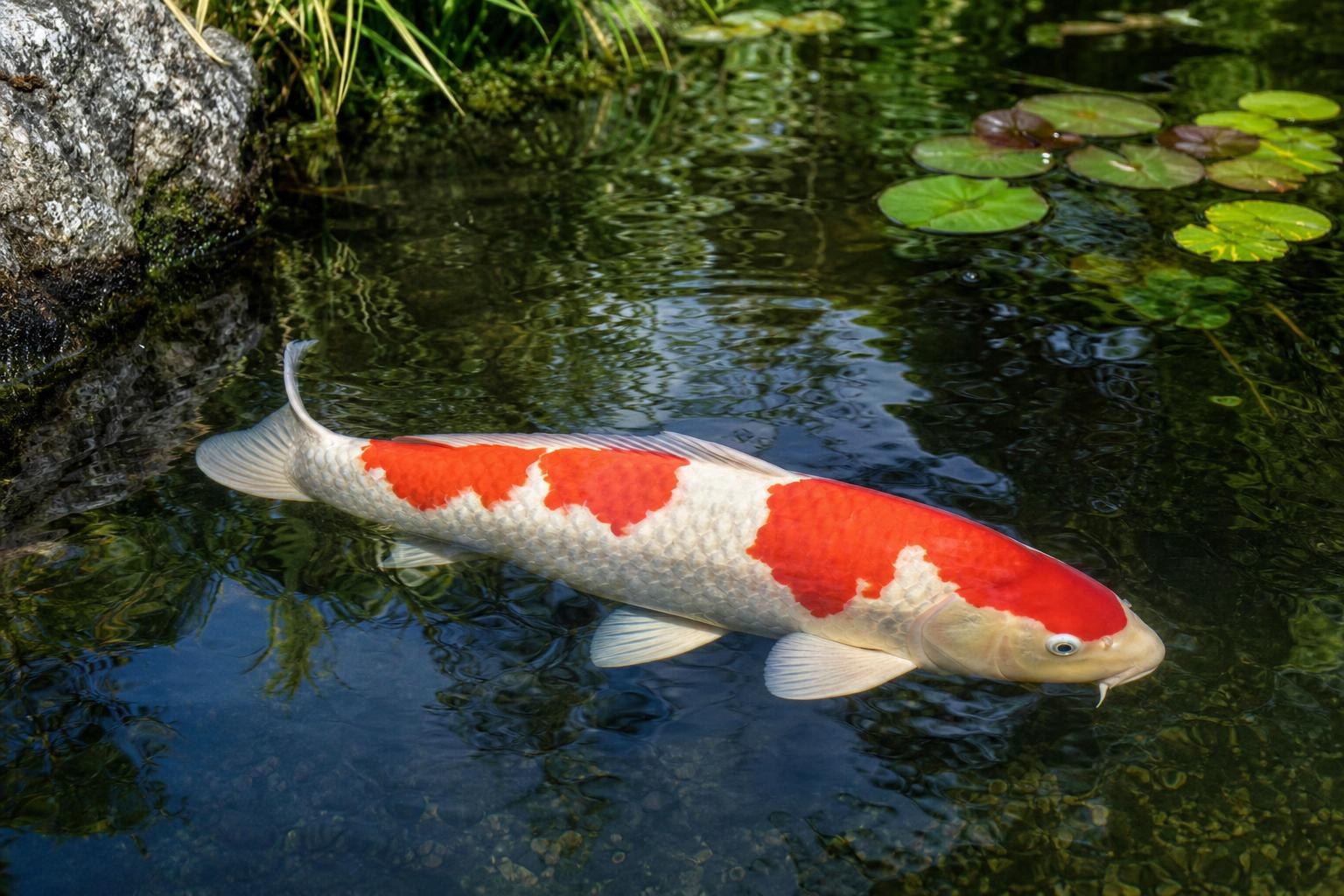
Kohaku is the classic red‑on‑white colour variety of domesticated koi (nishikigoi). They need a dedicated, large, well‑filtered and aerated pond, careful biosecurity and seasonal feeding changes.
At a glance
- Maximum length
- Up to 75 cm
- Minimum pond volume
- 4,500 litres
- Minimum pond depth
- 90 cm
- Temperature range
- 4–24°C
- Suitable for small ponds
- No
- Suitable for wildlife ponds
- No
About Kohaku Koi
Kohaku koi are a colour variety of domesticated koi (nishikigoi), recognised for their red markings on a white body rather than being a separate wild species. In UK conservation and regulatory contexts koi are treated as Cyprinus carpio (trade sources sometimes use Cyprinus rubrofuscus as an alternative taxonomic name). Because they grow large and are active foragers, Kohaku are best kept in a dedicated koi pond. Industry guidance recommends substantial water volume (guidance often quotes a minimum of about 4,500 litres for koi/orfe/tench) and pond depths preferably over 90 cm; many specialist keepers aim for around 1.2 m or more for dedicated koi ponds. Robust biological and mechanical filtration, good circulation and additional UV/clarification systems are commonly advised for koi, and pumps and surface movement or aeration (fountains, waterfalls, airstones) help maintain oxygen levels, especially in warm weather. Koi are omnivorous and are routinely fed commercial koi pellets; in autumn and winter feeds are changed to lower‑protein, more digestible formulas (wheatgerm‑based feeds) and feeding regimes are adjusted as water temperatures fall (trade guidance cites changes around 10–12 °C). Biosecurity is important: buy from reputable, certified suppliers, quarantine new fish and be aware of disease risks (for example Koi Herpes Virus) and import/keeping regulations. Kohaku are generally peaceful, curious and can become tame, but they are messy foragers that can uproot plants, disturb substrate and outcompete small or delicate pond species. For this reason, koi are not suitable for small feature ponds or for wildlife ponds intended to maximise biodiversity. Releasing ornamental fish into the wild is strongly discouraged and can be an offence under UK law (for example the Wildlife and Countryside Act 1981); koi are associated with ecological impacts in wild waters and must not be allowed to escape. If you plan to keep Kohaku, plan for large volume, deep water, strong filtration and aeration, seasonal feeding adjustments, quarantine/biosecurity and sourcing from reputable suppliers rather than treating small garden ponds or wildlife ponds as suitable homes.
Diet
Omnivore: commercial koi pellets/sticks; will eat plant material and invertebrates. Switch to lower‑protein/wheatgerm formulas in colder months.
Temperament
Generally peaceful and curious; can become tame. Foraging behaviour can uproot plants and disturb substrate.
Compatibility
Can be kept with other large, robust pond fish (e.g., orfe, tench) but may outcompete or disturb small or delicate species and plants. Compatibility should be assessed case‑by‑case.
Care notes
Provide a large, deep pond (industry guidance ~4,500 L; depth preferably >90 cm, many keepers use ~1.2 m), robust biological/mechanical filtration, good circulation and aeration, and consider UV clarification. Adjust feeding by temperature (use wheatgerm/low‑protein feeds as temperatures fall; feeding changes commonly advised around 10–12 °C). Quarantine new stock and buy from reputable, certified suppliers; be aware of disease risks (e.g., KHV) and legal/biosecurity obligations. Stocking should be planned around water volume, filtration capacity and oxygen exchange rather than simple per‑fish rules of thumb.