POND FISH GUIDE
Grass Carp
Ctenopharyngodon idella
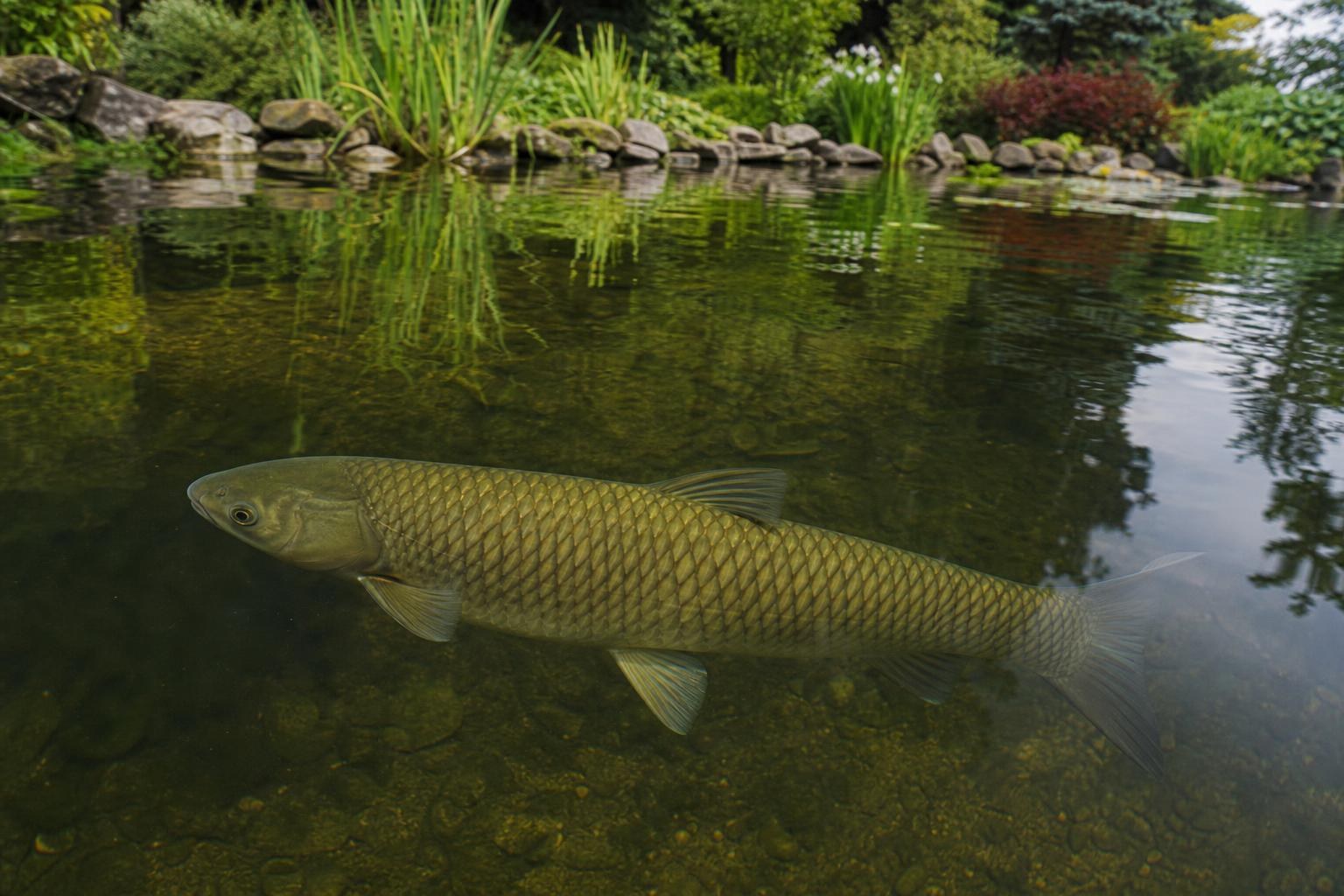
A large, principally herbivorous carp used occasionally for macrophyte control. Needs a large, deep, well‑filtered and well‑aerated pond; not suitable for small or wildlife ponds and subject to UK licence requirements.
At a glance
- Minimum pond depth
- 90 cm
- Suitable for small ponds
- No
- Suitable for wildlife ponds
- No
About Grass Carp
Grass carp (Ctenopharyngodon idella), also called Chinese grass carp or white amur, is a large, principally herbivorous carp commonly used to graze aquatic plants. UK trade guidance typically reports adult fish as “over 60 cm” and describes them as a large, hardy, long‑lived species. They feed chiefly on submerged and emergent macrophytes and will also take filamentous algae/blanketweed and duckweed; in captivity they can accept prepared pond foods and vegetable supplements such as lettuce. Non‑native species assessments note they can be selective about plant species eaten, so outcomes when used for plant control are variable and sometimes unpredictable. Because of their size and diet, grass carp require a large, deep pond with robust filtration and good aeration. Industry guidance suggests a deep pond (trade practice: c. 3 ft / ≈0.9 m as a working minimum for large carp), and non‑native species literature warns that the large volumes of plant material produced and digested can increase organic loading and lead to oxygen depletion during decomposition. Ensure secure containment (no risk of escape), strong filtration and aeration, and active removal or management of decaying plant matter. Behaviourally they are non‑predatory, peaceful grazers and are commonly kept only where aquatic plants are not important (for example with large carp or koi in plant‑free coarse fish ponds). They are explicitly not suitable for wildlife or planted ornamental ponds because they can remove vegetation that other pond wildlife depend on. Grass carp are hardy and can overwinter in UK ponds, but feeding and grazing activity decline sharply below about 15 °C; general pond food guidance also advises not feeding pond fish when water temperature falls below around 10 °C. Legally, grass carp are a regulated non‑native species in the UK. Keeping them in garden ponds is permitted only under specified general licence conditions that require secure containment; releasing or stocking into open waters requires specific agency consent or licence. Triploid (sterile) grass carp are referenced in the literature in relation to biological control, but stocking for control should only be done with appropriate consents and awareness of unpredictable ecological effects.
Diet
Herbivore — eats submerged and emergent aquatic plants, filamentous algae/duckweed; will accept prepared pond foods and vegetable supplements in captivity.
Temperament
Non‑predatory, peaceful, large carp‑type grazer.
Compatibility
Compatible in large, plant‑free coarse fish or koi ponds where aquatic plants are not desired. Not compatible with planted or wildlife ponds — they will consume most aquatic vegetation and can harm other pond wildlife.
Care notes
Require a large, secure, deep pond with strong filtration and good aeration. Manage decaying plant material to avoid oxygen depletion. Activity and plant‑grazing decline below c.15 °C; general trade advice is to avoid feeding pond fish below c.10 °C. Triploid (sterile) individuals are used in biocontrol contexts; stocking for plant control is regulated and outcomes can be unpredictable. Obtain and follow any ILFA/general licence conditions for garden ponds and obtain specific agency consent before any release or stocking to open waters.