POND FISH GUIDE
Golden Tench Red
Tinca tinca
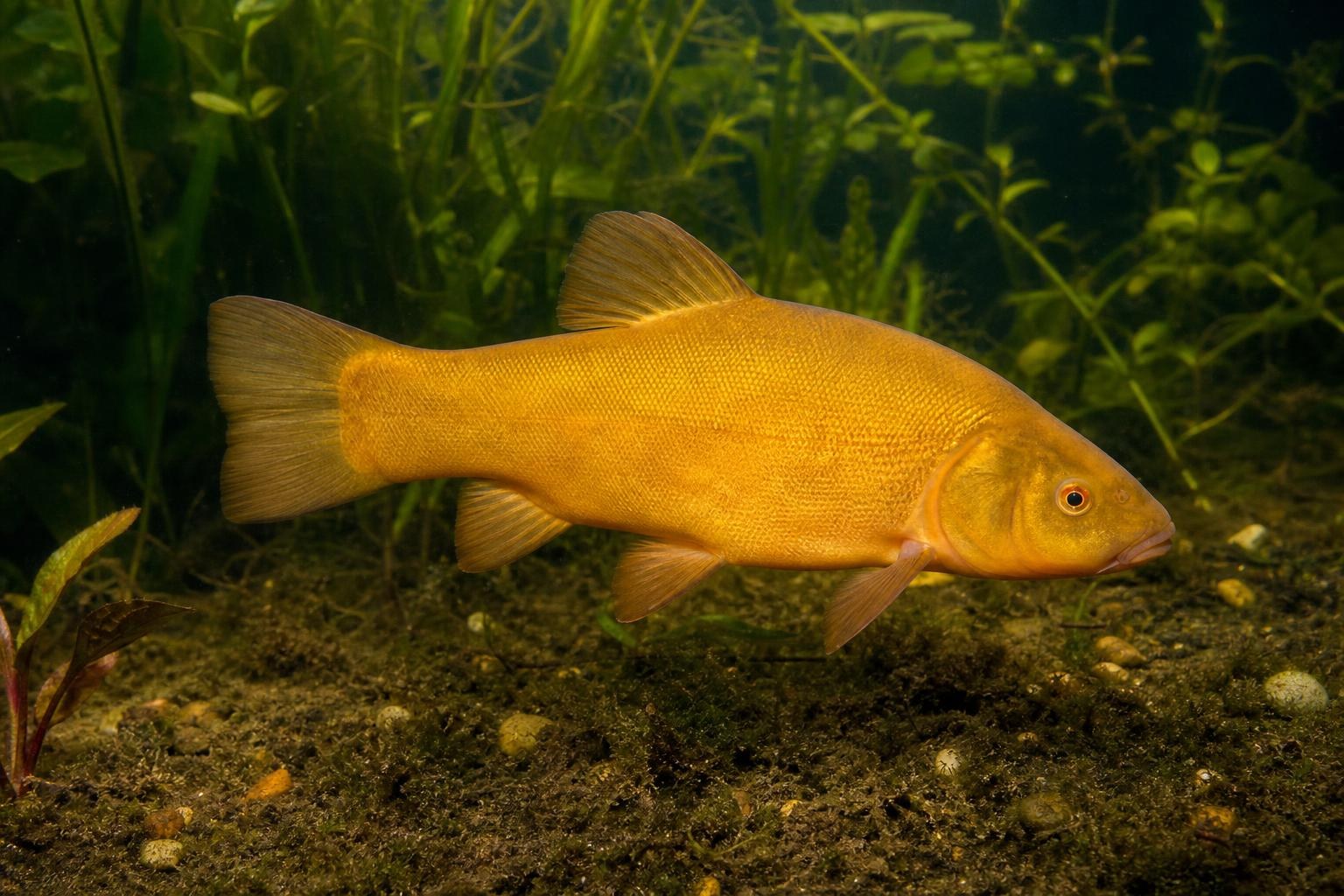
A gold-coloured ornamental strain of the common tench (Tinca tinca). A bottom‑dwelling, generally peaceful and hardy pond fish that does best in larger, planted ponds with adequate depth, filtration and soft substrate.
At a glance
- Maximum length
- Up to 75 cm
- Minimum pond volume
- 4,500 litres
- Minimum pond depth
- 45 cm
- Temperature range
- 4–24°C
- Care level
- moderate
- Suitable for small ponds
- No
- Suitable for wildlife ponds
- Yes
About Golden Tench Red
The Golden Tench Red is a colour variety of the common tench (Tinca tinca), bred for its gold/yellow appearance but otherwise sharing the species’ habits and requirements. Tench are shy, bottom‑oriented fish that favour vegetated, lowland stillwaters and planted garden ponds. They are hardy temperate fish and are often recommended for larger, planted ponds rather than very small or shallow water features. Housing and pond design: industry guidance recommends ponds for larger pond species like tench to be substantially sized (a commonly cited recommendation is around 4,500 litres or more). Pond depth guidance for fish generally is at least 45–60 cm, with deeper central areas (0.3–1.0 m) beneficial for refuge and plant growth. Provide a soft, silted bottom or areas of substrate and plenty of marginal and submerged vegetation to allow natural foraging and shelter. Feeding and behaviour: tench are benthic feeders that grub for invertebrates such as pond snails and small mussels. They readily accept sinking prepared foods (sinking pellets/sticks) and will also forage natural foods in the substrate. Their shy, placid nature makes them generally compatible with other non‑predatory cyprinids (goldfish, rudd, orfe, carp), provided pond volume, filtration and oxygenation are sufficient. Care and stocking: tench are regarded as tolerant and moderately easy to keep for pondowners who can provide appropriate space, planting and filtration. Match filtration and pond management to expected adult biomass and avoid overfeeding. In summer, additional aeration may be needed if oxygen levels fall; in winter reduce feeding and consider wheatgerm‑type foods at lower temperatures. Tench are typically present year‑round in UK waters and will usually overwinter in suitable ponds. Legal and health notes: tench (Tinca tinca) are included in UK fish‑health group listings (Group 1) and are subject to fish‑health and movement guidance — check GOV.UK guidance before moving or stocking. Do not release captive fish into the wild.
Diet
Benthic/invertivore-omnivore: pond invertebrates (snails, mussels), detritus; accepts sinking pellets/sticks.
Temperament
Generally peaceful, shy, bottom-dweller.
Compatibility
Generally compatible with non-predatory cyprinids (goldfish, rudd, orfe, carp) if pond size, filtration and oxygenation are adequate. Avoid housing with large predatory fish. Their grubbing behaviour can disturb substrate and delicate planting.
Care notes
Provide a planted pond with soft bottom areas for foraging, a deeper refuge zone, adequate filtration sized for adult biomass, and sinking food for feeding. Monitor water quality (ammonia/nitrite zero), reduce feeding as temperatures fall and consider wheatgerm-type winter foods. Provide aeration in hot weather and follow GOV.UK fish‑health guidance when moving or stocking fish.