POND FISH GUIDE
Golden Tench
Tinca tinca
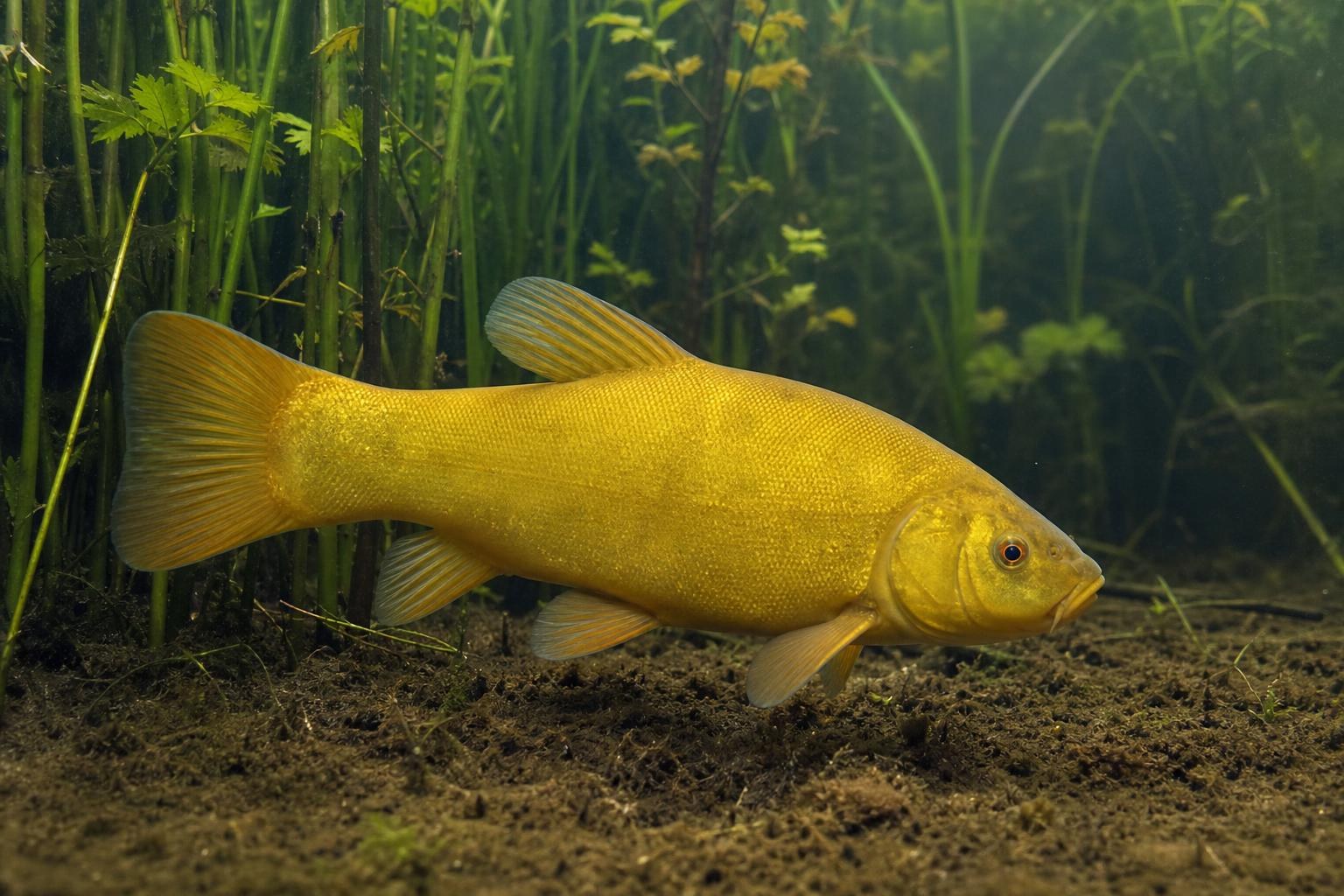
Golden Tench are the ornamental/golden colour form of the native coarse fish Tinca tinca. They are bottom‑feeding, shy pond fish that can grow large; keep them in well‑planted, adequately sized and oxygenated ponds.
At a glance
- Maximum length
- Up to 75 cm
- Minimum pond volume
- 4,500 litres
- Minimum pond depth
- 45 cm
- Temperature range
- 4–24°C
- Suitable for small ponds
- No
- Suitable for wildlife ponds
- No
About Golden Tench
Golden Tench are a domesticated, ornamental colour form of the native tench (Tinca tinca). They are shy, bottom‑dwelling fish that “grub” in the substrate and shelter in dense aquatic plants. Wild and trade sources report adult tench sizes variously (commonly c. 40–70 cm, with trade notes sometimes citing up to c. 75 cm), though many individuals in garden ponds remain much smaller. Husbandry guidance used by UK trade bodies describes tench as a hardy coldwater coarse fish but emphasises they still need suitable pond volume, depth, filtration, oxygenation and seasonal management. OATA trade guidance recommends a pond of around 4,500 litres or more for species that can grow large (koi, tench, orfe) and general pond‑fish guidance suggests ponds ideally at least c. 45–60 cm deep (deeper for larger or long‑term holding). These are husbandry recommendations rather than scientifically established minimums for a self‑sustaining wild population. Tench feed largely on aquatic invertebrates (pond snails, small mussels and similar prey) and will accept sinking foods in captivity. Recommended husbandry ranges used in trade guidance include a water temperature band of roughly 4–24 °C and pH around 6.5–8.5, with ammonia and nitrite at zero and low nitrates. Good filtration, regular monitoring, oxygenation (pond plants, aeration, features) and deeper refuges are important. Tench overwinter in UK stillwaters with reduced activity; winter care includes appropriate seasonal feeding and ensuring an ice‑free gap if the surface freezes. Conservation and legal notes: Freshwater Habitats Trust and other conservation bodies advise against adding fish to ponds created primarily for wildlife, because fish can reduce suitability for amphibians and invertebrates. Also, moving or introducing fish into rivers, lakes or fisheries without Environment Agency consent is an offence; always check EA/GOV.UK guidance before moving fish. In short, golden tench suit medium to large planted garden ponds with good filtration and aeration, not small wildlife pond features.
Diet
Bottom‑feeding omnivore: aquatic invertebrates (snails, small mussels), detritus; accepts sinking pellets
Temperament
Shy, bottom‑dwelling, shelters in dense macrophytes; not typically aggressive
Compatibility
Commonly kept with other coldwater coarse species such as orfe, rudd and roach where pond size, oxygenation and stocking allow. Exercise caution mixing with large carp or heavy‑bodied species that compete strongly or heavily disturb substrate.
Care notes
Trade guidance: aim for a well‑planted pond with good filtration and aeration; provide deeper refuges. Recommended husbandry ranges: temperature c. 4–24 °C, pH c. 6.5–8.5, ammonia and nitrite zero, low nitrates. Use sinking pellets for feeding and adjust diet seasonally for overwintering. Recommended pond volume for species that can grow large is c. 4,500 L or more and a general minimum depth guidance for pond fish is c. 45–60 cm; these are husbandry recommendations rather than definitive biological thresholds. Do not add fish to ponds created primarily for wildlife; check Environment Agency/Gov.UK rules before moving or introducing fish to any waterbody.