POND FISH GUIDE
Golden Rudd
Scardinius erythrophthalmus
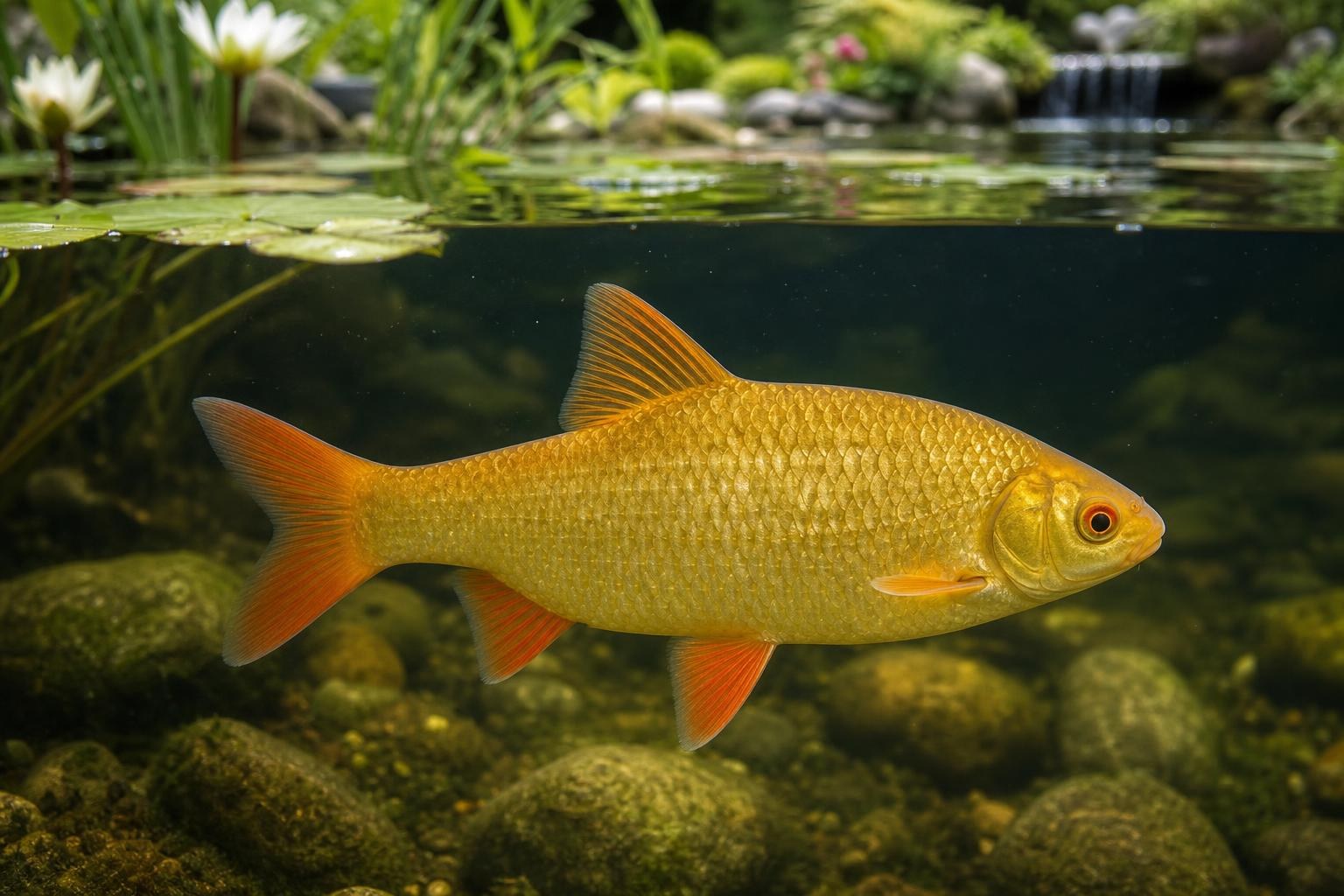
The golden/domesticated form of the native rudd (Scardinius erythrophthalmus) is a hardy, schooling pond cyprinid. It is omnivorous, generally peaceful and commonly kept in UK garden ponds, but fish-free ponds are preferred where wildlife value is the priority.
At a glance
- Maximum length
- Up to 40 cm
- Suitable for small ponds
- Yes
- Suitable for wildlife ponds
- No
About Golden Rudd
The Golden Rudd is the domesticated/golden colour form of the native rudd, treated as the same species Scardinius erythrophthalmus. In garden-pond and ornamental literature it is described as a relatively small-to-medium carp-family fish, schooling and generally peaceful; hobby and trade sources characterise it as hardy and one of the easier pond fishes to keep compared with larger or more demanding species. Diet and behaviour: Rudd are omnivorous in ponds and readily consume plant material such as duckweed and submerged macrophytes as well as aquatic invertebrates. They are schooling fish that benefit from being kept in groups and are usually compatible with other peaceful coldwater pond species when the pond is appropriately sized and managed. Care and habitat: Practical pond-keeping advice emphasises good plant cover (emergent, marginal and submerged plants), sheltered areas where fish can hide, avoiding overstocking, and routine maintenance to limit nutrient build-up. Trade guidance recommends allowing ponds to include a deep refuge to support winter survival; general OATA guidance for pond fish (not species-specific) suggests ponds ideally be at least c.45–60 cm deep so a stable thermal refuge is available. Rudd are commonly kept in unheated garden ponds and sellers often advise adding new fish only when water temperatures are reasonably stable. Compatibility and wildlife considerations: Rudd are often listed as compatible with goldfish and may be kept alongside orfe and tench in suitably large, well-managed ponds. However, Freshwater Habitats Trust warns that adding fish to small wildlife ponds can reduce amphibian and invertebrate populations and lower wildlife value; if wildlife is the priority, a fish-free pond or a separate fish pond is recommended. Biosecurity and legal points: Do not release fish into wild waters. Rudd appear on lists of susceptible/vector species in trade disease guidance, so follow legal import/transport rules and biosecurity best practice and consult an experienced retailer for stocking and disease-prevention advice.
Diet
Omnivore: duckweed and other plant material plus aquatic invertebrates
Temperament
Schooling, generally peaceful
Compatibility
Generally compatible with other peaceful pond species such as goldfish, orfe and tench in suitably large, well-managed ponds. Keep in groups and avoid overcrowding.
Care notes
Provide good plant cover (emergent, marginal and submerged), sheltered areas, and adequate depth for winter refuge. Avoid overstocking and excess feeding to limit nutrient build-up. Follow biosecurity and legal rules: do not release fish into wild waters and follow retailer/OATA disease-prevention guidance. For wildlife-focused ponds, consider keeping fish-free or creating a separate fish pond.