POND FISH GUIDE
Golden orfe
Leuciscus idus
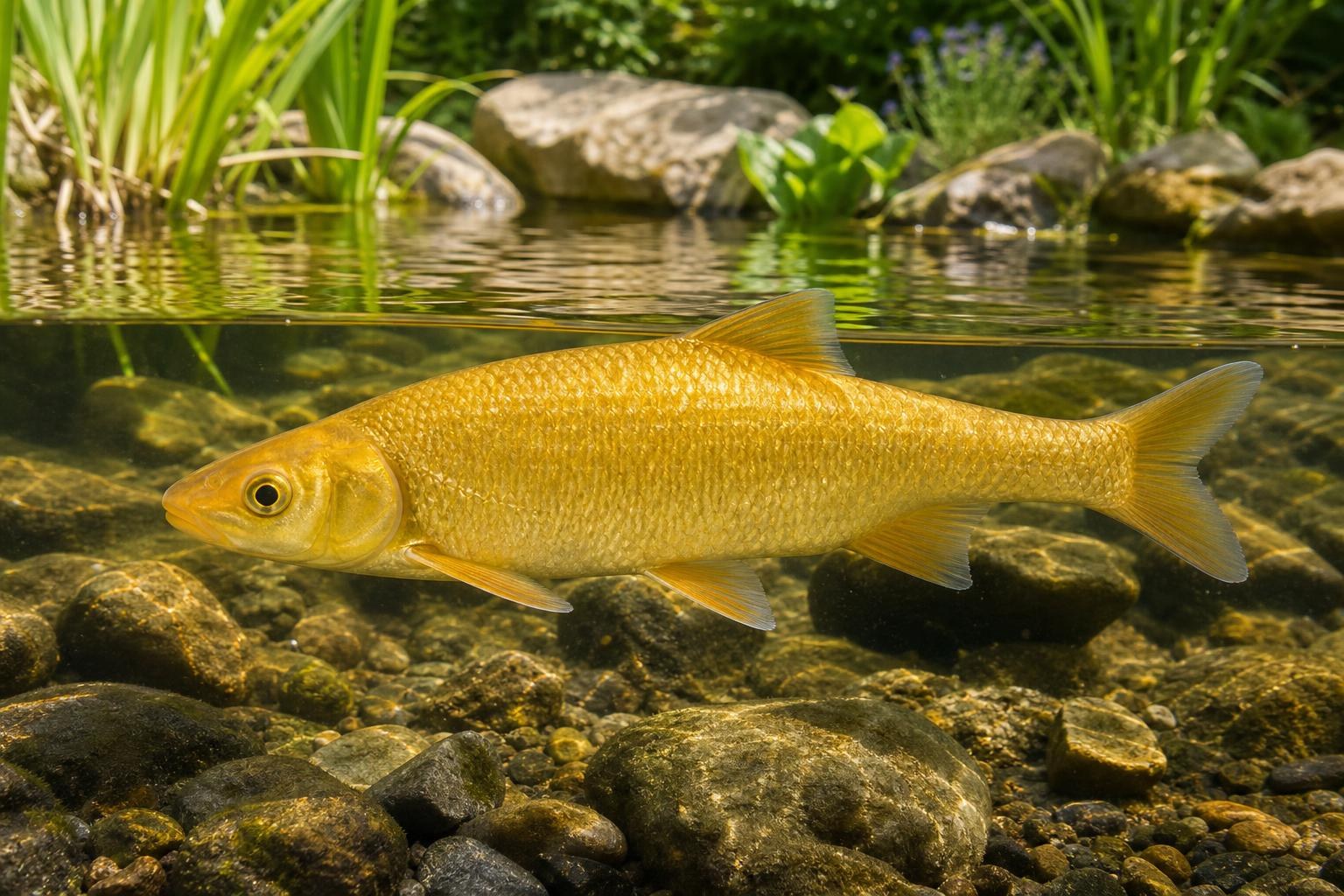
The golden orfe is the domestic gold colour form of the European ide (Leuciscus idus). An active, shoaling cold‑water pond fish that grows large (commonly ~60 cm+ in captivity), it needs large, well‑aerated ponds with strong water movement and good filtration.
At a glance
- Maximum length
- Up to 60 cm
- Minimum pond volume
- 4,500 litres
- Minimum pond depth
- 50 cm
- Temperature range
- 4–22°C
- Suitable for small ponds
- No
- Suitable for wildlife ponds
- No
About Golden orfe
The golden orfe is a domestic colour form of the European ide (Leuciscus idus) commonly sold to UK pondkeepers. These are active, sociable fish that should be kept in shoals rather than singly. In captive pond literature they commonly reach around 60 cm or more, so plan pond space and filtration for large adult fish. Orfe are adapted to temperate outdoor ponds and tolerate low temperatures, so they are regularly overwintered outdoors in the UK provided oxygenation and water quality are maintained. Husbandry priorities are high oxygen and water movement: fountains, waterfalls or stream flows and strong filtration are regularly recommended. Orfe need well‑filtered, well‑aerated larger ponds and do not suit small, stagnant or poorly‑aerated garden features. They are reported as needing high oxygen levels and can struggle or jump if oxygen dips. Use water conditioners when adding tap water and take care with some pond medications, as orfe can be sensitive to certain treatments. Diet is omnivorous and opportunist: staple feeding is pellets/pond sticks (or flakes where appropriate) with supplementary frozen or live foods and insects; juveniles readily take mosquito larvae and other invertebrates. Behaviourally they are peaceful with plants but are active cruisers and may unsettle very placid species; large orfe can eat fry and very small fish. Because of their size and activity, stock by considering adult biomass, oxygen and filtration capacity. They are not appropriate for wildlife ponds intended to maximise invertebrate or zooplankton diversity: introduced fish such as orfe can reduce aquatic invertebrate communities and alter water clarity. From a legal/biosecurity angle, Leuciscus idus is recorded as a non‑native in GB datasets, and ornamental movements can spread pathogens; GOV.UK guidance notes that keeping ide/orfe in private residential garden ponds (discrete, non‑escaping waterbodies under one acre) does not require an ILFA licence, but standard biosecurity (quarantine new stock, source reputable suppliers, do not release fish) is recommended.
Diet
Omnivore — pellets/pond sticks (staple) supplemented with frozen/live foods and insects; juveniles eat mosquito larvae and invertebrates.
Temperament
Active, shoaling and sociable; generally peaceful with plants and larger pond fish but may eat fry and can stress very placid species with their activity.
Compatibility
Keep in groups. Compatible with larger pond species (koi, goldfish, tench, rudd) when pond volume, filtration and oxygenation are sufficient. Beware predation on fry and very small fish, and that high activity can stress placid species. Avoid overstocking and provide strong water movement and aeration when mixing species.
Care notes
Provide a large pond with strong filtration and good water movement (fountain, waterfall or stream) to ensure high oxygen. Keep in shoals; plan for adult size (~60 cm+). Use water conditioners for tap water and be cautious with some pond medications. Expect active behaviour and possible jumping — consider predator covers/netting. Overwinter outdoors with maintained oxygenation and appropriate winter feeding. Quarantine new stock and source from reputable suppliers; do not release ornamental fish into the wild.