POND FISH GUIDE
Golden Ide
Leuciscus idus
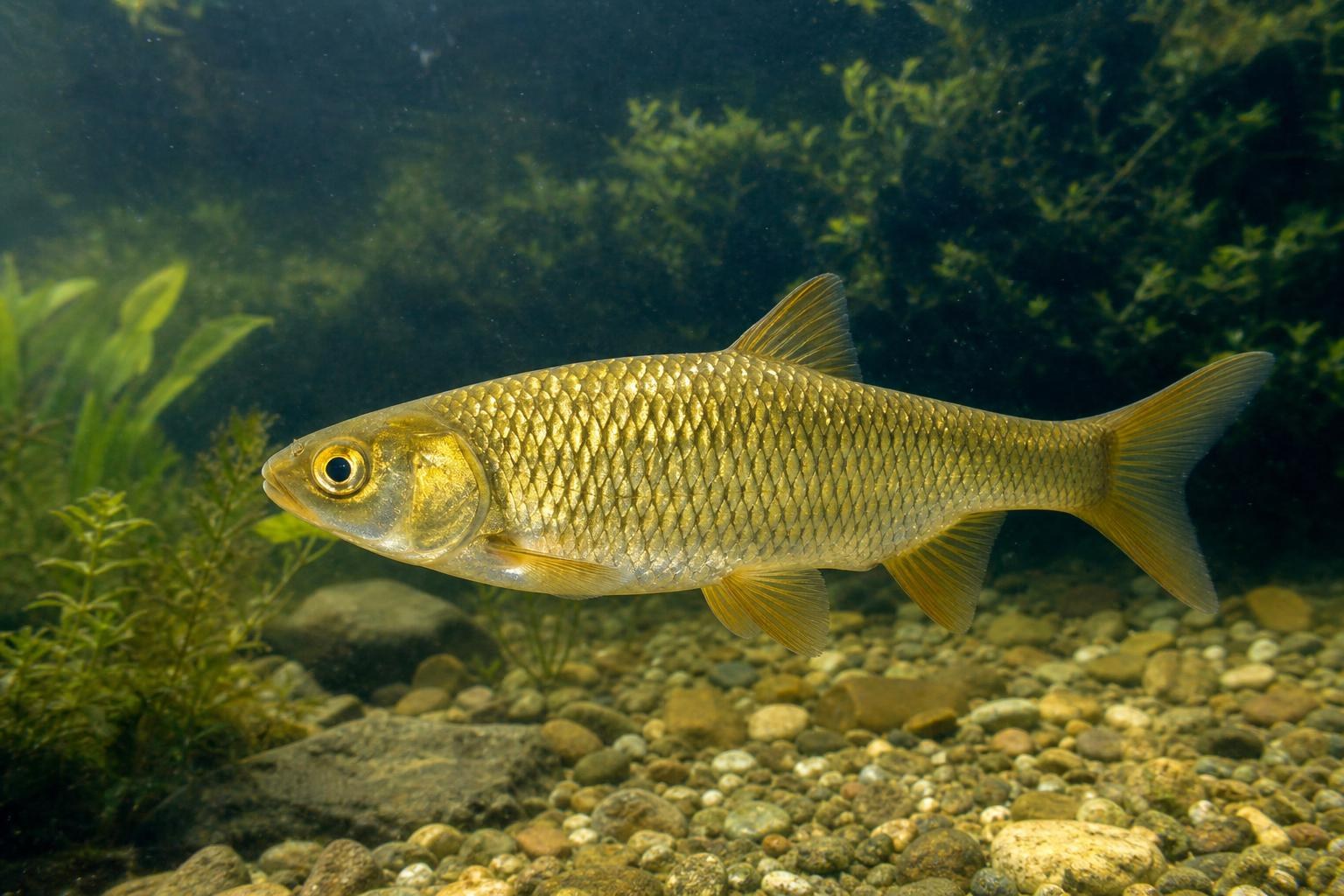
The Golden Ide (or Golden Orfe) is Leuciscus idus — an active, shoaling temperate pond cyprinid. Typically reaches about 30 cm, needs a large, well‑oxygenated pond and is not suitable for wildlife ponds.
At a glance
- Maximum length
- Up to 30 cm
- Minimum pond volume
- 4,500 litres
- Temperature range
- 4–24°C
- Suitable for small ponds
- No
- Suitable for wildlife ponds
- No
About Golden Ide
The Golden Ide (trade name Golden Orfe; Leuciscus idus) is a hardy, active shoaling pond fish commonly offered to UK pond owners. Ornamentally kept specimens are typically quoted as reaching up to about 30 cm, although larger coarse‑fish sizes can occur under different conditions. In trade guidance the species is treated as a temperate pond cyprinid that remains active at relatively low pond temperatures and will accept standard commercial pond foods. Pond requirements emphasise space, water movement and oxygen. Trade and industry advice recommends keeping orfe in larger, well‑aerated ponds with good filtration and continuous water movement (for example fountain, waterfall or high‑flow filtration), because they have higher oxygen and swimming‑space needs than small goldfish. A commonly cited trade recommendation for orfe/tench/koi is ponds of around 4,500 litres or more and a reasonable surface area (trade notes reference about 5–6 m² as adequate swimming space in guidance documents). A species‑specific minimum pond depth for orfe was not established in the reviewed sources. Golden Ide are omnivorous pond cyprinids that take regular pond foods and commercial pond sticks; they will feed at cooler temperatures than some carp. They are best kept in shoals (trade guidance suggests groups of at least 4–6) and with similar non‑aggressive, similar‑sized pond species. They are not suitable for wildlife‑focused ponds because they will prey on amphibian larvae and many invertebrates and so reduce wildlife value. Legal and biosecurity notes for UK keepers: GOV.UK guidance lists ide/orfe among species that do not require an ILFA licence for keeping in discrete residential garden ponds with no risk of escape, but owners should check current GOV.UK/FHI/OATA guidance before purchase or movement. Also follow trade biosecurity advice because orfe appear on some disease/vector lists and can be sensitive to some stronger fish medicines.
Diet
Omnivore — accepts standard commercial pond foods / pond sticks
Temperament
Active, shoaling, generally peaceful; surface to midwater swimmer
Compatibility
Keep in shoals (trade guidance suggests groups of at least 4–6). Compatible with other non‑aggressive, similar‑sized pond fish. Avoid adding to wildlife ponds — will eat amphibian larvae. Exercise caution when mixing species if medicating, as orfe can be susceptible to some strong medications.
Care notes
Provide a large pond with good filtration, continuous water movement and aeration (fountain, waterfall or high‑flow filter) to maintain oxygen. Do not overstock — orfe are active and need swimming space and oxygen. Feed standard pond foods; they will feed at lower temperatures than some carp. Overwintering outdoors is possible in suitably deep, well‑oxygenated ponds, but no species‑specific depth guidance was established in the reviewed sources. Follow current OATA/FHI biosecurity and disease guidance when moving or managing stock.