POND FISH GUIDE
Gold Barb
Barbodes semifasciolatus
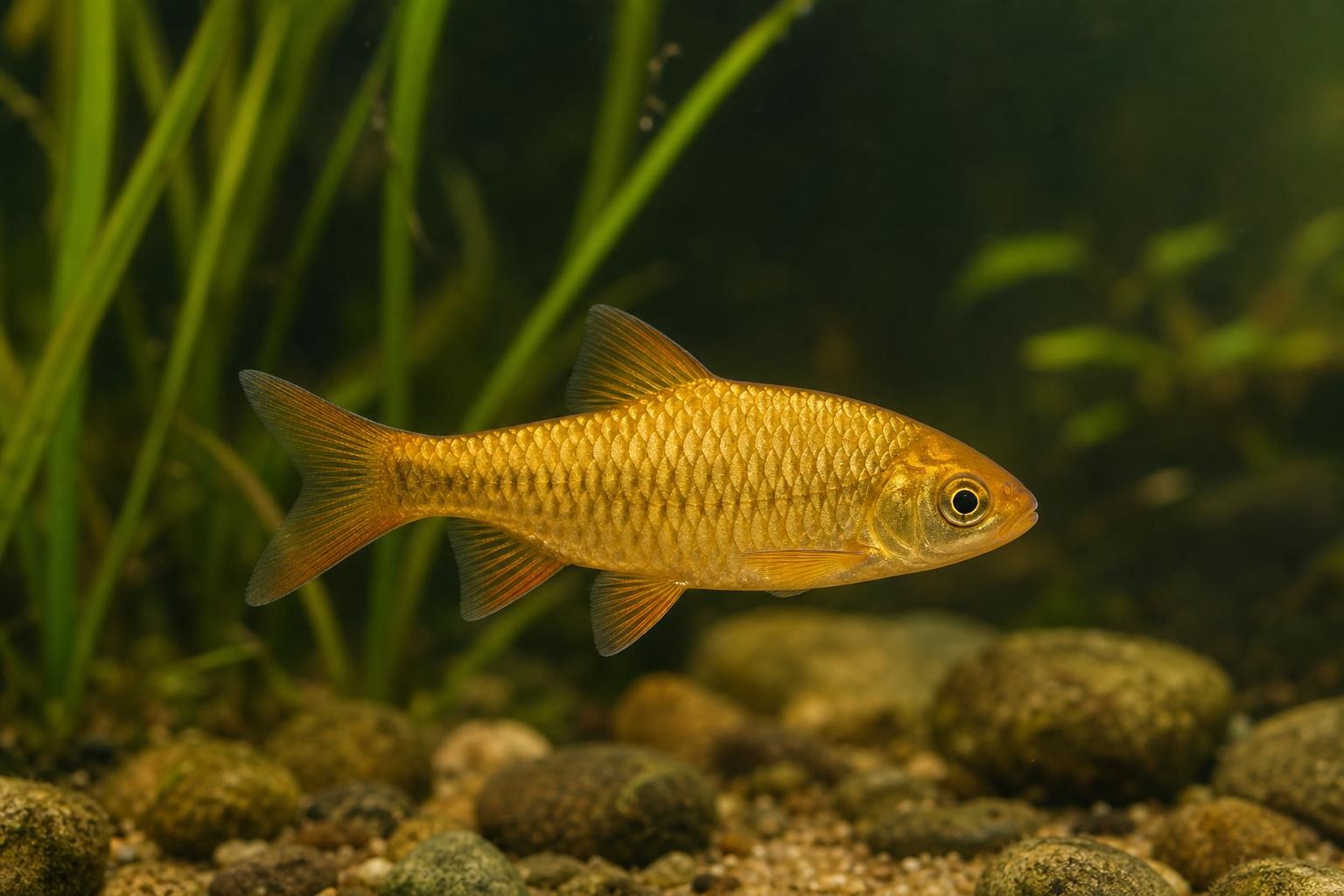
A hardy, golden captive colour form of Barbodes semifasciolatus that reaches about 10 cm. Suited to indoor aquaria as a shoaling, active omnivore. Not recommended or authorised for outdoor or wildlife ponds in the UK due to biosecurity and legal concerns.
At a glance
- Maximum length
- Up to 10 cm
- Temperature range
- 15–24°C
- Suitable for small ponds
- No
- Suitable for wildlife ponds
- No
About Gold Barb
The Gold Barb is the golden, captive colour form of Barbodes semifasciolatus and is commonly sold in the aquarium trade. Adults grow to roughly 10 cm (4"), are active, shoaling cyprinids and are generally described as hardy and suitable for beginners in aquarium settings. Fishkeeper lists a comfortable aquarium temperature range of about 15–24 °C for this species. Gold Barbs are omnivorous: they accept flake and pellet foods, algae wafers and small frozen foods such as mosquito larvae, brine shrimp and daphnia. They will also nibble some algae and soft aquatic plants, so choose robust planting or provide open swimming areas to reduce plant damage. As active mid-water swimmers they do best in groups; trade guidance recommends keeping them in shoals (Fishkeeper: groups of 6+; OATA advises at least five for barbs generally). Practical husbandry for aquarium keepers includes good filtration, reasonable flow and extra aeration, regular partial water changes and varied feeding. Avoid slow-moving, timid or long-finned tankmates that could be stressed or subject to nipping; instead choose robust, similarly active community species. Cycle biological filtration before adding fish and add stock slowly to allow the filter to mature. Crucially for UK pond owners: authoritative trade guidance (OATA) and UK wildlife advice discourage and explicitly prohibit keeping some barbs outdoors for biosecurity reasons. Gold Barbs are not recommended for outdoor garden or wildlife ponds; Freshwater Habitats Trust and related guidance advise that fish should not be added to wildlife ponds and that releasing aquarium fish into the wild is illegal without consent. No authoritative minimum outdoor pond volume or depth for Gold Barb was identified in the consulted sources, and overwintering outdoors in UK ponds is not supported by the references. Treat Gold Barbs as indoor aquarium fish and follow standard barb husbandry if you keep them.
Diet
Omnivore — accepts flakes, pellets/granules, algae wafers and small frozen foods (mosquito larvae, brine shrimp, daphnia); will nibble soft plants and algae.
Temperament
Hardy, peaceful but active shoaling fish; may nibble plants. Avoid slow, timid or long‑finned tankmates.
Compatibility
Keep in shoals (Fishkeeper recommends groups of 6+; OATA recommends at least five for barbs generally). Best with active, robust mid‑water community species. Avoid slow or long‑finned companions vulnerable to nipping.
Care notes
Treat as an indoor aquarium species — OATA states some barbs (including golden barbs) must not be kept outdoors for biosecurity reasons. Provide good filtration, moderate current, extra aeration, open swimming space and planted margins with robust plants. Perform regular water testing and weekly partial water changes; add fish slowly to allow biological filtration to develop. Do not release into wild waterbodies (illegal without consent).