POND FISH GUIDE
Ghost Koi
Cyprinus carpio
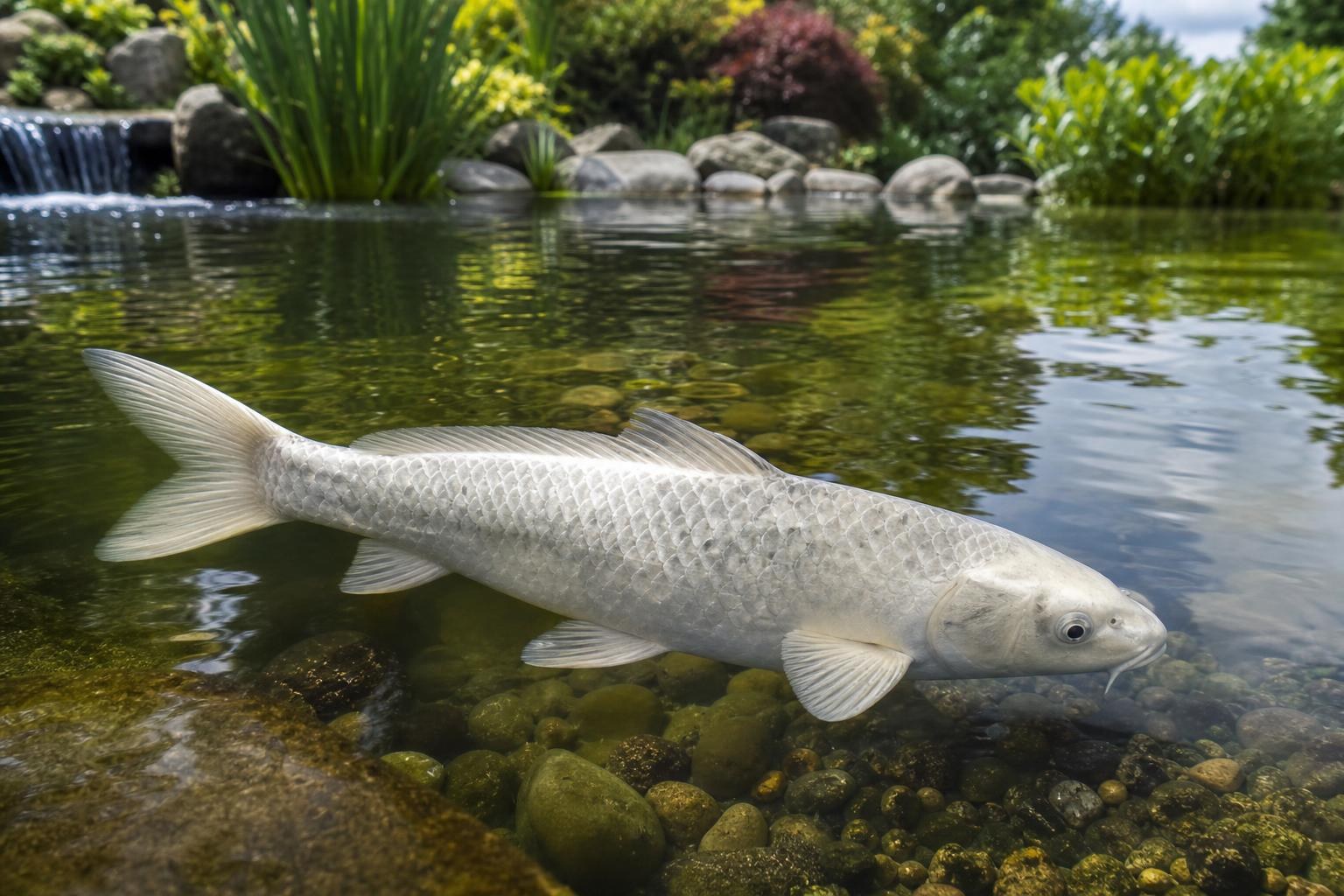
Ghost Koi are ornamental colour variants / hybrids of common carp (Cyprinus carpio). They can grow into large pond carp and need substantial volume, depth, strong filtration and strict biosecurity; they are not suitable for wildlife or small ponds.
At a glance
- Minimum pond volume
- 4,500 litres
- Minimum pond depth
- 90 cm
- Temperature range
- 4–24°C
- Suitable for small ponds
- No
- Suitable for wildlife ponds
- No
About Ghost Koi
Ghost Koi are an ornamental variety or hybrid form within the common carp complex (Cyprinus carpio). They are not a separate wild species but treated in trade and government guidance as colour/varietal forms of C. carpio. Like other koi and large carp, ghost koi can reach substantial adult sizes (size varies with strain and environment) and require pond design and husbandry appropriate for large carp rather than small garden pools. Practical care guidance for UK pond owners: plan for a large, deep pond and robust systems — industry guidance suggests ponds of about 4,500 litres or more and depths of around 90 cm (3 ft) or greater for koi-sized carp. These figures are husbandry recommendations rather than statutory minima. Good filtration and aeration (pumps, waterfalls or fountains) are important to maintain water quality and oxygen levels. Feed formulated carp/koi food and avoid overfeeding to limit ammonia and nitrate build-up. Stock with the adult size in mind and avoid overcrowding. Ghost koi are omnivorous: they feed on plant material, benthic invertebrates and detritus, will grub in substrate and accept prepared foods; they can become tame with regular feeding. Temperament is generally social but can be boisterous; they may uproot marginal and submerged plants and can be aggressive at spawning. Biosecurity and legal points for UK keepers: ornamental variants (including ghost carp/ghost koi) are treated as ornamental variants for fish-health reporting. Koi Herpesvirus (KHV) affects all C. carpio varieties, including ghost koi, and is a notifiable disease in Great Britain — suspected outbreaks must be reported to the Fish Health Inspectorate. Follow OATA and government biosecurity guidance when buying, moving or introducing fish. Conservation note: do not add carp to wildlife ponds. Carp reduce biodiversity by predating amphibian eggs/larvae, suppressing invertebrates and uprooting plants. If you want to keep ghost koi long-term, provide large volume, deep water, strong filtration/aeration and strict biosecurity.
Diet
Omnivore — plant material, benthic invertebrates, detritus; accepts prepared carp/koi food
Temperament
Social and can become tame; boisterous, may uproot plants; possible aggression during spawning
Compatibility
Compatible with other large coldwater pond fish (other koi, large goldfish, tench, orfe) in appropriately large, well-filtered ponds. Not compatible with small wildlife ponds; will outcompete or predate amphibians and small fish and uproot plants.
Care notes
Design for adult size: large volume (~4,500 L guidance) and depth (~90 cm+) with robust biological/mechanical filtration and good aeration. Feed formulated carp/koi food; avoid overfeeding. Plan stocking with adult sizes in mind and avoid overcrowding. Follow strict biosecurity: test new stock, follow movement rules and report notifiable diseases (KHV). Overwintering: deeper ponds provide refuge; maintain oxygenation and stable water quality through autumn/winter.