POND FISH GUIDE
Fathead Minnow
Pimephales promelas
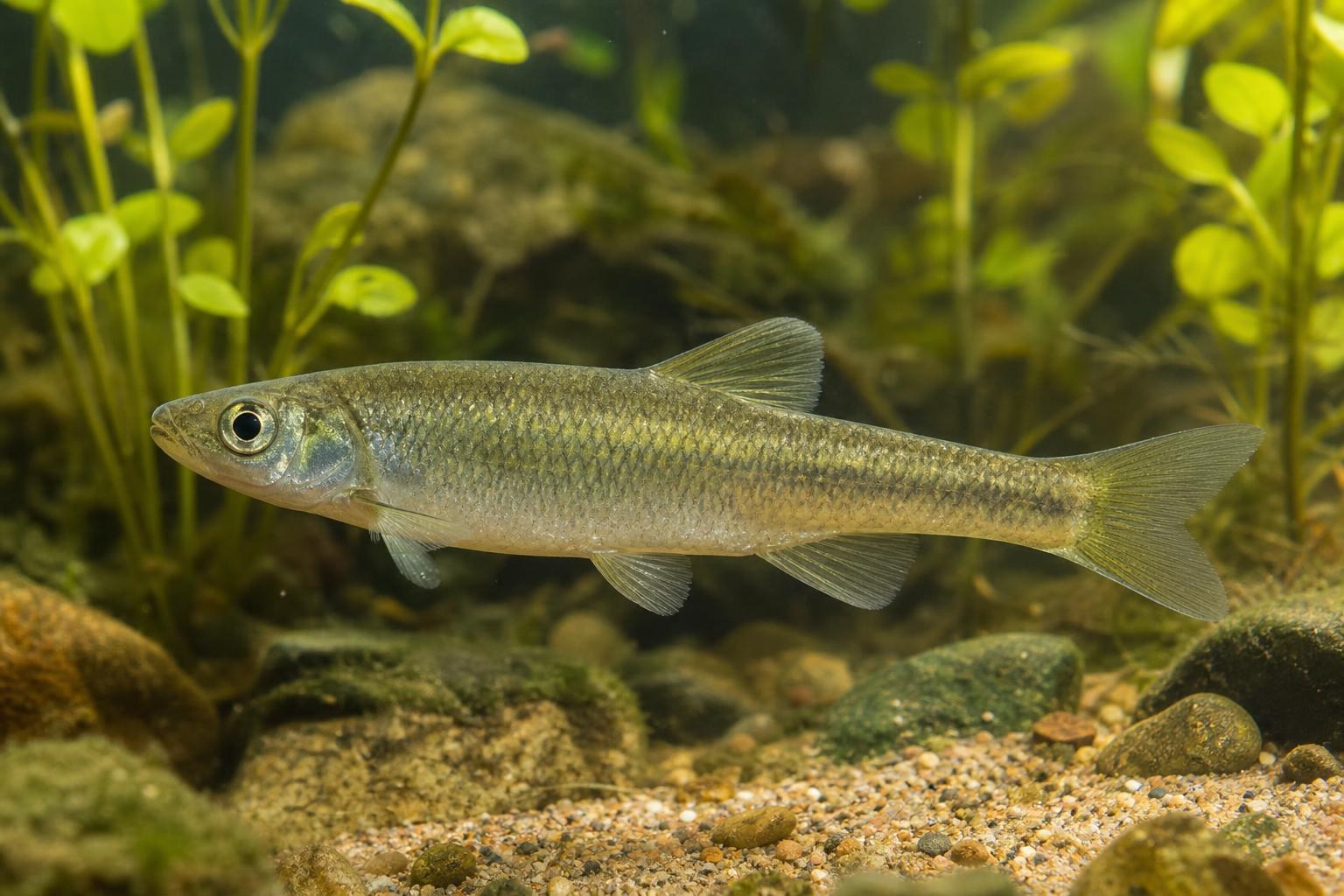
A small non-native minnowspecies recorded breeding in UK garden ponds. Tolerant of a wide temperature range (0–33 °C) and low oxygen, omnivorous and capable of reaching high densities. Not recommended for wildlife ponds; if kept in decorative filtered features follow strict biosecurity and legal guidance.
At a glance
- Temperature range
- 0–33°C
- Suitable for small ponds
- Yes
- Suitable for wildlife ponds
- No
About Fathead Minnow
The Fathead Minnow (Pimephales promelas), including captive “rosy red” strains sold in the trade, is a hardy, omnivorous small fish that has established self‑reproducing populations in ponds in England and Scotland. UK non‑native species material notes its broad environmental tolerance (reported as sub‑temperate, 0–33 °C), resilience to poorly oxygenated or turbid water, and ability to overwinter in suitable sites. Diets recorded in UK guidance include detritus, plant material, aquatic invertebrates and zooplankton, reflecting an opportunistic feeding habit. Breeding behaviour is important for pond keepers: males develop a swollen head during spawning and guard eggs laid in nests, so territorial behaviour around nest sites can occur. Natural England / NNSS sources warn the species can reach very high densities and outcompete native small fishes for food and spawning sites; in small ponds this can reduce suitability for amphibians and invertebrates. Freshwater Habitats Trust guidance on garden/wildlife ponds emphasises that fish commonly overwhelm small wildlife ponds, predate amphibian larvae and increase turbidity or pollution unless filtration and careful husbandry are used. Trade sources indicate captive rosy strains are used successfully in very small, filtered decorative features, but UK conservation guidance is clear that fathead minnows are inappropriate for wildlife‑focused ponds. They are also listed on GB susceptible/vector species documents and the species appears on import/quarantine lists (Import of Live Fish Act listings referenced in NNSS material), and historical introductions have led to disease and control concerns. Where kept, ensure secure containment, appropriate filtration and water‑quality management, avoid releases to the wild, and check current APHA/Defra/NNSS guidance before buying, moving or trading these fish.
Diet
Detritus, plant material, aquatic invertebrates and zooplankton (omnivorous, opportunistic feeder)
Temperament
Can be competitive and reach very high densities; males become territorial during nesting and guard eggs. Not typically piscivorous, but can outcompete and impact native small fish and amphibian larvae.
Compatibility
Can outcompete native small fishes for food and spawning sites and may consume amphibian larvae and invertebrates at high densities. Compatibility depends on pond purpose and management: may be used in small, filtered decorative features, but are unsuitable for wildlife ponds and natural waterbodies.
Care notes
Provide adequate filtration and good water‑quality management in small decorative features. Account for nesting behaviour and possible territorial males during breeding. Offer a varied diet (small frozen/live foods, prepared feeds) and allow natural plant/detrital materials. Prevent escapes and never release into the wild. Be aware of disease risks and trade/import controls — consult current APHA/Defra/NNSS guidance before purchasing or moving fish.