POND FISH GUIDE
Fantail Koi
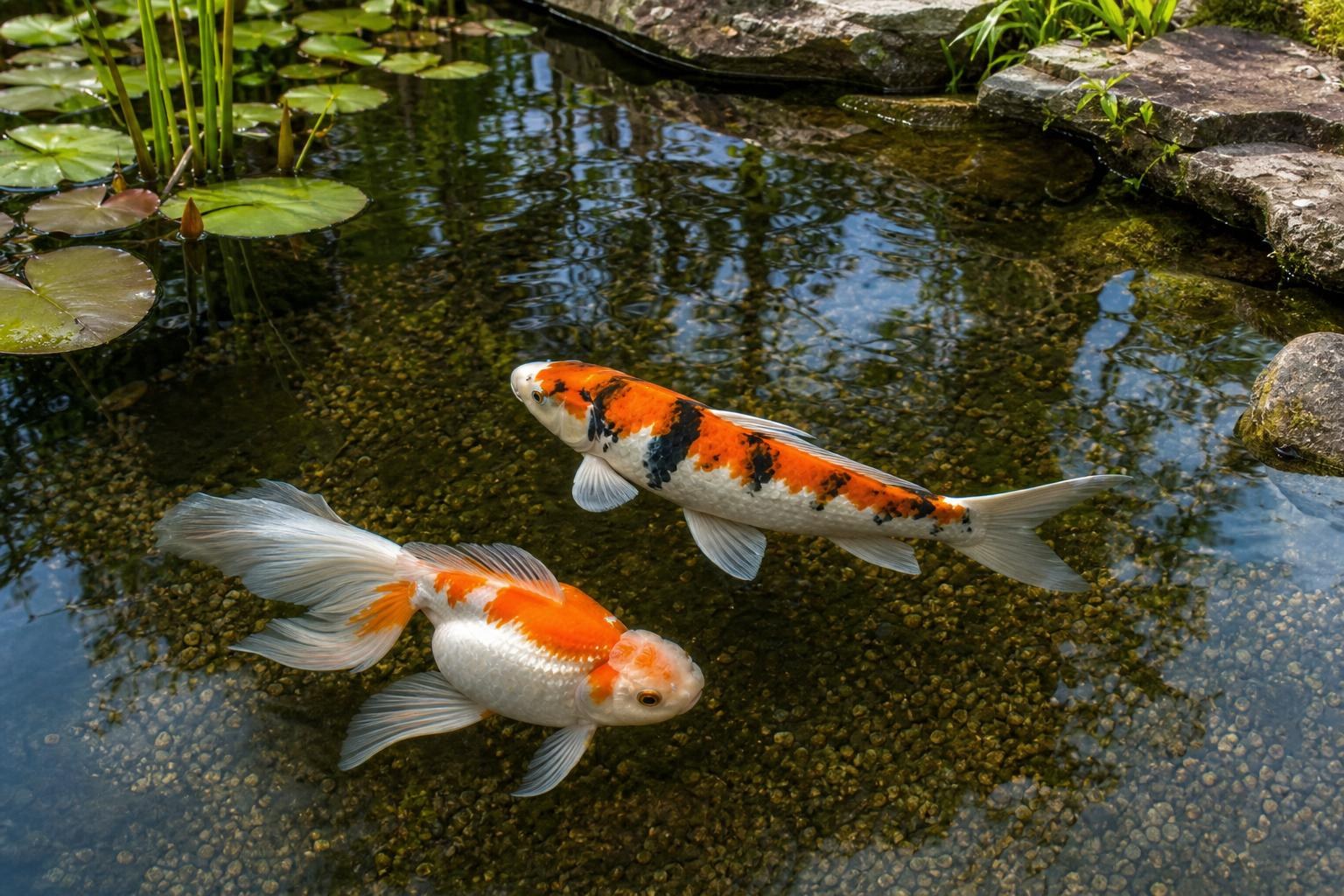
The catalogue name “Fantail Koi” is ambiguous. “Fantail” is a fancy goldfish form (Carassius auratus) while “koi” are varieties of common carp (Cyprinus carpio). Verify species with the supplier before planning pond size, care or disease reporting.
At a glance
- Suitable for small ponds
- No
- Suitable for wildlife ponds
- No
About Fantail Koi
“Fantail Koi” is a catalog label that requires verification. In UK trade usage “fantail” refers to a fancy goldfish body/tail form (Carassius auratus); “koi” are coloured varieties of common carp (Cyprinus carpio). These are different animals for stocking, care and legal/disease reasons, so do not assume a fish sold as “Fantail Koi” is a koi carp without supplier confirmation. Practical differences to check: adult size — fancy (fantail) goldfish may reach around 30 cm in good conditions, whereas ordinary koi/common carp commonly grow to ~45 cm and can reach well over 60 cm (some reports up to ~75 cm). Pond volume and depth guidance differs accordingly: trade guidance for koi recommends very large ponds (examples: ~4,500 litres or more and depths ideally over 90 cm), while fantail goldfish need substantially less water but still need ample space for healthy adults. Temperature guidance for coldwater pond species (including koi) is given as roughly 4–24 °C; feeding should be reduced and switched to wheatgerm-style winter feeds as water temperatures fall (many keepers stop regular feeding below ~10 °C). Care essentials (species-dependent) include strong mechanical and biological filtration, good aeration (pumps, waterfalls or air-stones), quarantine new fish, regular water testing and appropriate winter management. Koi and carp are large, active rooters that can uproot planting and outcompete more delicate species. Koi are associated with notifiable diseases such as Koi Herpesvirus (KHV); if you suspect disease you must report it to the Fish Health Inspectorate (GOV.UK) and follow biosecurity guidance. Never release ornamental fish into the wild — UK law and non-native species guidance prohibit allowing escapes or release. Verification steps: ask the supplier to confirm species (Cyprinus carpio vs Carassius auratus) and provide stock/breeder records; request clear photos showing body shape and tail morphology (fantail tails are double/fancy, koi have a single caudal fin); for valuable koi ask for pedigree/veterinary statements. If you provide a catalogue photo, it can be checked against trade descriptions to indicate which identification the sources support.
Diet
Omnivore: commercial pond pellets/sticks; will eat plant material, invertebrates and detritus. In cold weather switch to lower-protein wheatgerm-style winter feeds and reduce feeding as temperatures fall.
Temperament
Generally docile and can become tame with owners, but large active fish (especially koi) will root substrate, uproot plants and can outcompete smaller or more delicate pond species.
Compatibility
If the fish proves to be koi (Cyprinus carpio), compatibility is limited to other large, robust pond species (e.g. orfe, rudd, tench) in a suitably large, well-filtered pond. All ornamental carp/goldfish can disturb planting and outcompete small native pond fauna. Wildlife ponds are best kept fishless or with native species per UK guidance.
Care notes
Do not assume identity from the label—verify with the supplier or photos. For koi, trade guidance recommends very large volumes (examples cited: ~4,500 L+) and depths ideally over 90 cm; robust mechanical and biological filtration, good aeration, UV if required, and routine water testing are essential. Quarantine new fish. Reduce and change feed to wheatgerm-style as temperatures fall and limit feeding below ~10 °C. Be aware of Koi Herpesvirus (KHV) — it is a notifiable disease in Great Britain and must be reported to the Fish Health Inspectorate if suspected. Never release ornamental carp/goldfish into the wild (legal and ecological risks).