POND FISH GUIDE
Fantail Goldfish
Carassius auratus
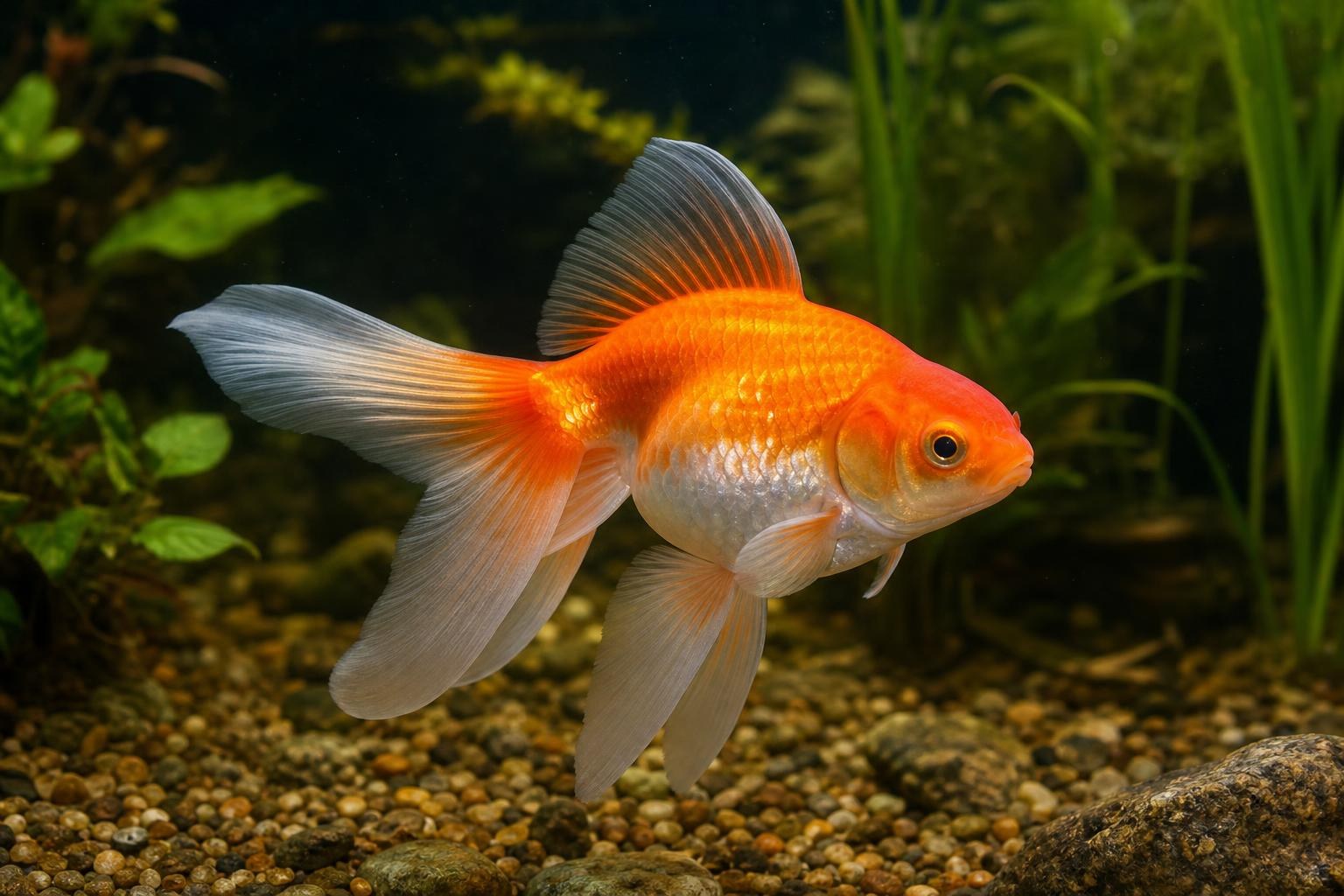
A fancy variety of domestic goldfish (Carassius auratus). Fantails are coldwater, omnivorous fish that commonly reach about 20 cm in kept conditions. They need good filtration, stable water quality and are best kept with other fancy goldfish. They are not suitable for wildlife/amphibian ponds.
At a glance
- Maximum length
- Up to 20 cm
- Minimum pond depth
- 45 cm
- Temperature range
- 4–25°C
- Suitable for small ponds
- No
- Suitable for wildlife ponds
- No
About Fantail Goldfish
The fantail is a ‘fancy’ variety of the domestic goldfish, Carassius auratus, produced by selective breeding rather than a separate species. As a fancy form, fantails have rounded bodies and flowing fins and are slower, more delicate swimmers than single‑tailed, pond‑hardy goldfish. Guidance for fancy goldfish commonly quotes a typical upper size of around 20 cm in kept situations, though actual size depends on genetics and husbandry. Fantails are coldwater fish. Approved care guidance gives a working tolerance broadly between 4–25 °C, with a narrower optimal band often cited around 15–23 °C. They are omnivorous and opportunistic: feed commercial flake or sinking pellets/pond sticks, offer wheatgerm at cooler temperatures, and supplement with frozen foods; they will also graze on invertebrates and plant material in a pond. Reduce high‑protein feeds as water temperatures fall and stop feeding once fish become dormant in winter. Because fancy goldfish produce a lot of waste and are less robust swimmers, provide substantial water volume, strong biological/mechanical filtration and good surface agitation/aeration. Regular water‑quality monitoring (zero ammonia/nitrite, low nitrates) and routine maintenance are important. Pond design guidance commonly suggests around 45 cm as a typical deep point for general pond fish — deeper, larger ponds are easier to manage for fish survival and overwintering. In small ornamental features or shallow containers, keepers often move fancy fish indoors for winter rather than risk temperature/oxygen swings. Fantails do best with other fancy goldfish of similar body shape and swimming ability; avoid mixing with faster single‑tailed pond types that will outcompete them for food. Importantly, goldfish are non‑native in the UK and can harm wild freshwater habitats. Do not release aquarium or pond fish into the wild. For private ornamental keeping, an ILFA licence is not required, but consult gov.uk guidance before any introductions to inland waters.
Diet
Omnivore: commercial flake or sinking pellets/pond sticks, wheatgerm at cooler temps, frozen foods (e.g. bloodworm), plus natural grazing on invertebrates and plant material.
Temperament
Social but slow and relatively delicate; can be out‑competed by faster single‑tailed pond fish.
Compatibility
Best kept with other fancy goldfish (similar body/fins and swimming ability). Avoid mixing with fast, single‑tailed pond‑hardy goldfish (common, comet) or species that will prey on or stress them. Do not stock ponds intended for amphibian or wildlife conservation.
Care notes
Provide large water volume where possible, strong biological and mechanical filtration, good surface agitation/aeration, and regular water‑quality testing. Plan for adult size when stocking. Protect marginal plants from grazing/rooting. Adjust diet seasonally (wheatgerm at cool temps) and cease feeding when fish are fully dormant. In small/shallow features consider overwintering indoors.