POND FISH GUIDE
Dojo loach
Misgurnus anguillicaudatus
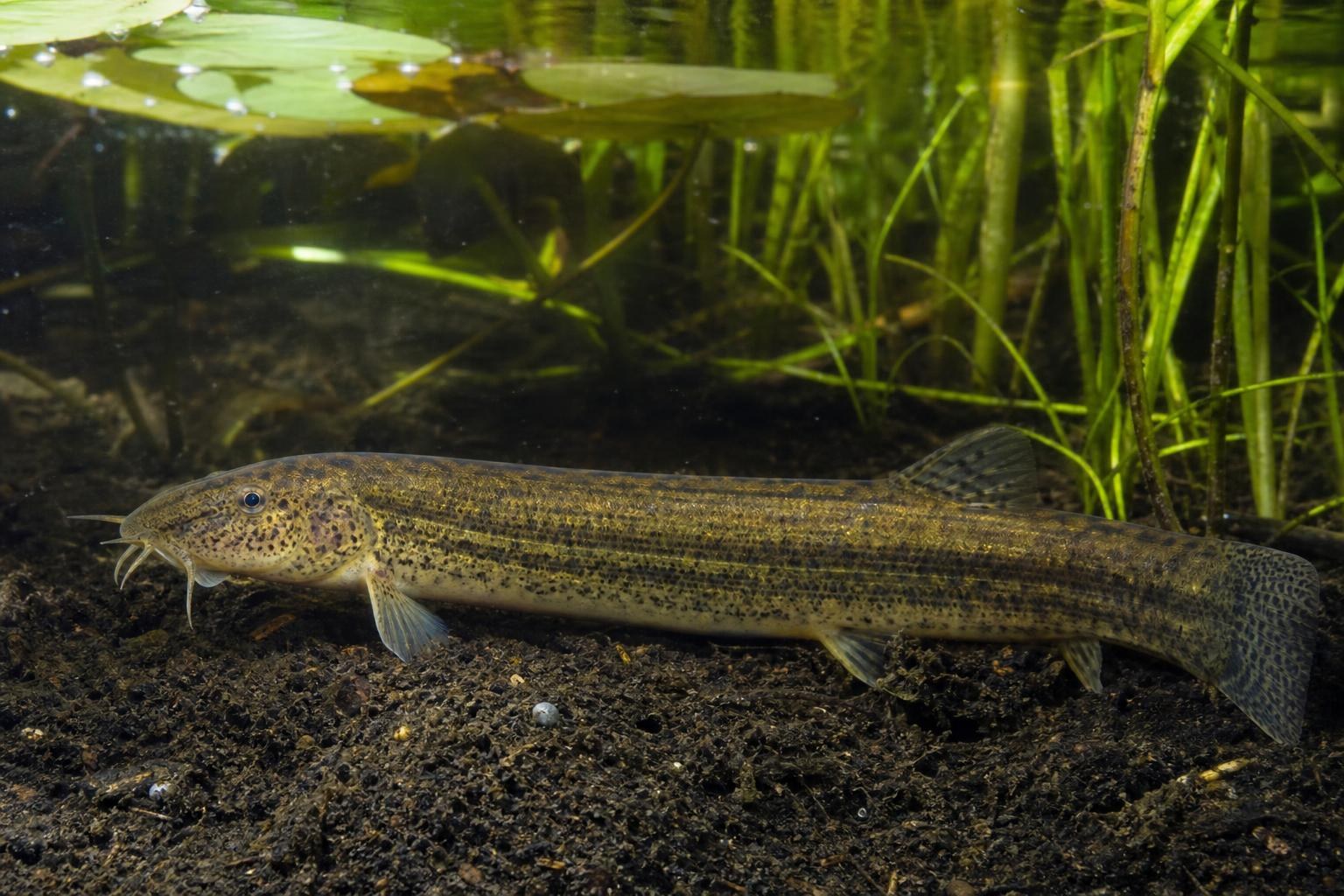
A hardy, social temperate loach often called the weather loach. Grows to around 25 cm, tolerates a wide temperature range and is best kept in small groups with soft substrate and plenty of hides. Do not release to the wild and check UK licensing and biosecurity rules before acquiring.
At a glance
- Maximum length
- Up to 25 cm
- Temperature range
- 2–30°C
- Care level
- easy
- Suitable for small ponds
- No
- Suitable for wildlife ponds
- No
About Dojo loach
The dojo (or weather) loach, Misgurnus anguillicaudatus, is a robust, social bottom-dweller commonly sold in the ornamental trade. Adults can reach about 25 cm. In the wild they forage through substrate for benthic invertebrates such as molluscs, chironomid larvae, small crustaceans and other insect larvae; in captivity they accept sinking pellets, frozen foods and will scavenge in the substrate. They are described as peaceful and gregarious and are best kept in small groups (trade guidance suggests groups of 3–4). Hobby guidance recommends providing a soft sand or smooth gravel substrate to protect their skin because they burrow and forage in the bottom. Provide plenty of cover — caves, pots, dense planting and shelters — because they are largely nocturnal and like to hide. A good filter and routine maintenance to keep ammonia and nitrite at zero and nitrates low are recommended. Dojo loaches are hardy: trade care sheets cite aquarium temperatures of roughly 18–24 °C for captive care, while field/tolerance data show they tolerate a broader range (approximately 2–30 °C). They are facultative air-breathers and can cope with lower-oxygen conditions better than obligate high-oxygen species, but good oxygenation and water quality remain important. Their cold tolerance and ability to use burrowed refuges means they can overwinter in temperate conditions, though no authoritative UK source gives a specific minimum pond depth or volume for safe overwintering. Important UK-specific notes: Misgurnus anguillicaudatus has been recorded in the wild in England (including one reproducing garden-pond population that was eradicated). Because of this invasive-history risk, do not release dojo loaches into the wild. Check gov.uk / Fish Health Inspectorate guidance and any licences required under the Import of Live Fish Act before acquiring or keeping non-native fish, and follow biosecurity best practice to prevent escapes.
Diet
Wild: benthic invertebrates (molluscs, chironomid larvae, small crustaceans, insect larvae). Captivity: sinking pellets, frozen foods; will scavenge in substrate.
Temperament
Generally peaceful and social; best kept in small groups and compatible with many peaceful temperate pond/aquarium species.
Compatibility
Compatible with many coolwater community species (commonly kept with goldfish in suitably sized systems). Keep in small groups (3–4). Avoid aggressive or very small fish that might be stressed by burrowing activity.
Care notes
Provide soft sand or smooth gravel substrate and abundant hides (pots, caves, dense planting). Maintain zero ammonia/nitrite and low nitrates with reliable filtration. Trade guidance suggests aquarium temperatures around 18–24 °C and a minimum aquarium volume of ~120 L for a small group (this is aquarium guidance; no authoritative numeric pond-volume/depth minimum was found). They tolerate cold and can overwinter in temperate conditions, but avoid releasing fish and follow UK biosecurity and any licensing requirements.