POND FISH GUIDE
Doitsu Koi
Cyprinus carpio
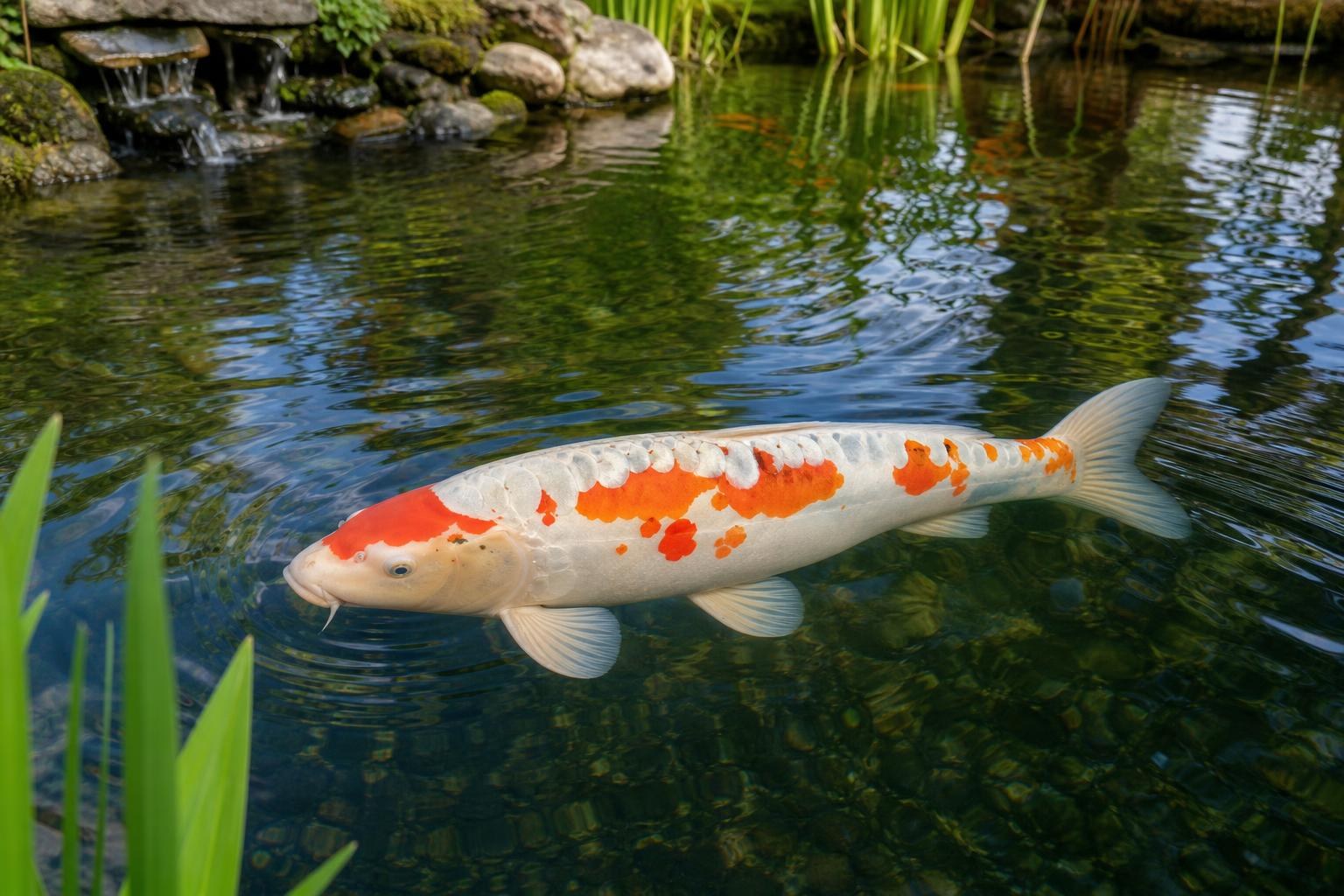
Doitsu Koi is sold as a variety of ornamental koi (domesticated Cyprinus carpio). Koi need large, deep, well‑filtered ponds (guidance commonly cites ~4,500 L and ≥90 cm depth), stable water quality and seasonal feeding adjustments.
At a glance
- Maximum length
- Up to 75 cm
- Minimum pond volume
- 4,500 litres
- Minimum pond depth
- 90 cm
- Temperature range
- 4–24°C
- Suitable for small ponds
- No
- Suitable for wildlife ponds
- No
About Doitsu Koi
Note on name: the specific catalogue term "Doitsu" was not found on the allowed UK sources used for this record; however, koi and ornamental common carp in the permitted sources are treated as Cyprinus carpio. If you see fish labelled Doitsu Koi, the underlying species guidance for koi/C. carpio below applies. Doitsu Koi are large ornamental carp kept in garden ponds and require pond planning for long‑term welfare. UK trade and pond‑care guidance commonly recommends planning for adult koi of around 75 cm in length and providing several thousand litres of water: one frequently cited practical recommendation is a pond of about 4,500 litres or more. Ponds are recommended to be deep for winter refuge, preferably over 90 cm (many keepers advise 90–120 cm or more). Temperatures used in pond guidance for coldwater pond fish including koi run roughly from 4 °C to 24 °C; seasonal feeding changes (lower protein/wheatgerm feeds as temperatures fall) are recommended. Staple nutrition should be high‑quality formulated koi/pond pellets, with feeding reduced and switched to appropriate winter feeds as metabolism slows. Koi are generally described as peaceful, active and curious fish that readily surface‑feed and can be tame. Their size and behaviour mean they can uproot or graze unprotected plants and may outcompete delicate species. Keeping koi requires robust mechanical and biological filtration, good oxygenation and regular water testing (ammonia, nitrite, nitrate). Stocking should be planned around adult size and filtration capacity to avoid overcrowding. Koi can be overwintered outdoors in suitably deep ponds if water quality and oxygenation are managed. Legal/management note: UK guidance distinguishes private garden ponds under licensing rules for non‑native fish; consult gov.uk/ILFA guidance before introducing or moving fish. For wildlife ponds, guidance advises against stocking non‑native ornamentals such as koi.
Diet
High‑quality formulated koi/pond pellets as staple; reduce protein and use wheatgerm/low‑protein feeds in cooler months; avoid overfeeding.
Temperament
Generally peaceful, large, active and curious; surface‑feeding and tameable; can uproot or graze plants and may outcompete delicate species.
Compatibility
In large, well‑filtered ponds koi are commonly kept with other hardy pond species (goldfish, rudd, tench, orfe), but mixing requires consideration of adult size, oxygen and filtration needs. Koi can outcompete or damage more delicate species or planted wildlife areas.
Care notes
Provide large volume and depth, robust mechanical and biological filtration, and good oxygenation (pumps, waterfalls or aeration). Test water regularly for ammonia, nitrite and nitrate. Feed appropriate commercial koi diets and reduce protein in autumn/winter; plan stocking around adult size and filter capacity. Observe biosecurity when buying stock and follow guidance for overwintering in sufficiently deep ponds.