POND FISH GUIDE
Common tench
Tinca tinca
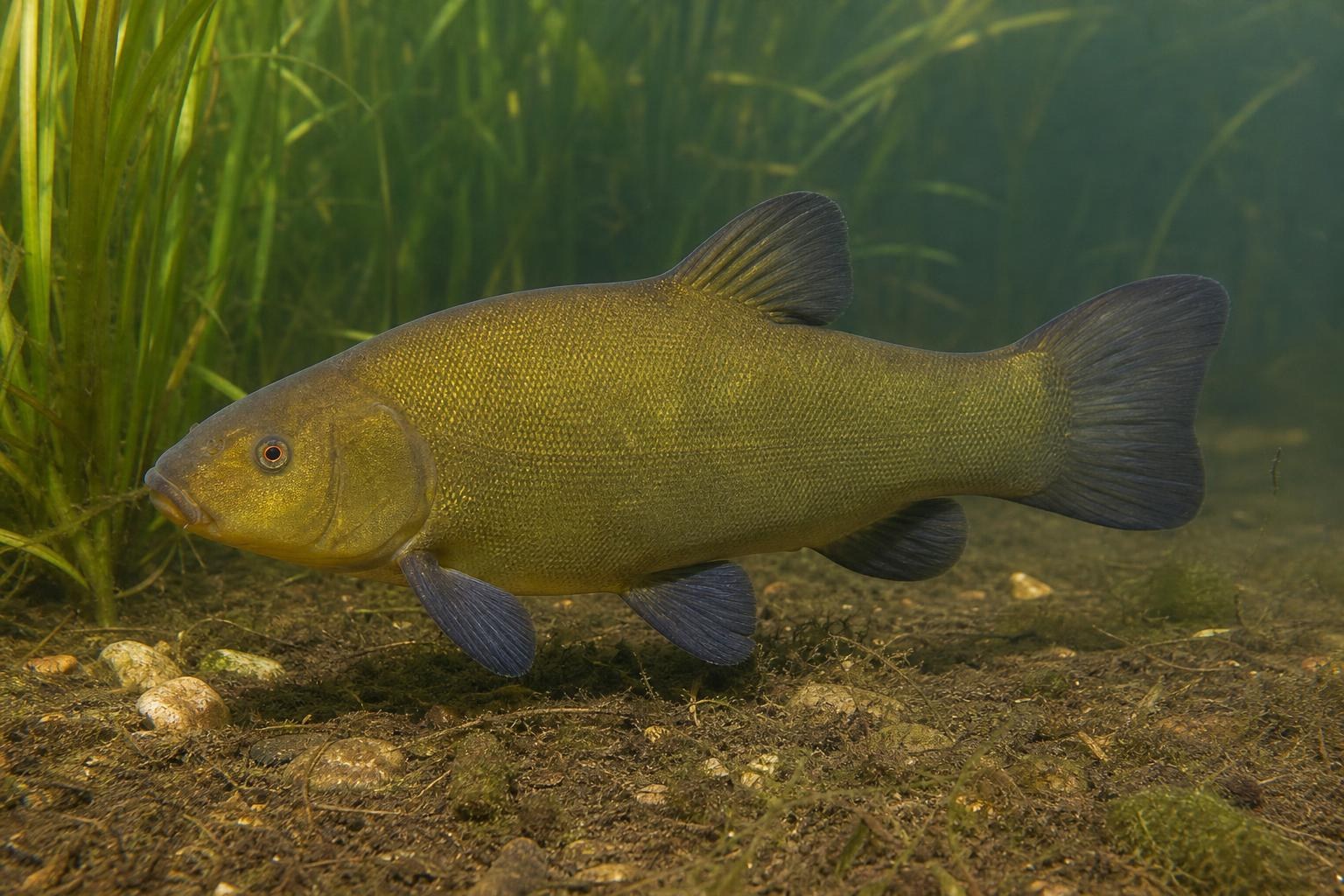
A native UK coarse fish, the common tench is a shy, bottom‑feeding species that can reach large sizes. It suits medium to large, well‑oxygenated garden ponds rather than small or wildlife-only ponds.
At a glance
- Maximum length
- Up to 75 cm
- Minimum pond depth
- 50 cm
- Temperature range
- 4–24°C
- Suitable for small ponds
- No
- Suitable for wildlife ponds
- No
About Common tench
The common tench (Tinca tinca) is a native UK coarse fish prized in garden and larger ornamental ponds for its hardiness and peaceful, bottom‑dwelling habits. Tench feed by rooting through soft substrate for benthic invertebrates – pond snails, small mussels and other bottom fauna are typical prey – so sinking foods are recommended for captive care. Adults can grow substantially in the right conditions; published UK sources report large specimens typically in the 40–70 cm range, and some pond/coarse‑fish guidance notes sizes up to around 75 cm. Because growth is strongly habitat‑dependent, pond owners should plan for the potential of large fish rather than assuming individuals will remain small. Practical pond guidance for keeping coarse fish in the UK suggests providing reasonable depth and space: commonly recommended garden fish‑pond depths are about 50–60 cm (this is general fish‑pond advice rather than a tench‑specific legal minimum). Good water quality and reliable oxygenation are essential: filtration, surface agitation or aeration are recommended, and stocking should be managed to avoid deoxygenation and excessive nutrient loading. Tench are generally non‑aggressive and favour densely planted margins and soft bottoms where they can hide and forage. They are commonly kept with other coarse pond species such as rudd, orfe, carp and hardy goldfish in suitably sized and filtered ponds, but compatibility depends on pond size, stocking density and water quality. Overwintering: as a temperate native, tench will survive UK winters in ponds with adequate depth and oxygen. Reduce and adjust feeding as temperatures fall (commercial pond guidance suggests lowering to wheatgerm/low‑protein diets as temperatures approach 10–15 °C and stopping high‑protein feeding by ~10 °C). Biosecurity and legal notes: follow GOV.UK/Environment Agency rules on fish health checks and permissions before moving or introducing fish into inland waters. Do not release ornamental fish into the wild. For wildlife ponds, the Freshwater Habitats Trust advises not adding fish; if you want both fish and wildlife, consider separate ponds or fish‑free refuges.
Diet
Benthic invertebrates (pond snails, small mussels and other bottom fauna); sinking foods recommended.
Temperament
Shy, bottom‑dwelling and generally non‑aggressive.
Compatibility
Typically compatible with other coarse species (rudd, orfe, carp, hardy goldfish) in medium/large, well‑filtered ponds. Compatibility depends on pond size, stocking density and water quality.
Care notes
Provide a planted pond with soft foraging areas and sinking/benthic foods. Maintain good filtration, surface agitation or aeration and monitor water quality (ammonia/nitrite/nitrate). Quarantine new fish before introduction. Manage stocking densities carefully (retailer rule‑of‑thumbs exist but are not regulatory) and be aware moderate mixed populations are less damaging than high densities. Overwinter in deep, oxygenated water; reduce feeding as temperatures fall. Follow GOV.UK/Environment Agency guidance on fish health checks and permissions; never release fish into the wild.