POND FISH GUIDE
Common Rudd
Scardinius erythrophthalmus
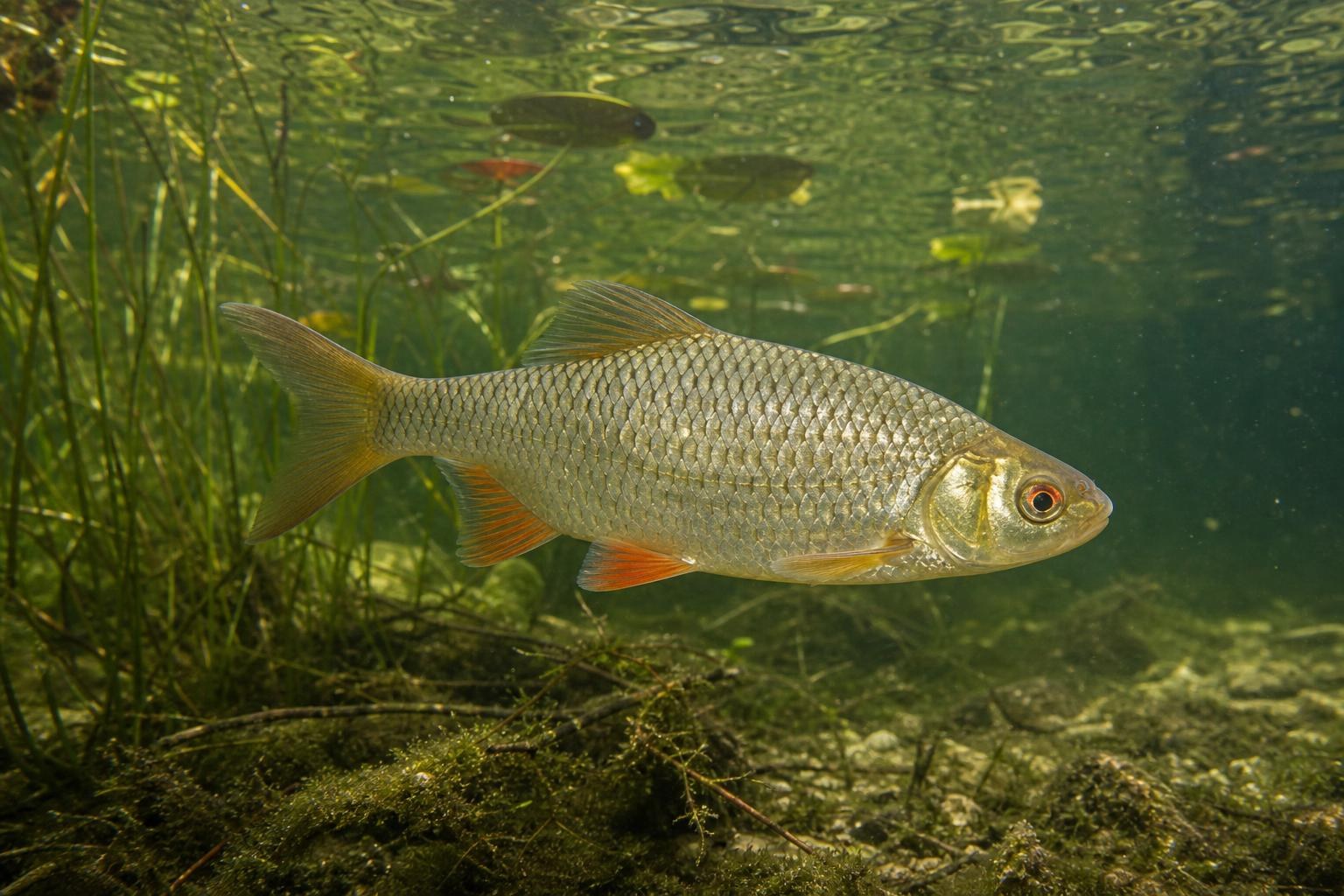
A native UK pond cyprinid often sold as ‘rudd’ or ornamental ‘golden rudd’. Shoaling, surface‑feeding omnivore (insects, invertebrates, duckweed and plant material). Typical pond adults are around 10–20 cm, and trade sources commonly report about 15 cm; larger individuals are possible. Rudd do well in planted, filtered garden ponds but are not recommended where the primary aim is to maximise wildlife/biodiversity. Follow filter, water‑quality and quarantine guidance when moving fish between waterbodies.
At a glance
- Maximum length
- Up to 40 cm
- Minimum pond depth
- 45 cm
- Temperature range
- 4–24°C
- Suitable for small ponds
- Yes
- Suitable for wildlife ponds
- No
About Common Rudd
The common rudd (Scardinius erythrophthalmus) is a familiar UK pond fish and is frequently sold in the ornamental trade (including colour variants called “golden rudd”). In garden ponds they are a shoaling, active surface feeder that picks off insects and will feed on duckweed; they will also take submerged plant material in some circumstances, so are best described as omnivorous. Typical adults kept in ponds are commonly reported at roughly 10–20 cm (trade guidance often cites ~15 cm), while larger individuals can occur. Rudd do best in a planted, well‑filtered pond. Trade and industry guidance stresses good water quality and recommends a properly matured biological filter as essential for keeping rudd. They are treated as a hardy, coldwater pond fish with low–moderate care requirements for keepers who provide filtration, routine water testing and sensible feeding. Practical winter management follows general pond‑fish advice: metabolic slowdown as temperatures fall, a switch to lower‑protein winter feeds (wheatgerm style foods are recommended once water falls below around 15 °C) and providing sufficient pond depth so fish can avoid freezing extremes. Industry guidance commonly recommends fish ponds be at least about 45–60 cm deep; this is general pond‑fish advice rather than a rudd‑specific minimum. Compatibility: rudd are normally kept with other pond cyprinids (goldfish and similar species) when size and water‑quality needs are matched and shoaling requirements considered. They are not suitable for ponds where the priority is wildlife or biodiversity: conservation guidance advises against stocking fish because they consume invertebrates and amphibian larvae and can reduce biodiversity. Legal and biosecurity notes: rudd are treated as native in the UK, but ornamental variants must not be released into wild waters and GOV.UK guidance requires health checks/documentation when moving fish between inland waters. Follow quarantine and fish‑health checks whenever transferring or purchasing stock.
Diet
Omnivore: surface insects and small invertebrates, duckweed and plant material/submerged macrophytes
Temperament
Shoaling, active surface feeder; can show intraspecific social/territorial behaviour
Compatibility
Generally compatible with other pond cyprinids of similar size and water‑quality needs. Not compatible with wildlife‑focused ponds: rudd eat invertebrates and amphibian larvae. Avoid releasing ornamental variants into wild waters and follow GOV.UK health‑check requirements when moving fish between waterbodies.
Care notes
Provide a planted, filtered pond and mature the biological filter before stocking. Maintain good water quality (aim for zero ammonia/nitrite and low nitrates), avoid overstocking and overfeeding, and follow seasonal feeding: reduce protein and switch to wheatgerm‑style winter food as water cools below ~15 °C. Use quarantine and health checks when introducing or moving fish. Industry dissolved oxygen guidance for pond fish recommends maintaining good aeration (general welfare guidance cites ~5.5 mg/L as desirable, with never below ~4.0 mg/L); monitor oxygen, especially in winter and at dawn.