POND FISH GUIDE
Common Minnow
Phoxinus phoxinus
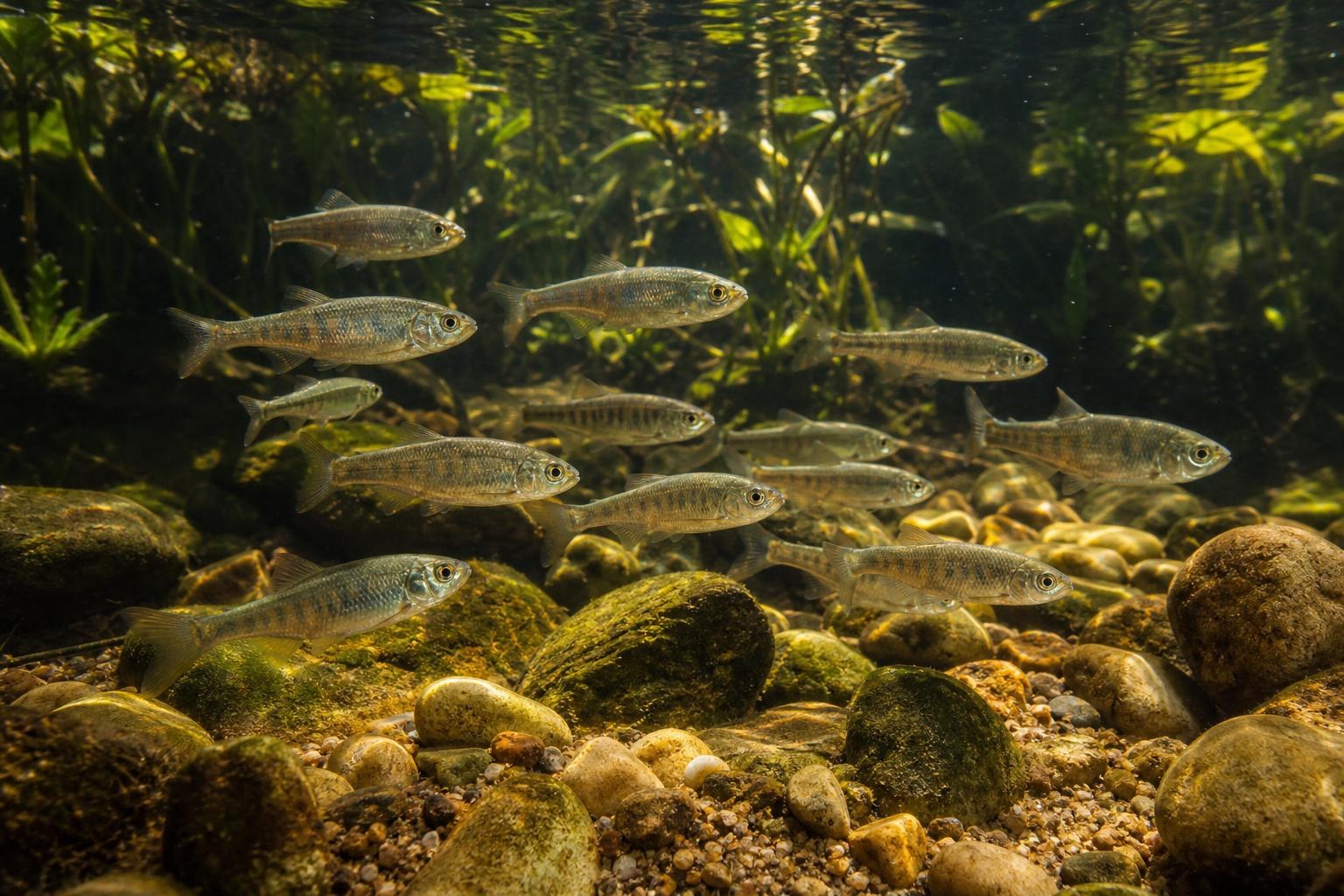
A small native UK freshwater fish (4–10 cm) that shoals in large groups and is typically found in well‑oxygenated, flowing waters. Suitable only for ponds with good oxygenation and some flow; avoid introducing into very small wildlife ponds.
At a glance
- Maximum length
- Up to 10 cm
- Suitable for small ponds
- No
- Suitable for wildlife ponds
- No
About Common Minnow
The Common Minnow (Phoxinus phoxinus) is a widespread native UK freshwater fish often encountered in streams, rivers and occasionally lakes. Adults are typically reported at 4–10 cm. In the wild they form large shoals and are present year‑round. Minnows spawn repeatedly in spring, depositing eggs on gravelly substrates, so gravel margins and shallow spawning areas are part of their natural requirements. Diet in the wild includes insects, molluscs, crustaceans, plant debris and fish eggs, so they act as predators on small invertebrates and on eggs of other species. Habitat notes from UK sources associate minnows with clean, well‑oxygenated, moving water and gravelly riffles; for garden pond owners this indicates they will fare better where there is reliable oxygenation and some flow or circulation rather than in stagnant basins. Because they shoal, minnows do best in groups rather than singly, and in mixed communities they are recorded alongside other small native fishes such as three‑spined and nine‑spined sticklebacks, bullhead and, in some waters, roach and rudd. However, introducing fish to small wildlife ponds is generally discouraged by UK conservation guidance because fish can reduce amphibian and invertebrate populations; this is particularly relevant for wildlife‑focused shallow ponds without filtration or flow. There are no species‑specific numeric husbandry values (temperature bands, minimum pond volume or depth, dissolved oxygen minima, or stocking densities) established on the referenced UK guidance sites. The Common Minnow is a native species and is not listed as a non‑native invasive; nevertheless, pond owners should take care with identification because small non‑native species with similar appearance exist and can have different legal and ecological implications. If identification matters, consult diagnostic keys and NNSS guidance.
Diet
Insects, molluscs, crustaceans, plant debris and fish eggs
Temperament
Strongly shoaling; social (forms large shoals). Specific aggression level not stated in referenced sources.
Compatibility
In the UK minnows co‑occur with other small native fish (three‑spined and nine‑spined sticklebacks, bullhead, occasional roach/rudd) in well‑oxygenated, connected waters. They prey on small invertebrates and fish eggs and their presence can reduce amphibian breeding success in small wildlife ponds.
Care notes
Prefer clean, well‑oxygenated, moving water and gravelly spawning sites. Shoaling species — keep in groups rather than solitary individuals. Present year‑round in UK waters. No species‑specific numeric guidance for pond volume, depth, temperature ranges, dissolved oxygen or stocking densities is provided on the referenced UK sources. Avoid introducing minnows into small, stagnant wildlife ponds; check identification carefully to avoid confusing native minnows with visually similar non‑native species.