POND FISH GUIDE
Common Goldfish
Carassius auratus
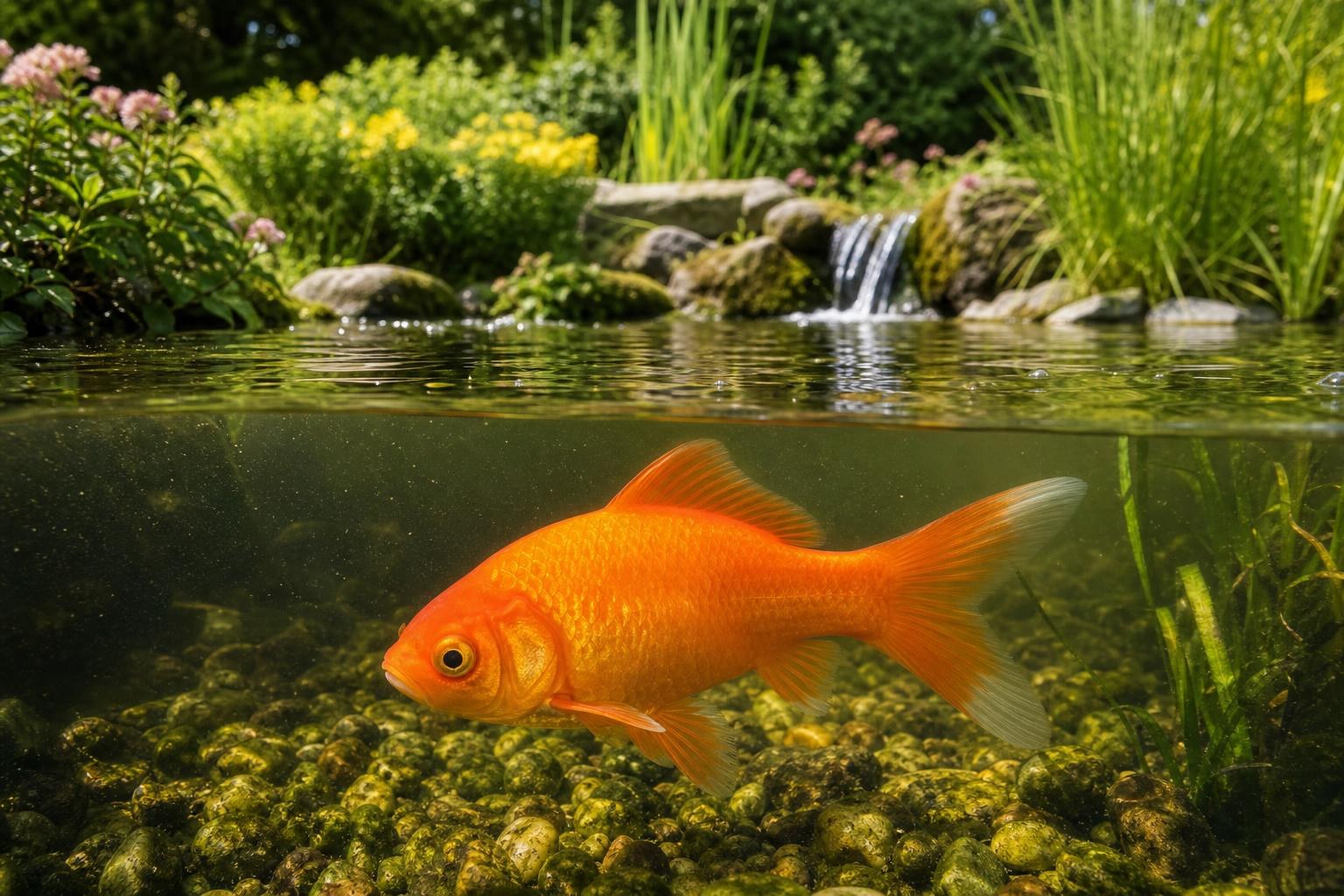
A hardy, adaptable pond fish (Carassius auratus). Common in UK garden ponds, goldfish tolerate 4–25°C, are omnivorous and can grow from typical captive sizes (~12–25 cm) up to and beyond 40–45 cm in very large ponds. They need good space, filtration and aeration and are not recommended for wildlife ponds.
At a glance
- Maximum length
- Up to 45 cm
- Minimum pond volume
- 455 litres
- Minimum pond depth
- 45 cm
- Temperature range
- 4–25°C
- Care level
- moderate
- Suitable for small ponds
- No
- Suitable for wildlife ponds
- No
About Common Goldfish
Common goldfish (Carassius auratus) are one of the most widely kept ornamental pond fish in the UK. Trade guidance describes them as adaptable and cold‑tolerant (roughly 4–25 °C) but they do need adequate space, filtration and husbandry to thrive: captive fish often reach 12–25 cm, but individuals in very large, favourable ponds have been reported to exceed 40–45 cm. Practical stocking guidance used by UK pond keepers is to allow about 25 cm of adult fish length per 455 litres (100 imp gallons) of pond water — use expected adult size, not juvenile size, when planning stocking rates. Goldfish are omnivores: they accept flakes, pellets/pond sticks and wheatgerm (recommended in cooler months) and will also browse natural pond foods such as invertebrates and soft plant matter. Feeding should be seasonal — reduce to low‑protein/wheatgerm food as temperatures approach about 10 °C and stop feeding during winter dormancy. They are “messy” fish with high waste production, so robust filtration and circulation are important; trade guidance recommends good turnover and routine filter maintenance (some pond design notes suggest pumping the pond volume through the filter regularly). Water quality targets from trade guidance include ammonia = 0 mg/L, nitrite = 0 mg/L, and keeping nitrate low (ideally not much above ~20 mg/L above source water); pH about 6.0–8.0 and moderate hardness are typical recommendations. Aeration/surface movement is emphasised, especially with dense stocking or warm weather; a specific dissolved oxygen mg/L minimum is not provided in these sources. Goldfish will uproot and eat plants and can reduce amphibian and invertebrate numbers; they can hybridise with wild Carassius taxa and are listed as non‑native with invasive potential in the UK. Freshwater Habitats Trust and pond guidance therefore advise against adding fish to wildlife ponds. It is an offence to release ornamental fish into inland waters without consent — check Environment Agency rules before moving or releasing fish. Fancy varieties may be less hardy and may need indoor overwintering if the pond is small or likely to freeze or lose oxygen.
Diet
Omnivore: flakes, pellets/pond sticks, wheatgerm in cool weather; natural pond foods (invertebrates, plant matter).
Temperament
Generally peaceful with other fish but messy and opportunistic; will uproot/eat plants and may eat amphibian larvae.
Compatibility
Can be kept with other coldwater, pond‑tolerant species in larger ponds, but avoid stocking in wildlife ponds where amphibians and invertebrates are a priority. Goldfish can hybridise with wild Carassius species and may compete with or harm native fauna. Do not release into the wild — Environment Agency consent may be required.
Care notes
Stock using the 25 cm per 455 L guideline and plan for adult sizes; provide robust filtration and regular maintenance, with good circulation/aeration (trade guidance suggests regular turnover). Water quality targets: ammonia 0 mg/L, nitrite 0 mg/L, keep nitrate low (~<20 mg/L above source water), pH ~6.0–8.0 and moderate hardness. Feed seasonally: switch to wheatgerm/low protein near ≈10 °C and stop during winter dormancy. Provide planting for shelter but expect browsing; move less hardy fancy varieties indoors if the pond is shallow or at risk of freezing/oxygen loss. Exact dissolved oxygen mg/L minimum is not specified in the reviewed sources — provide reliable aeration instead.