POND FISH GUIDE
Comet goldfish
Carassius auratus
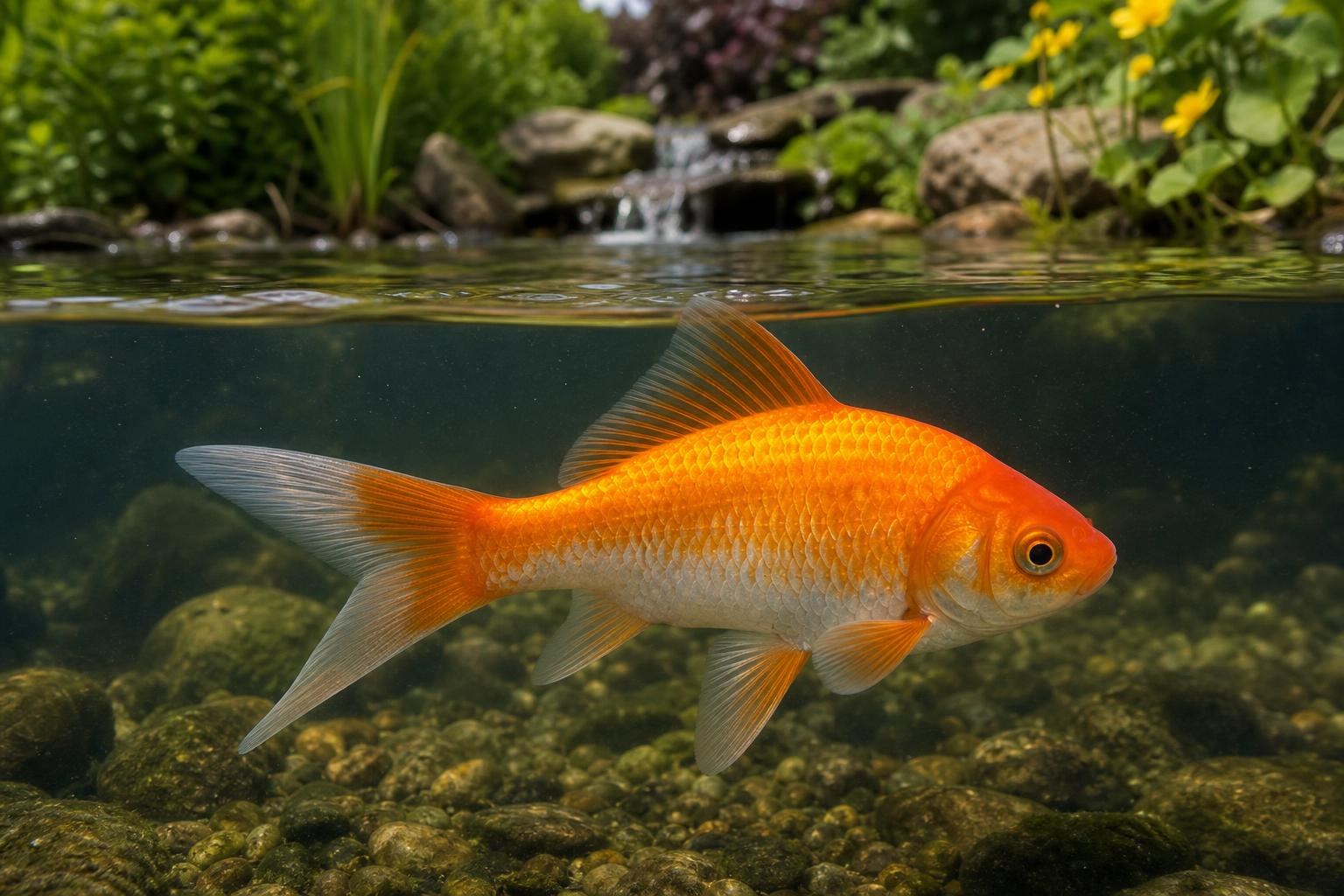
A single‑tailed variety of domestic goldfish, Comets are hardy, active pond fish that can reach large sizes in big waterbodies. They tolerate typical UK pond temperatures but need good filtration, space and biosecurity; do not release them into wildlife ponds or the wild.
At a glance
- Maximum length
- Up to 45 cm
- Minimum pond depth
- 45 cm
- Temperature range
- 4–25°C
- Suitable for small ponds
- Yes
- Suitable for wildlife ponds
- No
About Comet goldfish
Comet goldfish are a single‑tailed variety of the domestic goldfish Carassius auratus rather than a separate species. In garden ponds they are popular because they are hardy and active swimmers, but their welfare depends on appropriate pond design and husbandry. Adult size varies by environment: many guides list a typical garden‑pond size of around 12–15 cm, aquarium adults often reach ~25 cm, and records from large outdoor waters show individuals up to ~40–45 cm. Trade and industry guidance treats comets as coldwater pond fish. Typical operational temperature guidance is broadly about 4–24/25 °C, with sellers or vets consulted for stock‑specific limits. Ponds for fish are commonly recommended to be at least 45–60 cm deep for seasonal stability (some keepers advise deeper ponds, for example ~90 cm for better overwintering). There is no single statutory “minimum pond volume” for comets in the cited guidance; aquarium guidance suggests planning ~100 litres per adult as a starting point, and a retail pond rule‑of‑thumb often quoted is about 25 cm of fish per 455 litres (100 imp gallons) — these are stocking heuristics rather than legal minima. Comets are omnivores: in ponds they eat plant material, invertebrates and detritus and accept balanced goldfish feeds in captivity. They are generally peaceful but voracious; single‑tailed varieties are active and can outcompete or nip the fins of slower, fancy goldfish. Because they produce substantial waste they need filtration sized to the pond, regular water testing, circulation/aeration (industry guidance cites dissolved oxygen recommendations around 5.5 mg/L as desirable with lower operational limits noted around 4.0 mg/L), seasonal feeding adjustments (reduce/stop feeding as temperatures fall, with some guidance to reduce below ~8 °C) and careful acclimation for new fish. Conservation/legal notes: goldfish are non‑native and can harm wildlife ponds and native species through competition, hybridisation and habitat change. Do not stock wildlife ponds, do not release goldfish into the wild, and check Environment Agency/NNSS guidance if moving or releasing fish.
Diet
Omnivore — plant material, invertebrates and detritus; accept balanced goldfish feeds (adjust feed by season/temperature).
Temperament
Generally peaceful but boisterous and voracious; active single‑tailed varieties can outcompete or nip fins of slower fancy goldfish.
Compatibility
Compatible with other single‑tailed, hardy pond fish (other common goldfish types, shubunkins, sarasa comets and many coarse pond fish) when pond size, filtration and stocking are appropriate. Avoid mixing active single‑tailed comets with slow, delicate fancy goldfish. Never release kept goldfish into wild waters — they can compete with or hybridise with native species.
Care notes
Provide filtration and circulation sized to pond volume; perform regular filter maintenance. Test ammonia, nitrite, nitrate, pH and hardness regularly, especially during establishment or after changes. Use dense marginal planting for refuges but do not rely on vegetation to replace filtration. Acclimatise new fish slowly (floating bag method) and increase numbers gradually to allow biological filtration to mature. Feed seasonally (higher protein in warm months; lower‑protein/wheatgerm style feeds as temperatures fall; reduce or stop feeding at low temperatures per feed instructions). Use aeration and circulation in warm weather or in heavily stocked ponds; industry guidance cites desirable dissolved oxygen around 5.5 mg/L and operational lower limits near 4.0 mg/L. Maintain biosecurity (Check, Clean, Dry) and ensure the pond cannot allow fish to escape to connected waters.