POND FISH GUIDE
Calico Goldfish
Carassius auratus
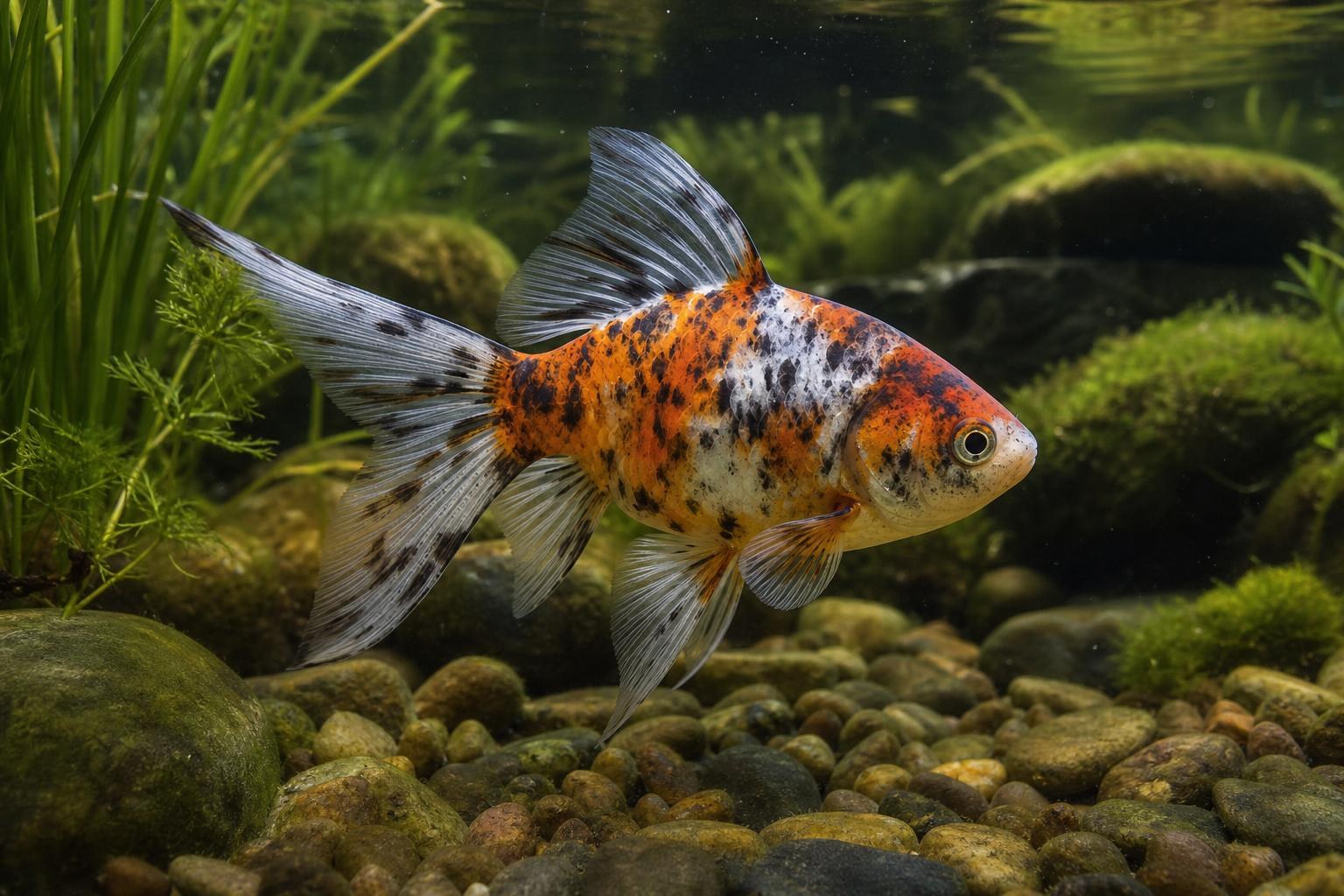
A calico is a colour/scale variant of the domestic goldfish (Carassius auratus). Hardy coldwater pond fish up to about 30 cm, but avoid adding them to wildlife-focused ponds and check licensing before moving or introducing fish.
At a glance
- Maximum length
- Up to 30 cm
- Minimum pond depth
- 45 cm
- Temperature range
- 4–24°C
- Suitable for small ponds
- Yes
- Suitable for wildlife ponds
- No
About Calico Goldfish
“Calico goldfish” is a descriptive name for a colour and scale pattern of domestic goldfish (Carassius auratus), not a separate species. The calico pattern typically shows mottled nacreous and dark patches over the usual goldfish body forms; calico variants can occur among many fancy types. In suitable conditions domestic goldfish commonly reach up to about 30 cm, though size depends on variety and husbandry. Industry guidance for pond fish recommends an overall pond temperature range of about 4–24 °C and a pond depth ideally of at least 45–60 cm. No single authoritative minimum pond volume for goldfish was given in the cited guidance; use conservative stocking and good filtration rather than relying on a fixed volume figure. Calico goldfish are omnivores that graze plant material and feed on invertebrates; in garden ponds they accept floating balanced pellets and benefit from occasional frozen or live foods such as daphnia or bloodworm. Seasonal feeding adjustments are advised: lower-protein wheatgerm-style feeds and reduced feeding are recommended as water temperatures fall (guidance suggests considering cessation of feeding below about 8 °C). They are generally peaceful and social pond fish but will eat eggs and fry and may uproot or consume some aquatic plants. Practical husbandry priorities are reliable filtration and circulation (pump/fountain), regular water testing (pH, ammonia, nitrite, nitrate), adequate plant cover for shelter, and careful stocking to avoid overloading the system. For overwintering maintain some open water/circulation where possible and avoid complete ice/snow cover; pumps or other oxygenation measures help survival. Goldfish are non-native and can harm wild waters via predation, competition, disease transmission and hybridisation; do not release them into the wild and check Gov.uk/ILFA guidance for licensing before introducing or moving fish.
Diet
Omnivore — grazes plant material and invertebrates; accepts floating balanced pellets; frozen/live foods (daphnia, bloodworm) can be offered; lower-protein feeds in cold conditions.
Temperament
Generally peaceful and social; will eat eggs and fry and may uproot or browse aquatic plants.
Compatibility
Compatible with other temperate/coldwater pond species with similar environmental needs if pond size and filtration are appropriate. Not compatible with tropical species. Goldfish can hybridise with other Carassius and may negatively affect native crucian carp and other wildlife.
Care notes
Provide adequate filtration and circulation (pump/fountain) sized to stocking level; test water weekly for pH, ammonia, nitrite and nitrate; supply dense marginal and submerged planting for shelter; adjust feeding seasonally (use lower-protein feeds or reduce/stop feeding as temperatures fall, e.g. around/below 8 °C); avoid overfeeding and overstocking; maintain open water/oxygenation in winter (avoid total ice cover). Do not release into the wild and check Gov.uk/ILFA/licensing requirements before introducing or moving fish.