POND FISH GUIDE
Butterfly Koi
Cyprinus carpio
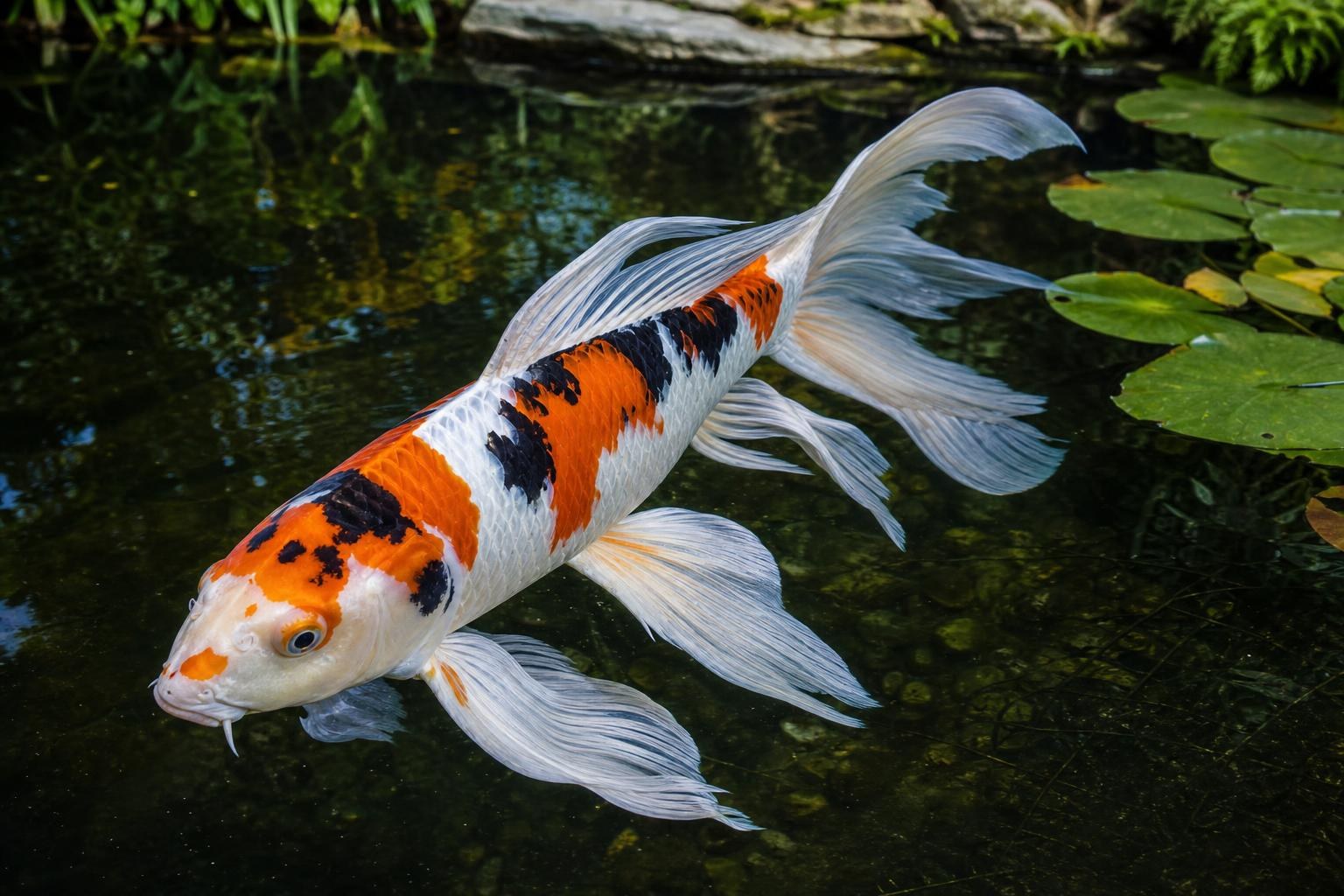
A trade name for long‑finned ornamental koi (variants of common carp). Treat them as you would other koi: large, deep, well‑filtered ponds, good biosecurity and no release to wildlife ponds.
At a glance
- Maximum length
- Up to 75 cm
- Minimum pond volume
- 4,500 litres
- Minimum pond depth
- 90 cm
- Temperature range
- 4–24°C
- Suitable for small ponds
- No
- Suitable for wildlife ponds
- No
About Butterfly Koi
“Butterfly Koi” is a market name used for long‑finned ornamental koi — these are ornamental variants of common carp rather than a separate wild species. UK trade and pond guidance treat butterfly/long‑fin forms the same as other koi (Cyprinus sp.), so husbandry follows standard koi recommendations. Key practical points for UK pond owners: plan for a large, deep, well‑filtered and well‑aerated pond. Sector guidance commonly cites a practical benchmark of around 4,500 litres or more for koi and a preferred depth of at least 90 cm (many guidance notes recommend deeper ponds for very large specimens). Koi can grow large (trade material cites adult sizes up to about 75 cm) and many live for decades, so design ponds and filtration with adult size and long‑term care in mind. Diet and feeding: koi are omnivores. Keepers use commercial koi pellets/sticks (seasonal formulations exist) and the fish will also take natural foods in the pond (insects, small invertebrates and some plant material). Reduce or change feeding as temperatures fall; trade advice gives different winter feed regimes and thresholds for feeding reduction. Temperament and compatibility: koi are generally peaceful, social and active, but are large, boisterous fish that can uproot plants and outcompete or injure much smaller species. They are commonly kept with similarly sized carp or large goldfish; avoid mixing with delicate or small pond fish. Care and biosecurity: koi need robust filtration and aeration because of their high bioload. Regular water testing, provision of deep refuges, secure planting (if desired) and careful stocking plans are advised. Do not release ornamental koi into the wild — common carp are non‑native in the UK and can alter habitats. Be alert to serious carp diseases (for example Koi Herpes Virus and Spring Viraemia of Carp) and follow supplier and trade biosecurity guidance.
Diet
Omnivore: commercial koi pellets/sticks; also insects, small invertebrates and plant material.
Temperament
Generally peaceful, social and active but large and boisterous; will disturb plants and substrate and can outcompete smaller fish.
Compatibility
Best kept with similarly sized carp or large pond goldfish. Avoid housing with small, delicate species — butterfly koi will outcompete, accidentally injure smaller fish and uproot plants.
Care notes
Provide large pond volume and depth (≈4,500 L+, ≥90 cm preferred), robust filtration and supplementary aeration, regular water testing, seasonal feeding regimes (reduce/change feed in cold months), deep refuges, secure planting and strict biosecurity. Do not release to wild waters; be vigilant for notifiable carp diseases (e.g. KHV, SVC).