POND FISH GUIDE
Blue Orfe
Leuciscus idus
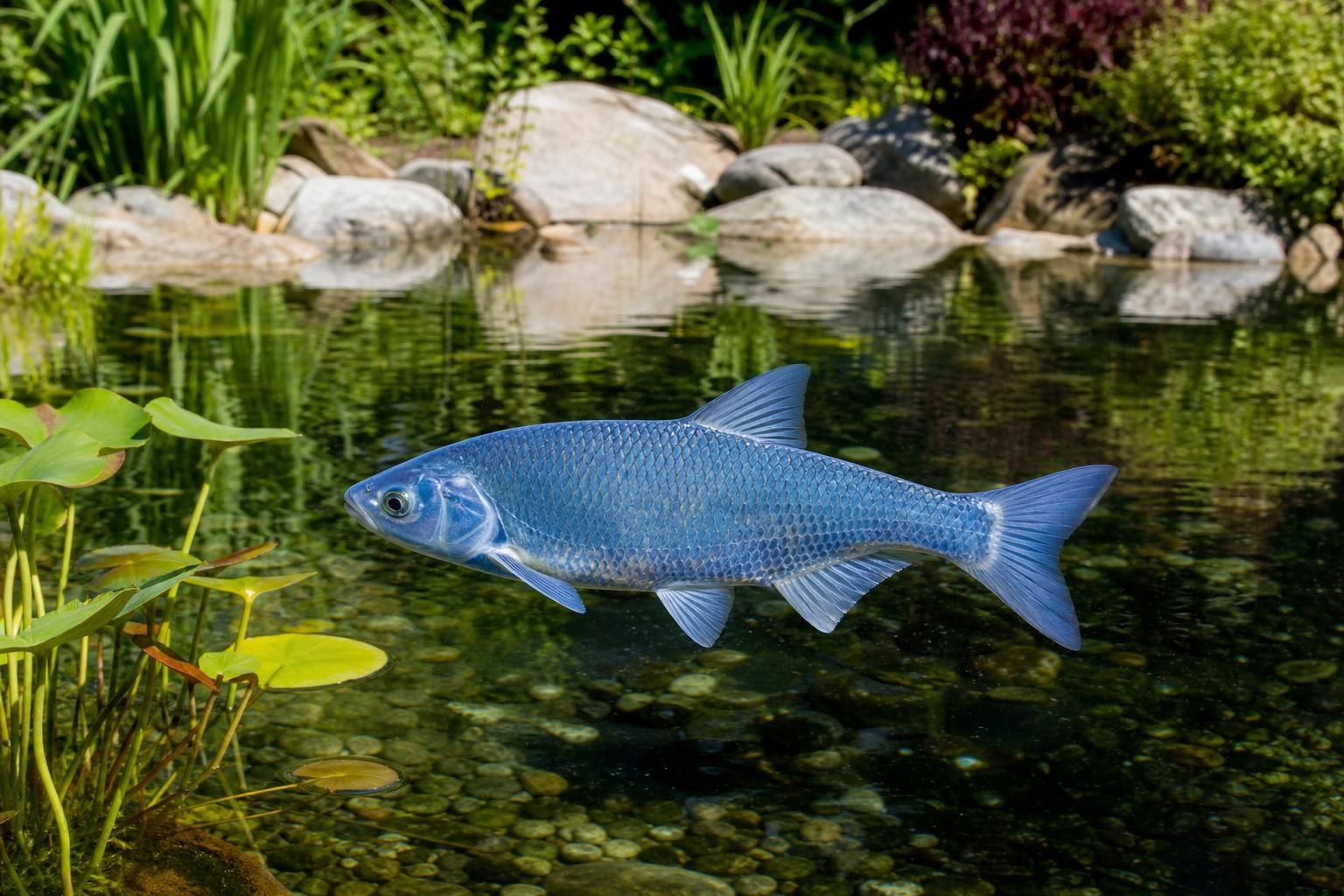
The Blue Orfe is an ornamental colour form of the European ide (Leuciscus idus). A large, active, shoaling coldwater cyprinid, it needs a well‑filtered, very well‑oxygenated pond with plenty of open water. Not suitable for small or wildlife ponds.
At a glance
- Maximum length
- Up to 60 cm
- Temperature range
- 4–22°C
- Care level
- moderate
- Suitable for small ponds
- No
- Suitable for wildlife ponds
- No
About Blue Orfe
The Blue Orfe is the domestic colour form of the European ide (Leuciscus idus). It is a large, active, surface‑oriented shoaling fish commonly kept in garden ponds in the UK. Trade guidance reports adults reaching 60 cm and above (Fishkeeper notes "60 cm+", with other coarse‑fish guidance citing figures up to about 75 cm for large orfe/ide). Because of their size and activity they need substantial space to swim and shoal. Water quality and oxygenation are the key management priorities. Orfe prefer cool, well‑oxygenated water and do best with strong circulation — fountains, falls, streams or forced aeration are recommended. Industry guidance recommends deep, well‑filtered ponds for large coarse fishes; as a management benchmark OATA/ornamentalfish.org gives guidance figures for similar species of several thousand litres (commonly cited guidance for large coarse fish is around 4,500 litres) and general pond‑depth guidance of about 45–60 cm or deeper for pond fish. These are guidance benchmarks rather than formal species‑minimums, but they reflect the level of space and depth typically needed. Diet is flexible: orfe accept quality pond pellets, flakes and sticks and take live or frozen foods and insects. Young fish readily eat mosquito larvae and other invertebrates. They are generally not plant‑chasers but will take small fish or fry if available, so avoid mixing them with very small species you wish to protect. Practical care notes: provide open water for shoaling, robust filtration and strong water movement, use tap‑water conditioners and be cautious with medications (some contain heavy metals). Orfe tolerate low temperatures (down to about 4 °C) and are active in cool water; Fishkeeper gives a species temperature range of about 4–22 °C. Secure ponds to prevent escapes and follow GOV.UK guidance on keeping non‑native fish — do not release or allow escape into wild waterbodies. Finally, avoid adding orfe to wildlife ponds; Freshwater Habitats Trust advises that fish will usually overwhelm small wildlife ponds and that fish and wildlife ponds should be separate.
Diet
Accepts pond pellets/flakes/sticks, live and frozen foods, insects; young feed on mosquito larvae and other invertebrates.
Temperament
Active, fast‑swimming, shoaling and surface‑oriented; can stress slower fish and may eat very small fish/fry.
Compatibility
Can be kept with other pond fishes when there is ample space, strong filtration and high oxygen. They may stress slower species (for example koi) and will prey on very small fish or fry; avoid mixing with small species you wish to protect.
Care notes
Provide a large, well‑filtered pond with strong water movement and high dissolved oxygen (fountains, falls or aeration). Offer open water for shoaling. Feed quality pond pellets/flakes/sticks with occasional live/frozen insect foods. Use tap‑water conditioners and avoid medications containing heavy metals without appropriate treatment. Orfe tolerate cool temperatures and overwinter well in deep, oxygenated ponds. Secure ponds to prevent escape and follow GOV.UK guidance on keeping non‑native fish; do not release ornamental fish into wild waterbodies.