POND FISH GUIDE
Asagi Koi
Cyprinus carpio
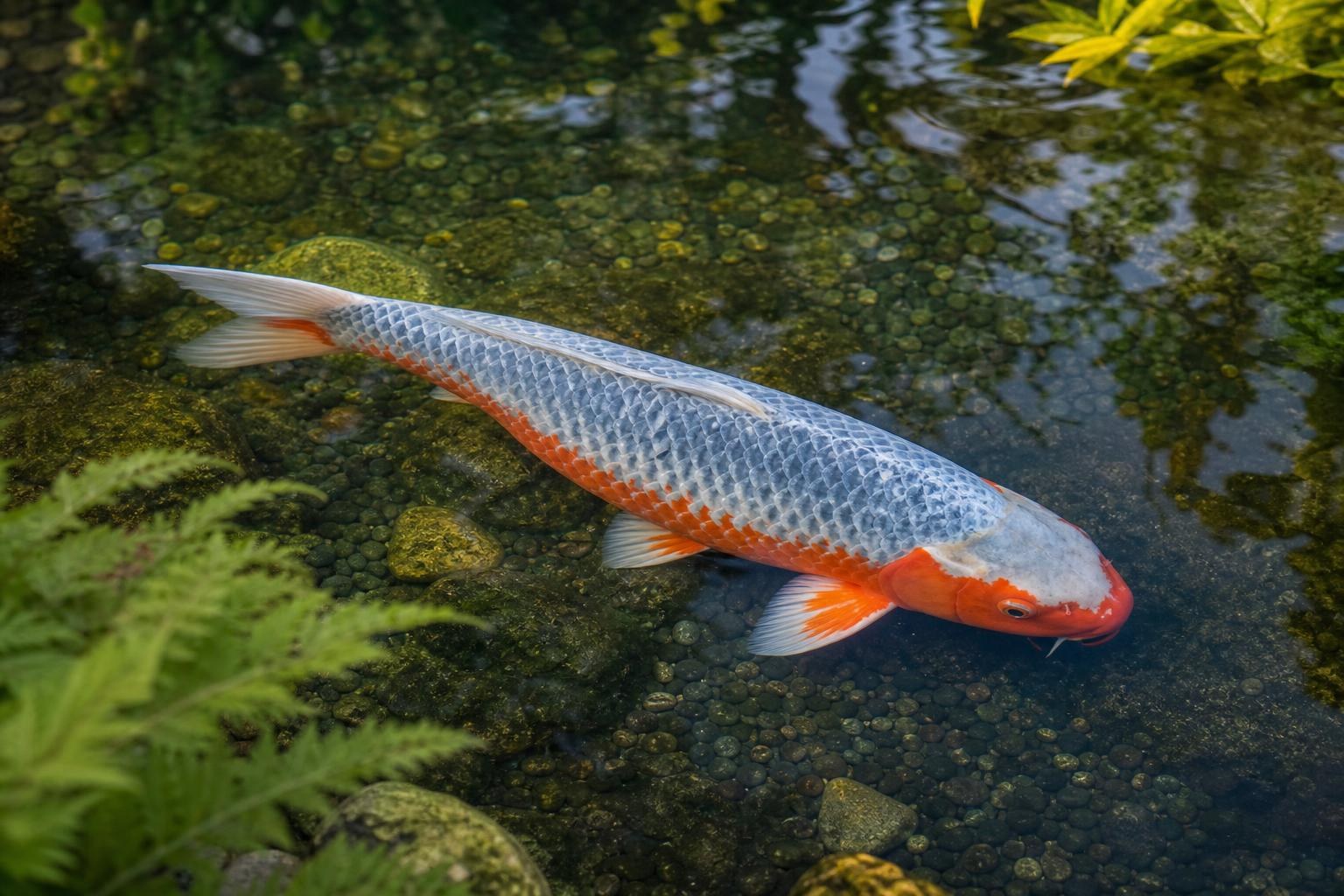
Asagi Koi is presented as a koi variety (koi are ornamental forms of Cyprinus carpio). Husbandry follows standard koi guidance: large, deep, well‑filtered ponds, careful feeding and biosecurity; Asagi as a catalogue name was not verifiable on the industry sources used.
At a glance
- Maximum length
- Up to 75 cm
- Minimum pond volume
- 4,500 litres
- Minimum pond depth
- 90 cm
- Temperature range
- 4–24°C
- Suitable for small ponds
- No
- Suitable for wildlife ponds
- No
About Asagi Koi
Asagi Koi is listed as a koi variety; approved UK industry and non‑native species sources treat koi generally as ornamental/coloured varieties of the common carp (Cyprinus carpio). The specific catalogue name “Asagi” was not found on the permitted UK industry or GB non‑native species sites used for this profile, so any Asagi‑specific show or breeder standard (colour, pattern or strain details) could not be verified from those sources. For pond owners in the UK, husbandry follows standard koi guidance. Koi are large, active carp that can reach around 75 cm and need substantial swimming volume, stable winter refuge and robust filtration and aeration. Industry recommendations for koi ponds commonly start at around 4,500 litres and a minimum pond depth of ~90 cm (many keepers recommend 1.2 m where practical) to provide thermal stability and space. Maintain good filtration capacity and aeration (designed for the higher bioload of koi), frequent water testing to keep ammonia and nitrite low and pH within the general pond guidance range reported by industry sources. Temperatures for temperate pond fish are generally cited as roughly 4–24 °C; koi feeding and active husbandry are usually reduced below ~12 °C. Koi are omnivorous and opportunistic: feed high‑quality seasonal pond pellets, reduce feeding in cool months, and avoid overfeeding. Koi can be peaceful as adults and social with conspecifics, but males can be aggressive during breeding and can injure females. They root in substrate and may disturb plants. Biosecurity is important: koi are susceptible to diseases including Koi Herpes Virus (KHV), and industry and non‑native species guidance strongly warn against releasing ornamental fish to the wild. If you need legal or licence details (GOV.UK/ILFA) or breeder‑standard verification for “Asagi”, those documents can be checked directly.
Diet
Omnivore/opportunistic: commercial pond pellets (seasonal protein), plus foraging on plants, detritus and invertebrates; avoid overfeeding.
Temperament
Generally peaceful and social as adults; can be aggressive during breeding. Large and active, may uproot or disturb plants and substrate.
Compatibility
Often kept with goldfish and other large pond cyprinids in large, well‑filtered ponds, but many keepers use koi‑only ponds. Exercise caution: different species have differing oxygen/flow needs; koi/goldfish can hybridise with native crucian carp and present ecological risks if they escape.
Care notes
Provide deep zones (≥90 cm), large swimming volume and secure planting to prevent uprooting. Install robust filtration sized above pond volume and ensure good aeration. Follow seasonal feeding: higher protein in warm months, reduce/stop feeding below ~12 °C. Test water regularly for ammonia, nitrite and pH (industry guidance ~6.5–8.5). Overwinter with a thermally stable refuge and maintain oxygen exchange. Maintain strict biosecurity to reduce disease risk (notably KHV) and do not release fish into the wild. For legal/licence queries, consult GOV.UK/ILFA and GB non‑native species guidance.